

Why Choose Us?
Reliable Product Quality
Our cows cell on wheels units comply with strict global safety standards and undergo stringent quality control checks during the manufacturing process.
Professional Technical Team
Our team of engineers and designers work with customers to develop custom cows cell on wheels products that meet customer needs and adhere to best industry practices and standards.
Wide Range of Applications
All Wuxi chinge technology co., ltd. units feature rugged construction, making them suitable for a variety of challenging applications and environments.
Excellent Customer Service
Customers can choose a standard design or work with our design team on a custom design that meets their needs.
What is Cell Site On Wheels?
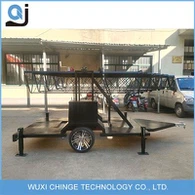
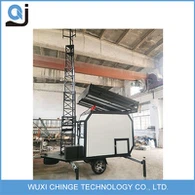
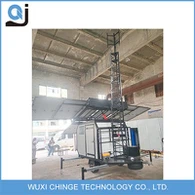
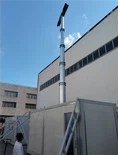
A cell site on wheels, commonly known as a COW, can be quickly delivered to any site for emergency coverage on a short-term basis. Service wherever you want it. A COW is a mobile cell site product that includes a tower and transceiver, as well as all other necessary equipment, carefully constructed on a trailer or truck.

As an innovative technology, mobile cell on wheels has completely changed the way we use communication media.

The Cell on Wheels (COW) is a portable base station used to provide temporary cellular network coverage

Cow cell on wheels is a mobile cellular base station product. Unlike standard towers, COW is highly portable

Cell tower on wheels is a basic mobile telecommunications facility that provides temporary coverage in areas

Cell site on wheels is truck-transportable mobile communications infrastructure that can be installed quickly and easily

Cell on wheels tower is a type of mobile infrastructure that provides temporary signal coverage in areas where cell towers

Wuxi Chinge Technology Co., Ltd. designs and manufactures various telescopic towers, cell on wheels and communication solutions for Chinese and overseas customers.

Communication on wheels is a type of mobile infrastructure that provides temporary signal coverage in areas

The cell on wheels trailer provides an industry-standard platform to accommodate many different sizes of wheeled batteries, customer equipment and small generators.
Flexibility: These towers offer flexibility in terms of location, allowing cellular service providers to optimize coverage where it's most needed. They can be easily relocated based on changing population densities or network demands.
Cost-Efficiency: Compared to building permanent cell towers, deploying portable ones can be more cost-effective, especially in temporary situations or in remote areas where the cost of constructing permanent infrastructure may not be justified.
Redundancy: Portable cell towers provide a redundancy option for cellular networks. In case of tower damage or failure, they can serve as backup communication channels, ensuring continuity of service and reducing downtime.
Improved Coverage: By strategically placing portable towers, cellular service providers can extend coverage to areas that are underserved or where building permanent infrastructure is not feasible due to terrain or regulatory restrictions.
Emergency Response: During emergencies, portable cell towers play a crucial role in facilitating communication among emergency responders, affected individuals, and relief organizations. They enable coordination and rescue efforts in real-time.
Temporary Events: For temporary events like music festivals, sports events, or outdoor gatherings, portable cell towers can meet the surge in demand for network capacity without the need for permanent installations, ensuring seamless connectivity for attendees.
Scalability: Portable cell towers can be scaled up or down depending on the requirements. Additional units can be deployed to handle increased traffic during peak hours or special events, offering scalability without significant infrastructure investments.
Esting and Optimization: These towers can also be used for testing new network configurations or optimizing existing ones. Service providers can experiment with different placements and configurations to improve network performance and coverage.
Environmental Impact: Compared to traditional cell towers, portable towers generally have a lower environmental impact since they require less land and infrastructure. They can be powered using renewable energy sources, further reducing their carbon footprint.
3 Situations Cell Site On Wheels Can Improve Business Connectivity
One of the most significant advantages of COW towers is their flexibility. Unlike traditional cell towers, which require permanent installation and infrastructure, mobile towers deploy virtually anywhere. This makes them ideal for temporary coverage, bridging emergency response, and extended coverage.
Temporary Coverage
Need to ensure strong internet signals for a one-time event like a concert, festival, or conference? Our MITT WiFi-configured COW towers set up quickly and dismantled just as easily, providing reliable coverage for the duration of your event.
Bridging Gaps in Business Connectivity
Does your business operate in a rural area or suffer from spotty signal strength due to geographical limitations? COW towers are strategically placed to fill coverage gaps and ensure uninterrupted cellular service for your employees and customers.
Emergency Response
Traditional communication infrastructure can be compromised in a natural disaster or other emergency situation. COW towers offer a reliable and rapid deployment solution to maintain critical communication channels for emergency responders and first aid teams.
What Are the Components of Cell Site On Wheels?
Cell towers are complex structures that consist of various components, each playing a crucial role in facilitating wireless communication. Here are the key components of a typical cell tower site:
Tower Structure
The tower structure itself provides the height and support needed to position the antennas and ancillary equipment at an optimal height for signal coverage. It is typically made of steel and is fixed to a reinforced concrete foundation.
Antenna
Antennas transmit and receive radio frequency signals to enable communication between mobile devices and a cellular network. A telecommunications operator may have several antennas installed in each tower.

Transceiver
The transceiver transmits and receives radio signals, via the antennas onsite, to mobile devices in the coverage area. The transceiver, sometimes knows as a base station, is connected to the Mobile Network Operator's core network, either by fibre or a microwave connection.
Amplifier
The amplifier enhances the cellular signals and helps to overcome signal degradation due to distance, obstacles, or interference. Amplifiers improve overall signal strength and quality for users within the coverage area of the cell tower.
What if You Could Put a Cell Site On Wheels?
Instant Connectivity for Remote Sites
Operators in remote and/or sprawling industrial environments don't always have enough existing cell towers (or any towers at all) located within their range, and it can take a mammoth effort to get one installed in a new location. But what if, instead of being statically affixed to one site, the cell tower had the ability to get up and drive directly to the place you needed it, moving in with ease to rapidly expand coverage to that area?
Scalability for Operations of Any Size
These cell towers on wheels could also spread as far and wide as a site required, flexibly augmenting or creating infrastructure ad-hoc to provide ubiquitous coverage across growing operations – no matter how far out they span. And as more connected people, devices, and machines are added to the expanding site, new cell towers would simply roll in to provide the increased network support required.
Total Mobility of Industrial Assets
With the roving connectivity of a cell site on wheels, the many moving assets that make up an industrial site-from equipment to cars to people-could take robust connectivity with them as they traveled. The tower would simply follow along, dodging line-of-sight issues caused by rugged terrain and seamlessly connecting hot zones to allow operators to maintain unwavering connectivity to, communications with, and control over all the 'things' that power more efficient and productive operations. Giving the network "wheels" means that even edge communications would be completely reliable.
What Is the Function of the Cell Site On Wheels?
Cell site on wheels, also commonly referred to as cell sites or base transceiver stations, are crucial components of modern telecommunication systems. The physical structure holds necessary equipment for the transmission and reception of radio signals for a specific "cell" or area, hence the name. Cell towers facilitate wireless communication between mobile devices and the network. These structures play an indispensable role in the wireless communication ecosystem, enabling us to make calls, send texts, and access the internet from our mobile devices-and they require intensive testing.
By providing flexible, scalable, and cost-effective solutions for the testing of new, complex technologies, NI contributes significantly towards building reliable wireless infrastructures. As wireless technologies evolve and grow more intricate, particularly relevant with the advent of 6G, innovative solutions will help test engineers build an advanced understanding of the network design and test technology necessary to maintain cell tower uptime.
How High Is a Cell Site on Wheel?
Cell site on wheels, in general, stand out for their size. At first glance, one would think they are not so big since these antennas vary between 30 centimeters and 1 meter long. The truth is that they are usually placed on top of a tower, or on the roof of a building, at a height of 15 to 50 meters. In order to reduce the impact that these infrastructures can have on the landscape, they are often integrated with the environment; Infrastructures that mimic the elements of the landscape, that are designed to go unnoticed.
Cell site on wheels are usually situated at the highest peaks of cities or on buildings' rooftops. For safety reasons, a distance of at least 6 meters between an antenna and a person is recommended, a condition that is easily met in both rural and urban environments.
What Is Cell Site On Wheels in 5G?
For example, cell site on wheels, where antennas are placed on an antenna sled, and weighted down on the rooftop with under blocks or sandbags, is a cell site, but it is not a cell tower. We basically define a cell site as a structure that's equipped with antennas, transmitters, receivers, and other electronic equipment that make the transmission and reception of signals to and from cellular devices possible. These wireless telecom sites are strategically positioned in a sort of mesh, or grid, to ensure optimal coverage and network reliability within a specific geographical area, or coverage area, that's often referred to as a "cell".
A cell site can be a cell phone tower but not all cell sites are cell towers. For example, some cell sites use other vertical real estate besides traditional towers to mount their antennas or equipment, such as water towers, electrical transmission towers, church steeples, smokestacks or rooftops. Cell sites are also getting close to the ground level with 5G technology and small cells. Cell towers can typically be anywhere from twenty to three hundred feet high, and rooftop cell sites can also be installed on rooftops of various heights. Cell tower and cell sites that exceed 200' height are required to be lit at night by the FAA.
Compared to 4G, 5G has a higher frequency network. The signal doesn't travel as far, but it is faster. We require more 5G towers per area to solve this. Although there are more towers per square kilometre, they are smaller, and their hardware is capable of supporting the widest range of operations and requirements.
This means that they will require less maintenance and upgrades in the future. When a 5G tower is built in your neighbourhood, you might not even notice. They are made to blend in with the surroundings and offer a quick, reliable connection without interfering with your daily activities.
All Wuxi chinge technology co., ltd. units feature rugged construction, making them suitable for a variety of challenging applications and environments. Our cows cell on wheels units comply with strict global safety standards and undergo stringent quality control checks during the manufacturing process. Customers can choose a standard design or work with our design team on a custom design that meets their needs.
Ultimate FAQ Guide to Cell Site On Wheels
Hot Tags: cell site on wheels, China cell site on wheels manufacturers, suppliers, factory, Vandal proof COW tower, Wireless coverage extension, COW for disaster recovery, portable cellular root on wheeled wheels, wheeled cellular system, Towable cell tower