

Why Choose Us?
Reliable Product Quality
Our cows cell on wheels units comply with strict global safety standards and undergo stringent quality control checks during the manufacturing process.
Professional Technical Team
Our team of engineers and designers work with customers to develop custom cows cell on wheels products that meet customer needs and adhere to best industry practices and standards.
Wide Range of Applications
All Wuxi chinge technology co., ltd. units feature rugged construction, making them suitable for a variety of challenging applications and environments.
Excellent Customer Service
Customers can choose a standard design or work with our design team on a custom design that meets their needs.
What is Cell Tower On Wheels?
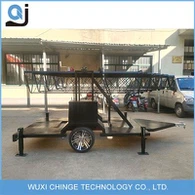
In simple terms, cell tower on wheels (CoW) is a portable cell tower that is easily deployed and retrieved. It includes a cellular antenna, transceiver device, battery, and other necessary equipment required to provide a stable wireless mobile network as needed. All of these platforms are mounted over vehicles such as trucks or trailers, which makes the entire setup portable or, as they say, "on-wheels."

As an innovative technology, mobile cell on wheels has completely changed the way we use communication media.

The Cell on Wheels (COW) is a portable base station used to provide temporary cellular network coverage

Cow cell on wheels is a mobile cellular base station product. Unlike standard towers, COW is highly portable

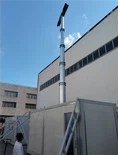
Cell tower on wheels is a basic mobile telecommunications facility that provides temporary coverage in areas

Cell site on wheels is truck-transportable mobile communications infrastructure that can be installed quickly and easily

Cell on wheels tower is a type of mobile infrastructure that provides temporary signal coverage in areas where cell towers

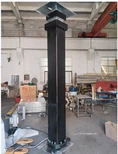
Wuxi Chinge Technology Co., Ltd. designs and manufactures various telescopic towers, cell on wheels and communication solutions for Chinese and overseas customers.

Communication on wheels is a type of mobile infrastructure that provides temporary signal coverage in areas

The cell on wheels trailer provides an industry-standard platform to accommodate many different sizes of wheeled batteries, customer equipment and small generators.
Benefits of Cell Tower On Wheels
Increased Mobility
One of the biggest advantages of using a mobile cell tower is moving it from location to location as needed. This is particularly useful for emergency response situations or for providing temporary coverage for events such as concerts or festivals. With portable towers, you can be sure that you'll have reliable coverage no matter where you are.
Reduced Costs for Mobile Cell Towers
Traditional cell towers require a significant investment in infrastructure and maintenance, which can be cost-prohibitive for remote locations. Mobile cell towers, on the other hand, offer a more cost-effective solution. Because they can be easily moved from location to location, you won't need to build multiple towers or pay for ongoing maintenance in multiple locations.
Improved Coverage
Mobile cell towers offer improved coverage in areas that traditional towers may not be able to reach. This is particularly important for rural communities or areas with difficult terrain. With Solaris' mobile towers, you can provide coverage in areas that may have been previously unreachable, improving connectivity and communication for those who need it most.
Cell towers serve as the intermediary between mobile devices and the telecommunications network. In layman's terms, cell towers work by receiving signals from your mobile device, converting these signals into a digital format, and then sending them along to their destination, either to another phone or onto the internet. For incoming calls or data, the process is reversed. That process may sound simple, but it has many steps and pieces of equipment. Let's get into the details.
The communication process begins when a mobile device, such as a cell phone, sends a signal. This signal is an electromagnetic wave, specifically a RF wave, which is essentially a modulated version of the user's voice or data. The signal is picked up by one of the antennas mounted on the mast. These antennas can use MIMO technology, transmitting multiple data streams on the same channel to increase capacity.
After the antenna receives the signal, it is passed through a series of high-frequency coaxial cables or waveguides to the BTS housed at the base of the tower. The BTS converts the RF signal into a digital format that can be processed by the network. The processed signal is then dispatched to the mobile switching center (MSC) through backhaul connections. Depending on the location and infrastructure, this connection could be physical, such as through fiber optic cables (for urban or suburban areas), or wireless like microwave links (for remote areas).
The MSC, the nerve center of a cellular network, then routes the call or data to the correct destination, which could be another mobile device or a server on the internet. For an incoming call or data, the process is essentially reversed. The MSC dispatches the signal to the BTS, which then upconverts it back to an RF signal. This RF signal is then transmitted by the tower's antennas to the intended mobile device.
Why You Need Cell Tower On Wheels?
Construction
Portable communication towers can be provided at any job site, and give off a strong signal for cell phone connection. How this benefits a construction site – is that portable cell towers can be utilized as a temporary solution while a more permanent cell tower is being constructed. Because portable cell towers are lightweight, durable and element resistant, they provide telecommunications alternatives to any construction site. Therefore, the unpredictability of a construction site is greatly benefited by portable cell towers.
Remote Worksites
The most important aspect with any job site is effective communication. This is particularly true when considering remote locations. Due to the nature of being highly portable, cell towers on wheels are strongly utilized and very beneficial for worksites that are off the beaten path. Worksites can be unpredictable, and with remote worksites, it's important to have proper communication capabilities being so far from an established community.
Oil & Gas
Similar to construction sites, within the oil & gas industry – Worksites can be unpredictable. That holds true in temporary job sites – you need a temporary solution. Portable cell towers boost communication and are easily adaptable in their environment. Given the situation of these sites, and costs associated, portable cell towers are an effective solution in comparison to permanent towers.
What Affects the Range of Cell Tower On Wheels?
Obstacles such as buildings, hills, and other structures can affect the effective range of a cell tower. Additionally, different frequency bands can have different propagation characteristics, with higher frequencies generally having shorter ranges but higher data capacity.
Cell Towers and Connectivity
Cell towers play a crucial role in the modern world of wireless communication. The use of cell tower connectivity is vast and transformative, and it has revolutionised the way we live, work, and communicate. Let's delve into some of the significant applications.
Mobile Communication
The primary purpose of cell towers is to facilitate mobile communication by transmitting and receiving signals between cellular devices and the network. They enable us to make voice calls, send text messages, and access high-speed internet on the go. Without cell tower connectivity, our mobile devices would simply not work.
Internet Access
Internet access is no longer limited to wired connections. Cell towers provide wireless internet connectivity, enabling users to browse the web, stream videos, check emails, and engage in online activities from anywhere within the tower's coverage area. Whether in bustling cities or remote rural areas, cell towers ensure access to the vast online world.
Emergency Services
Cell towers play a critical role in emergency situations. When disaster strikes or emergencies occur, prompt and reliable communication is vital. Cell towers facilitate emergency calls to be made, allowing individuals to reach out for help and request emergency services. These towers ensure that rescue teams and first responders can remain in contact with each other to coordinate their efforts swiftly.
Internet of Things (IoT) Connectivity
Cell towers provide the required connectivity for various IoT devices and applications, such as smart home systems, wearable tech, connected cars, and industrial automation. This connectivity enables seamless data transmission and facilitates interaction between IoT devices, improving our daily lives and driving technological advancements.
Business Connectivity
Cell tower connectivity is vital for businesses of all sizes. It enables employees to stay connected and access critical information on the go, facilitating remote work, video conferences, and seamless collaboration. Additionally, cell tower connectivity empowers businesses to deploy wireless point-of-sale systems, inventory management solutions, and other mobile technologies that enhance productivity and customer experiences.
Other uses for Cell Towers
Any service requiring a piece of equipment to be located at height may be installed on a cell tower. From high speed microwave connectivity, to tannoy systems and the monitoring of utilities networks, cell towers are shareable infrastructure available for a variety of communications requirements.
Cell tower on wheels finds its applications in large-scale events, emergency communications, and expanding network coverage in areas lacking mobile network connectivity. However, mobile cell towers are also used in different industries that depend on wireless communication. Some of those are:
Telecom infrastructure development, when gaps in long-term network assembly need to be filled temporarily.
Industry 4.0 or Industrial IoT (IIoT), where the sheer amount of data and the latency requirement for information retrieval are rapidly increasing.
Remote industries such as Oil and Gas, whose operations keep moving, require cell on wheels tower for effective communication at their worksites.
Besides these, other use cases include powerplants, construction projects, remote working sites for sectors such as mining, and more. Cell on Wheels is a versatile technology that can be enhanced with Galooli's smart site management solution. Let's have a closer look at how it does so.

Does Cell Tower On Wheels Have Radiation?
Cell tower on wheels can be free-standing towers or mounted on existing structures, such as trees, water tanks, or tall buildings. The antennas need to be high enough to adequately cover a certain area. Base stations are usually from 50 to 200 feet high.
Cell phones communicate with nearby cell towers mainly through RF waves, a form of energy in the electromagnetic spectrum between FM radio waves and microwaves. Like FM radio waves, microwaves, visible light, and heat, they are forms of non-ionizing radiation. This means they do not directly damage the DNA inside cells, which is how stronger (ionizing) types of radiation such as x-rays, gamma rays, and ultraviolet (UV) rays are thought to be able to cause cancer.
The electromagnetic spectrum illustration above shows the possible frequencies of electromagnetic energy, ranging from extremely low frequencies (such as those from power lines) to extremely high frequencies (such as x-rays and gamma rays), and includes both non-ionizing and ionizing radiation.
At very high levels, RF waves can heat up body tissues. But the levels of energy used by cell phones and towers are much lower.
When a person makes a cell phone call, a signal is sent from the phone's antenna to the nearest base station antenna. The base station responds to this signal by assigning it an available RF channel. RF waves transfer the voice information to the base station. The voice signals are then sent to a switching center, which transfers the call to its destination. Voice signals are then relayed back and forth during the call.
When RF signals are transmitted back and forth to the base station during calls, the RF waves produced at the base station are given off into the environment, where people can be exposed to them.
What Is the Range of a 4G Cell Tower On Wheels?
The range of a 4G cell tower is 2 to 4 miles (3 to 6.5 kilometers) when transmitting low- and mid-band spectrum.
Examples of the 4G LTE spectrum bands used by cell towers are Cellular (824 MHz to 894 MHz), SMR (854 MHz to 940 MHz), PCS (901 MHz to 941 MHz), AWS (1695 MHz to 2200 MHz), and WCS (2305 MHz to 2310 MHz).
All Wuxi chinge technology co., ltd. units feature rugged construction, making them suitable for a variety of challenging applications and environments. Our cows cell on wheels units comply with strict global safety standards and undergo stringent quality control checks during the manufacturing process. Customers can choose a standard design or work with our design team on a custom design that meets their needs.
Ultimate FAQ Guide to Cell Tower On Wheels
Hot Tags: cell tower on wheels, China cell tower on wheels manufacturers, suppliers, factory, Radio unit tower, cellular on wheels, wheeled cellular framework for cell on wheels, Temporary wireless tower, DC power COW setup, Mobile cell tower