


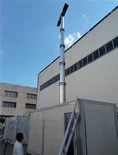

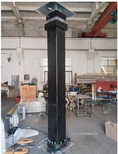

Your Leading Telescopic Aerial Mast Supplier
Wuxi Chinge Technology Co., Ltd. designs and manufactures various telescopic towers, cell on wheels and communication solutions for Chinese and overseas customers.
Reliable Product Quality
Our cows cell on wheels units comply with strict global safety standards and undergo stringent quality control checks during the manufacturing process.
Professional Technical Team
Our team of engineers and designers work with customers to develop custom cows cell on wheels products that meet customer needs and adhere to best industry practices and standards.
Wide Range of Applications
All Wuxi chinge technology co., ltd. units feature rugged construction, making them suitable for a variety of challenging applications and environments.
Excellent Customer Service
Customers can choose a standard design or work with our design team on a custom design that meets their needs.
What is Telescopic Aerial Mast?
Telescopic aerial masts are an essential component of wireless communication systems, providing the necessary support for antennas to transmit and receive radio frequency signals. Whether it's for television broadcasting, cellular networks, or amateur radio, telescopic aerial masts are crucial for ensuring smooth and reliable communication. Made from strong materials like steel or aluminum, these masts are the backbone of modern communication networks, enabling people to stay connected across a wide range of applications and industries.

50 Foot Telescopic Antenna Pole
The 50 foot telescopic antenna poles are made from either aluminum or steel, all steel is pre-galvanized and assembled with hardware. Simply tighten the thumbscrew, press on the tip to lock the sections, and the telescoping mast can be erected.

25 Ft Telescoping Antenna Mast
The 25 ft telescoping antenna mast is our main product, available in heights of 20', 30', 40', 50' and 60'. All 25 ft telescoping antenna masts are constructed from aluminum or steel, and all steel is pre-galvanized and assembled with hardware. Simply tighten the thumbscrew, press on the tip to lock the sections, and the telescoping mast can be erected.

The crank up pole uses a lifting pole or lifting tower as the carrier of the antenna (microwave, radio frequency, etc.) to realize the communication function.
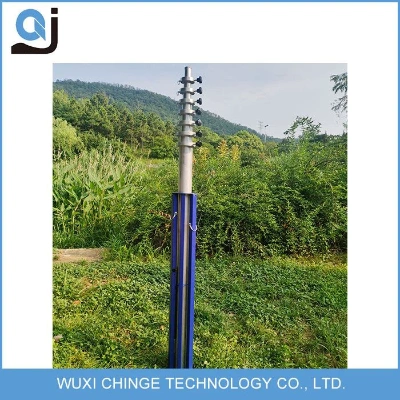
A crank up mast is a device used to raise and lower antennas, lighting, communications equipment, and other equipment. The crank up mast is a versatile and efficient tool widely used in a variety of industries including telecommunications, broadcasting and the military.

Push up antenna mast heights are available in 20', 30', 40', 50' and 60'. All push up antenna masts are made from aluminum or steel, and all steel is pre-galvanized and assembled with hardware. Simply tighten the thumbscrew, press on the tip to lock the sections, and the telescopic mast can be erected.

The newly designed antenna push up pole hand push aluminum alloy mast has different lengths and different transportation lengths to meet the requirements of different customers. We can provide OEM/ODM services to buyers to solve their different needs.

The mechanical telescopic mast is a lifting device specially designed for various environmental conditions. It can be used in vehicles or fixedly on the ground. The mechanical telescopic mast system adopts screw drive or wire rope drive, which has good self-locking performance and can achieve reliable self-locking at any height, improving safety and reliability.

The motorized telescoping mast is a lifting device specially designed for various environmental conditions. It can be used in vehicles or fixedly on the ground. The pole body of the motorized telescoping mast is made of high-strength aluminum alloy.

The mechanical telescoping mast we produce has the characteristics of small size, light weight, large load, high safety, earthquake resistance, strong self-fall buffering function, and stable performance. Its technology has reached the world's advanced level.
Advantages of Telescopic Aerial Mast
Adjustable Height
The ability to extend and retract the mast allows for adjusting the height to the optimal level for different applications, such as improving signal coverage or lighting. This flexibility is particularly useful in situations where the required height may vary or when the mast needs to be used in different locations.
Compact and Portable
When retracted, telescopic aerial masts have a much smaller footprint and can be easily transported and stored. This makes them ideal for applications where mobility and space-saving are important, such as in mobile communication systems or temporary lighting setups.
Improved Accessibility
The adjustable height of the telescopic aerial mast allows for easier access to the elevated components, simplifying installation, maintenance, and servicing. This can be especially beneficial in hard-to-reach or confined areas.
Enhanced Stability
Telescopic aerial masts are designed with features like guides, locking mechanisms, and stabilizing systems to maintain the mast's structural integrity, even at extended heights. This helps ensure the stability and reliability of the equipment mounted on the mast, such as antennas or lighting fixtures.
Cost-Effectiveness
Compared to having multiple fixed-height masts, a single telescopic aerial mast can often serve the same purpose, reducing the overall equipment and maintenance costs. The versatility of a telescopic aerial mast can also lead to savings in terms of installation, transportation, and deployment.
Enhanced Functionality
The ability to precisely adjust the mast height can improve the performance and coverage of the mounted equipment, such as maximizing the signal strength or lighting distribution. This can lead to better overall system performance and efficiency.
1. Critical Incidents & Crowd Control
Peaceful protests are a proud part of our American democracy, but peaceful can turn into riots quickly. Law enforcement must stay vigilant and fully aware of the situation to prevent dangerous riots. An eye in the sky is the best way to monitor a large demonstration with hundreds or thousands of protestors. If there is a disturbance, officers have a tactical advantage of being able to quickly locate the crowd and take action before things get out of control.
2. Special Event Surveillance
Providing security to large events can be tricky because of the vast amount of space that security forces need to cover. Utilizing surveillance technology such as a telescopic aerial mast and camera reduces the number of security staff an event needs to cover the same area. An entire outside event can be surveyed from a 360-degree surveillance camera on a telescoping mast strategically placed. The camera will be noticed by all, acting as a deterrent and giving the event a strong sense of security to participants.
3. Tactical Surveillance
Law enforcement is constantly investigating suspicious locations for illegal activity. It is not always possible to get the full picture from close up. A surveillance camera from a high vantage point gives officers a wide-angle view of the target area. The high vantage point can also draw less attention in tactical operations. Mobility and distance are key to keeping surveillance unnoticed. Discretion makes all the difference when collecting video and audio evidence.
4. Firefighting & Search And Rescue
When the lives of firefighters and victims are at stake, complete situational awareness can make all the difference. Fire departments use telescopic aerial masts to elevate a thermal camera to search for victims, determine hot spots, and identify where a fire is spreading. The tower can also be used as an elevated spotlight to illuminate an area during a night fire. Thermal imaging cameras allow firefighters to see through the smoke, gain valuable intelligence about the fire, and determine how best to safely fight it.
5. Radio Antenna
Communications in the field are not always easily secured. There are times when a mobile operation needs an RF/WiFi/Mobile antenna to keep communications on the ground open and secure. Radio antennas should be elevated for maximum range and potentially to limit interference.
6. Drone Antenna
There are considerable advantages to using a portable telescoping mast over a drone; however, a drone is ideal in the case of obstructions of view between buildings or dense vegetation. One of the weaknesses of drones is their limited range. The range of a drone can be significantly expanded by elevating the drone's antenna with a telescopic aerial mast. Buildings and trees can also disrupt the signal to a drone causing the operator to lose control. A telescoping mast gives the drone a better line of sight for more stable control.
7. 3D Laser Scanning
If you are a land or building surveyor, then you are well aware of the latest and most powerful tool – the 3D laser scanner. This state-of-the-art device accurately measures buildings and the lay of the land for engineers and builders quickly and easily. It can be necessary to elevate the laser high enough to get the full scope of the project, and a telescoping tower is the perfect solution.
An aerial mast is a tall structure that supports an antenna or a series of antennas. It is typically made of metal and is designed to be tall enough to provide a clear line of sight for the antenna to receive or transmit signals.
The mast works by raising the antenna above any obstacles such as buildings, trees, or other structures that may block or interfere with the signal. This allows the antenna to have a clear and unobstructed path to send or receive signals.
The mast is usually attached to a stable base or foundation, such as a concrete pad or a tower structure, to ensure stability and prevent it from toppling over. It is often equipped with guy wires or other support structures to provide additional stability and prevent swaying or bending in strong winds.
The aerial mast can be raised or lowered as needed. In some cases, it may be manually operated by a person using a winch or other mechanical device. In other cases, it may be motorized or automated, allowing for easy and convenient adjustment of the antenna height.
The aerial mast plays a crucial role in ensuring optimal signal reception or transmission for antennas by providing height and clear line of sight, allowing for effective communication and broadcasting.
How High Can I Get a Telescopic Aerial Mast?
Lightweight telescopic aerial masts typically range in size from 10-50 feet and some versions even have "lockable collars" that keep the mast extended for longer deployments and also can reduce or restrict the extended height as needed for special applications such as AI, LPR, facial recognition or other end uses. Any applications requiring high-precision or elevating beyond 33 feet should be properly guyed in most cases. All masts have a wind speed or wind survival rating based upon extended height, mast material, mast diameter, how it is mounted, the payload or head load and lastly, whether it's guyed or not.
How to Install the Telescopic Aerial Mast?
Installing an aerial mast typically involves the following steps

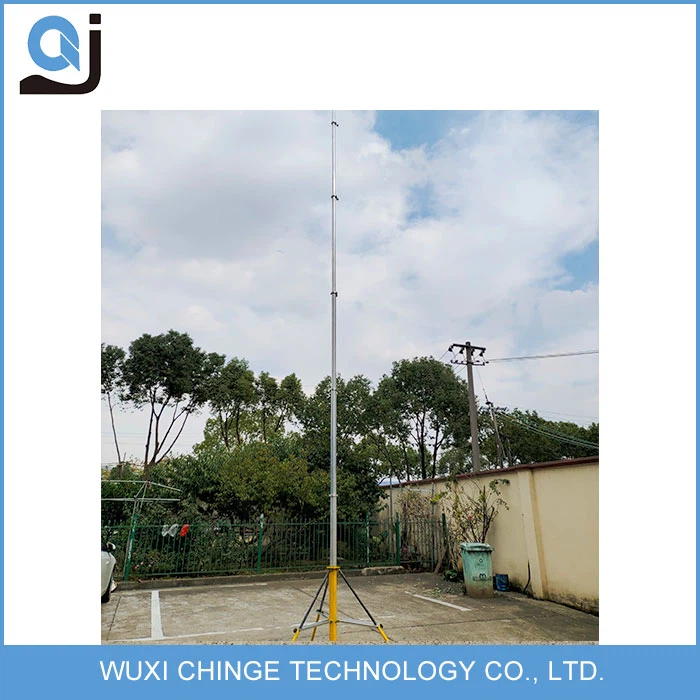

1. Determine the location: Select a suitable location for the aerial mast. It should be high enough to receive a clear signal but also safe and stable.
2. Gather the necessary tools and materials: You will need a mast, mounting brackets, screws, a drill, a wrench, a level, and a ladder.
3. Assemble the mast: Follow the manufacturer's instructions to assemble the aerial mast. This usually involves connecting several sections of the mast together.
4. Mount the mast: Use the mounting brackets to attach the mast to a stable structure such as a roof or chimney. Ensure the brackets are securely fastened and the mast is level.
5. Secure the mast: Use screws or other fasteners to secure the mast to the mounting brackets. Make sure it is tightly secured to prevent any movement or swaying.
6. Attach the antenna: Depending on the type of antenna, you may need to attach it to the top of the mast. Follow the antenna manufacturer's instructions for proper installation.
7. Connect the cables: Connect the coaxial cable from the antenna to the television or other device you are using. Use cable connectors and ensure a secure connection.
8. Test the signal: Turn on the television or device and check for a clear signal. Adjust the direction or position of the antenna if needed to improve the signal strength.
9. Secure the cables: Use cable clips or ties to secure the cables along the mast and any other structures to prevent them from dangling or getting damaged.
10. Weatherproof the installation (optional): If the aerial mast is exposed to the elements, consider using weatherproofing materials such as silicone sealant or weatherproof tape to protect the connections and prevent water damage.
What Devices Can I Put on Top of a Telescopic Aerial Mast?
Telescopic aerial masts are primarily used with antennas to improve radio coverage (antenna masts) or dead spots and with cameras as well to fill in blind spots (mobile surveillance towers). Other notable end-uses are mobile video surveillance, situational awareness & thermal imaging, radio devices including RF antennas, cellular signal boosters, outdoor WiFi access points, edge networks and many more. Depending upon the height, material and diameter of the telescopic aerial mast, weight limits for the top, payload or head load typically do not exceed 49 lbs for rapid deployment masts. However, there are heavier-duty telescopic aerial masts available for special order that can manage payloads in excess of 100lbs.
Elevate Your Surveillance and Communication with Telescopic Aerial Masts
Telescopic aerial masts are designed with lightweight aluminum materials, making them easy to transport and install. The use of aluminum ensures durability and resistance to harsh weather conditions, making them suitable for both indoor and outdoor applications. The lightweight nature of these masts also allows for quick and hassle-free deployment, saving valuable time and effort.
Telescopic aerial masts offer multiple deployment options, providing flexibility for various scenarios. They can be mounted on vehicles, trailers, or even on the ground using a tripod. This versatility allows for easy integration into existing systems or the creation of mobile surveillance units. Whether you need to elevate CCTV cameras, antennas, or lighting devices, telescopic aerial masts provide a reliable and efficient solution.
One notable feature of telescopic aerial masts is the presence of locking collars. These collars ensure that the equipment remains at a fixed height, even without air pressure. This stability is crucial for long-term surveillance or communication operations, as it eliminates the need for constant adjustments. The locking collars provide peace of mind, knowing that your equipment will stay securely elevated.
Telescopic aerial masts offer various lifting options to suit different requirements. Manual winches are a cost-effective solution, allowing for easy height adjustment by hand. Air compressors provide a pneumatic lifting mechanism, utilizing compressed air to raise the central column to its extended height. For a more automated approach, electric motors can be used, providing effortless and precise control over the elevation process. These different lifting options ensure that there is a suitable solution for every application.
Telescopic aerial masts find applications in a wide range of industries. They are commonly used in telecommunication for the deployment of antennas, enabling improved signal coverage and network connectivity. In the field of mobile surveillance, these masts provide an elevated platform for CCTV cameras, enhancing security and monitoring capabilities. Additionally, telescopic aerial masts are utilized in mobile lighting setups, ensuring adequate illumination for events, construction sites, or emergency situations.
How Different Heights of Pneumatic Telescopic Aerial Masts Enhance Performance
The Power of Low Heights
Low-height pneumatic telescopic aerial masts provide several advantages in specific applications. With their compact size and lower elevation, these masts are ideal for situations where a discreet or inconspicuous presence is required. They are commonly used in surveillance, security, and tactical operations, allowing cameras or sensors to be positioned at eye level or slightly above, ensuring optimal coverage without drawing attention.
Medium Heights: Striking the Balance
Medium-height pneumatic telescopic aerial masts offer a balance between elevation and practicality. These masts are versatile and widely used in various industries, including broadcasting, photography, and communication. With their ability to reach moderate heights, they provide improved line-of-sight, extended coverage, and enhanced signal reception. Medium-height masts strike the perfect balance between accessibility and performance, making them a popular choice for many applications.
Reaching New Horizons with High Heights
High-height pneumatic telescopic aerial masts unlock new possibilities in industries that require elevated perspectives. These masts can reach impressive heights, providing a bird's-eye view for applications such as aerial photography, long-range communication, and environmental monitoring. The increased elevation allows for broader coverage, extended range, and enhanced data collection. High-height masts empower users to explore new horizons and capture a comprehensive view of their surroundings.
Customization for Specific Needs
One of the significant advantages of pneumatic telescopic aerial masts is their ability to be customized to meet specific height requirements. Manufacturers offer a range of mast heights, allowing users to select the optimal height for their unique applications. This customization ensures that the mast perfectly aligns with the operational needs, maximizing performance and efficiency.
Height Considerations for Stability and Safety
When selecting a pneumatic telescopic aerial mast, it is crucial to consider the stability and safety aspects associated with different heights. Taller masts may require additional stabilization measures, such as guy wires or outriggers, to ensure stability in windy conditions. Safety precautions, such as proper grounding and adherence to weight limits, become increasingly important as the height of the mast increases. Understanding and addressing these considerations are essential for safe and reliable operation.
Ultimate FAQ Guide to Telescopic Aerial Mast
Hot Tags: telescopic aerial mast, China telescopic aerial mast manufacturers, suppliers, factory, military mast, network masts, hydraulic telescopic mast, Light mast with transport case, Steel light tower mast, antenna telescopic mast


