



Why Choose Us?
Reliable Product Quality
Our cows cell on wheels units comply with strict global safety standards and undergo stringent quality control checks during the manufacturing process.
Professional Technical Team
Our team of engineers and designers work with customers to develop custom cows cell on wheels products that meet customer needs and adhere to best industry practices and standards.
Wide Range of Applications
All Wuxi chinge technology co., ltd. units feature rugged construction, making them suitable for a variety of challenging applications and environments.
Excellent Customer Service
Customers can choose a standard design or work with our design team on a custom design that meets their needs.
What is Telescoping Mast For Antenna?
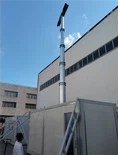
Telescoping mast for antenna are primarily used with RF antennas to improve radio coverage (antenna masts) or dead spots and with cameras as well to fill in blind spots (mobile surveillance towers). Other notable end-uses are mobile video surveillance, situational awareness & thermal imaging, radio devices including RF antennas, cellular signal boosters, outdoor WiFi access points, edge networks and many more.

The floodlights can be installed on the extension bracket on the top of the telescopic lighting mast.

Telescoping Radio Antenna Mast
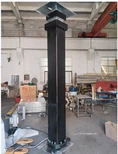
The telescoping radio antenna mast can be folded to a minimum length of 1.5 meters, with an extended mast length of 6 meters - 18 meters

A crank up mast is a device used to raise and lower antennas, lighting, communications equipment, and other equipment.

50 Foot Telescopic Antenna Pole
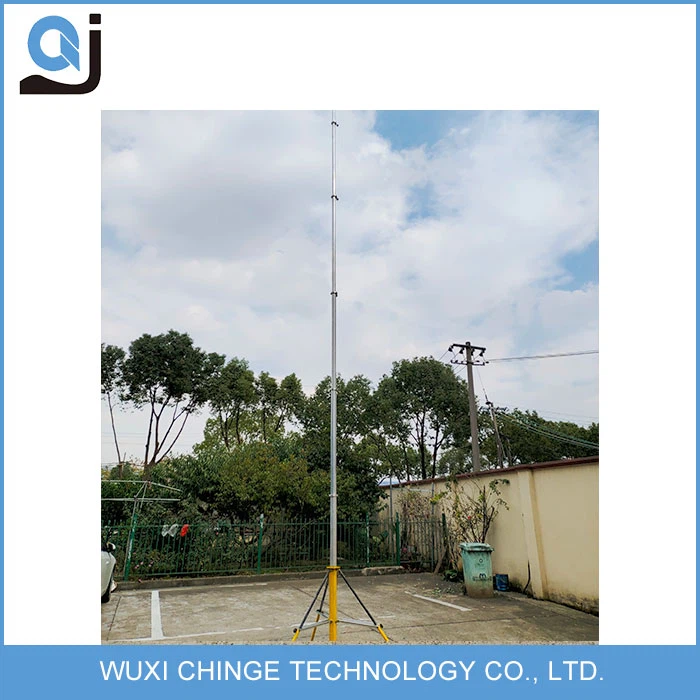
QJ series 50 foot telescopic antenna pole, available in various heights of 20', 30', 40', 50' and 60'.

25 ft Telescoping Antenna Mast
The 25 ft telescoping antenna mast is our main product, available in heights of 20', 30', 40', 50' and 60'.

Telescoping mast for antenna is an excellent choice for antenna installation, providing a reliable and secure foundation for communication equipment.

The crank up pole uses a lifting pole or lifting tower as the carrier of the antenna (microwave, radio frequency, etc.) to realize the communication function.

Push up antenna mast heights are available in 20', 30', 40', 50' and 60'. All push up antenna masts are made from aluminum or steel

The newly designed winch up mast hand-pushed aluminum alloy mast has different lengths and different transportation lengths
Increased range and signal strength: Heavy duty telescoping masts can be used to increase the range and signal strength of antennas. This is because they can be extended to heights of over 100 feet, which can provide a clear line of sight to other antennas.
Improved visibility: Heavy duty telescoping masts can be used to improve the visibility of cameras and lighting fixtures. This is because they can be extended to heights that provide a better view of the surrounding area.
Increased safety
Heavy duty telescoping masts can be used to increase the safety of workers and equipment by providing a stable and secure platform. This is because they are made of high-strength materials and can be designed to withstand heavy loads and extreme weather conditions.
Portability
Heavy duty telescoping masts are lightweight and portable, making them easy to transport and store. This is because they are typically made of aluminum or steel and can be disassembled into sections.
Versatility
Heavy duty telescoping masts can be used for a variety of applications, including antennas, cameras, and lighting. This is because they can be extended to different heights and can be equipped with a variety of accessories.
What Devices Can I Put on Top of a Telescoping Mast for Antenna?
Telescopic masts are primarily used with RF antennas to improve radio coverage (antenna masts) or dead spots and with cameras as well to fill in blind spots (mobile surveillance towers). Other notable end-uses are mobile video surveillance, situational awareness & thermal imaging, radio devices including RF antennas, cellular signal boosters, outdoor WiFi access points, edge networks and many more.
Depending upon the height, material and diameter of the telescopic mast, weight limits for the top, payload or head load typically do not exceed 49 lbs for rapid deployment masts. However, there are heavier-duty telescopic masts available for special order that can manage payloads in excess of 100lbs.
A telescoping mast for antenna is an upright pole or portable tower that consists of tubular sections that slide within another in order to be extended or retracted pneumatically or manually. Telescopic masts can be made from a variety of materials including aluminum, steel or carbon fiber depending upon the application, mission requirements and can be mounted any number of ways including a vehicle's 2×2" hitch receiver, building or command center wall, freestanding tripod, on a mobile surveillance vehicle or trailer, folded down on a roof and even through a hole in the roof via a roof bearing!
Telescopic masts are invaluable in various fields, including emergency response, broadcasting, telecommunications, and security. For first responders, these lightweight masts provide elevated viewpoints for better situational awareness, enabling quicker and more effective decision-making during crises. In broadcasting, they ensure reliable signal transmission even in remote locations. Telecommunications companies benefit from enhanced coverage and signal strength, crucial for maintaining communication networks.
How Do Telescoping Mast For Antennas Work?
Deploying telescoping mast for antennas is usually done by a serpentine cable running up and down between the nested columns. When the cable is winched in, the columns slide upward, deploying the mast. When at full height, an overlap between the associated columns serves as a structural connection between them. This overlap is often unrestrained, allowing some movement between columns.
Combining this overlap movement with the decreasing stiffness from the "stepped-taper" mast, causes a reduction of mast rigidity, bottom to top, limiting payload weight and payload stability.
While cell phone boosters and distributed antenna system (DAS) have become an increasingly common accessory for businesses and households, many people are overlooking a vital component of their set-up that will protect their investment and ensure the longevity of their equipment: properly grounding the antenna system.
Grounding the antenna protects your signal booster or DAS from damage in case of lightning strikes. Lightning can strike the antenna and travel through the coaxial cable to your device, which will not only damage the signal boosting equipment but can cause a fire or shock people in the vicinity. Lightning doesn't have to physically strike the antenna itself to cause damage: nearby lightning strikes and static charge build-up during storms can also create voltage surges which, although smaller, can damage the filters and amplifiers inside the booster or DAS headend.
To completely protect your device from lightning, two layers of protection are recommended: installing an in-line lightning surge arrestor and grounding the antenna mast. We'll delve into each of these below.
What Is the Difference Between Antenna Tower and Telescoping Mast For Antenna?
Communications antennas often are mounted on towers or masts at heights where they can send and receive radio waves. Towers are self-supporting structures or supported on one side, while masts are held up by stays or guy wires. Towers and telescoping masts can be ground-based or mounted on rooftops.
Hurricane winds can collapse towers and masts that support antennas, damaging roofing systems by puncturing roof membranes. Falling trees and limbs also can damage communications towers and masts, but this Fact Sheet only addresses direct damage from wind and flood.
If the antenna is mounted on the house, much will depend on how big it is and how it is attached. If it is judged not to result in a 'material alteration to the appearance of the building' it does not need permission. Any free-standing mast or pole more than 3 metres high needs permission; and more than 2.5m if it's within 2m of the boundary. Anything facing a highway needs permission. If in doubt, seek advice.
If your mast is genuinely mobile (you can take it down and move it off-site readily and it has no ground fixtures), then probably.
All Wuxi chinge technology co., ltd. units feature rugged construction, making them suitable for a variety of challenging applications and environments. Our cows cell on wheels units comply with strict global safety standards and undergo stringent quality control checks during the manufacturing process. Customers can choose a standard design or work with our design team on a custom design that meets their needs.
Ultimate FAQ Guide to Telescoping Mast For Antenna
Hot Tags: telescoping mast for antenna, China telescoping mast for antenna manufacturers, suppliers, factory, Utility maintenance light tower, Lighting mast with tripod, Film production lighting mast, Light mast with timer, emergency mast, telescopic masts


