


Is a Portable Tower Suitable for Marine Applications?
As a supplier of portable towers, I've often been asked about the suitability of our products for marine applications. The marine environment is a challenging one, with harsh conditions that can test the durability and functionality of any equipment. In this blog, I'll explore whether portable towers are a good fit for marine settings, considering factors such as stability, corrosion resistance, and communication needs.
Stability in Marine Conditions
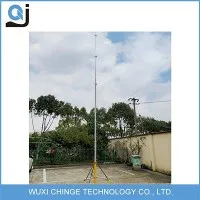
One of the primary concerns when using a portable tower in a marine environment is stability. The constant movement of the water, including waves, tides, and currents, can exert significant forces on the tower. To ensure stability, our portable towers are designed with a robust base and a sturdy structure. For example, some of our Telecommunication Tower Telescopic models come with a wide and heavy base that can be anchored firmly to the ground or a stable platform. This helps to counteract the forces of the water and keep the tower upright.
In addition, our towers are engineered to withstand high winds, which are common at sea. They are built using high - strength materials and designed with aerodynamic shapes to reduce wind resistance. The telescopic design of many of our towers also allows for easy adjustment of the height, which can be beneficial in different weather and sea conditions. By lowering the tower during storms or high - wind events, the risk of damage can be significantly reduced.
Corrosion Resistance
The marine environment is highly corrosive due to the presence of saltwater, humidity, and oxygen. Corrosion can weaken the structure of a portable tower over time, leading to safety hazards and reduced functionality. To address this issue, our portable towers are made from materials that are resistant to corrosion.


We use stainless steel and aluminum alloys in the construction of our towers, as these materials have excellent corrosion - resistant properties. The surfaces of the towers are also treated with special coatings to provide an additional layer of protection. For example, a powder - coated finish can prevent saltwater from coming into direct contact with the metal, reducing the rate of corrosion. Regular maintenance, such as cleaning and inspection, is also recommended to ensure the long - term integrity of the tower.
Communication Needs in Marine Applications
Communication is crucial in the marine environment, whether it's for navigation, safety, or operational purposes. Portable towers can play an important role in enhancing communication capabilities. Our 100ft Cell On Wheels (COW) and China COWs Cell On Wheels are designed to support various communication systems, including cellular, Wi - Fi, and radio.
These towers can be equipped with high - gain antennas to improve signal strength and coverage. They can be quickly deployed in different locations, such as on offshore platforms, ships, or coastal areas, to provide reliable communication links. For example, in the case of an emergency at sea, a portable tower can be rapidly set up to establish communication between the affected vessel and the shore - based rescue teams.
Installation and Mobility
Another advantage of portable towers in marine applications is their ease of installation and mobility. Unlike traditional fixed towers, portable towers can be easily transported and set up in different locations. They are designed to be assembled and disassembled quickly, which is especially useful in dynamic marine environments where the need for communication infrastructure may change frequently.
Our portable towers can be transported by various means, including trucks, boats, or helicopters, depending on the location and requirements. This flexibility allows for rapid response to changing situations, such as the need to provide communication support during a marine event or in a remote coastal area.
Cost - Effectiveness
Cost is always a consideration in any project, and portable towers offer a cost - effective solution for marine applications. Compared to building and maintaining a permanent fixed tower, the initial investment in a portable tower is significantly lower. There are also no long - term construction costs, such as land acquisition and building permits.
In addition, the operational costs of portable towers are relatively low. They require less energy to operate, and maintenance can be carried out more easily and at a lower cost. This makes portable towers an attractive option for marine operators, especially those with limited budgets.
Limitations and Considerations
While portable towers have many advantages for marine applications, there are also some limitations and considerations. For example, the height of portable towers may be limited compared to fixed towers, which can affect the range and quality of communication. In addition, extreme weather conditions, such as hurricanes or typhoons, can pose a challenge even for well - designed portable towers.
It's also important to ensure that the portable tower complies with all relevant safety and regulatory standards in the marine industry. This includes proper grounding, lightning protection, and compliance with maritime safety codes.
Conclusion
In conclusion, portable towers can be a suitable option for marine applications, provided that they are properly designed, installed, and maintained. Their stability, corrosion resistance, communication capabilities, mobility, and cost - effectiveness make them a viable alternative to traditional fixed towers. However, it's important to carefully assess the specific needs and requirements of each marine project to determine if a portable tower is the right choice.
If you're interested in learning more about our portable towers for marine applications or would like to discuss a potential purchase, please don't hesitate to reach out. We are here to help you find the best solution for your communication needs in the marine environment.
References
- "Marine Engineering Handbook", various authors, published by a well - known marine engineering publishing house.
- "Corrosion Prevention in Marine Structures", a research paper from a leading materials science journal.
- Industry reports on communication infrastructure in the marine sector.