


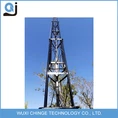

Hey there! As a supplier of telescopic radio towers, I've seen firsthand the potential these nifty gadgets hold in extending communication networks. But let me tell you, plopping one of these towers in a tropical rainforest is no walk in the park. There are challenges galore that we need to tackle head - on. So, let's dive right into the nitty - gritty of what it takes to use a telescopic radio tower in a tropical rainforest.
1. Harsh Weather Conditions
The weather in tropical rainforests can be a real pain in the you - know - what. The first thing we're up against is the heavy rainfall. Rain in these areas isn't just a light drizzle; it's more like a continuous downpour that can last for hours or even days. This constant exposure to water can lead to rusting of the tower's metal components. Rust weakens the structure over time, making it more prone to collapse. Even with the best - quality stainless steel, the relentless humidity and moisture can slowly eat away at the materials.
The high levels of humidity also pose a problem for the electronic components of the radio tower. Moisture can seep into the delicate circuitry, causing short - circuits and electrical failures. Imagine having a crucial communication link suddenly go down because of a little water, and there you have it. This is why proper waterproofing and sealing of the equipment are essential.
Then there are the storms. Tropical rainforests are no strangers to thunderstorms, and they can be pretty fierce. Strong winds associated with these storms can exert a tremendous amount of force on the telescopic tower. If the tower isn't properly anchored, it can easily topple over. And let me tell you, setting up a solid anchor in the dense, often waterlogged rainforest soil is no easy feat.
2. Dense Vegetation
The vegetation in tropical rainforests is thick and wild. It can be a real challenge to find a suitable spot to set up the telescopic radio tower. You need an area that's relatively clear of large trees and other obstacles to ensure the tower has enough room to extend fully. But clearing the vegetation isn't as simple as it sounds. There are environmental regulations to consider. You can't just go in and start chopping down trees willy - nilly.
Even if you manage to find a spot and set up the tower, the surrounding vegetation can interfere with the radio signals. Trees act as natural barriers, absorbing and scattering radio waves. This means that the range and quality of the communication can be significantly reduced. You might need to invest in more powerful transmitters or reposition the tower to get a clear line of sight.
Another issue is the growth of vines and plants around the tower. Over time, these can wrap around the tower, adding extra weight and potentially causing it to lean. They can also damage the surface of the tower, making it more vulnerable to corrosion.
3. Difficult Terrain
The terrain in tropical rainforests is hilly, uneven, and often muddy. Transporting the telescopic radio tower to the installation site is a nightmare. You can't just drive a truck straight to the location; in most cases, you have to rely on manual labor or specialized off - road vehicles. And if the tower is large, it might need to be disassembled and then reassembled on - site, which adds to the complexity and time of the installation process.
Setting up a stable foundation for the tower is also extremely challenging. The soft, muddy soil doesn't provide a solid base, and you might need to use special techniques like piling or building a reinforced concrete foundation. This not only increases the cost but also the environmental impact of the installation.


4. Wildlife and Insects
Tropical rainforests are home to a vast array of wildlife and insects, some of which can cause problems for the telescopic radio tower. Termites, for example, are a major threat. They can chew through wooden components (if any) of the tower and even damage the insulation of electrical cables.
Larger animals like monkeys or wild pigs might also interact with the tower. They could climb on it, causing physical damage, or knock it down in search of food or shelter. Additionally, some birds might build nests on the tower, which can disrupt the operation of the equipment and attract more pests.
5. Low Connectivity and Limitations for Maintenance
Once the tower is set up, maintaining it can be a real headache. The low connectivity in tropical rainforests means that remote monitoring and control of the tower can be difficult. You can't just log in to a system and check the status of the tower from a distance. Instead, technicians often have to make the long and arduous journey to the site to perform checks and repairs.
Access to replacement parts can also be limited. With the difficult terrain and lack of proper infrastructure, getting new parts to the tower in a timely manner can be a challenge. This can lead to longer downtime in case of a breakdown.
Solutions and Our Products
Despite these challenges, there are ways to make it work. At our company, we've developed some great solutions. Our Portable Cell Tower is designed to be easy to transport, even in difficult terrains. It's lightweight yet sturdy, and it comes with a waterproof and corrosion - resistant coating to withstand the harsh rainforest conditions.
The 100ft Cell On Wheels (COW) is another great option. It can be easily moved around and set up quickly. This is especially useful in areas where the terrain changes frequently or where the tower needs to be relocated.
Our Amateur Radio Tower Crank Up is designed with a user - friendly crank - up mechanism. It's easy to extend and retract, which is handy in situations where the tower needs to be taken down quickly, like during a storm.
The Telescopic Mobile Tower offers excellent flexibility. It can be adjusted to different heights, allowing you to optimize the radio signal based on the surrounding environment.
And our Retractable Antenna Tower is perfect for minimizing the impact of vegetation on the signal. It can be retracted when not in use, reducing the chances of damage from falling branches or climbing plants.
Let's Talk Business
We understand that every rainforest project is unique, and we're here to help you find the best solution. Whether you're looking to set up a short - term communication link or a long - term network, we've got you covered. If you're interested in our telescopic radio towers and want to discuss your specific requirements, don't hesitate to reach out. We're eager to work with you and overcome the challenges of using a telescopic radio tower in tropical rainforests together.