


When it comes to the world of manual telescopic masts, understanding the difference between single - stage and multi - stage models is crucial for both suppliers and customers. As a supplier of manual telescopic masts, I've witnessed firsthand the diverse needs of our customers and how the choice between these two types can significantly impact their projects. In this blog, I'll delve into the characteristics, advantages, and disadvantages of single - stage and multi - stage manual telescopic masts, helping you make an informed decision.
Single - Stage Manual Telescopic Masts
A single - stage manual telescopic mast is a relatively straightforward design. As the name suggests, it consists of a single section that extends and retracts. This simplicity is both its strength and its limitation.
Design and Structure
The design of a single - stage mast is typically uncomplicated. It usually has a base that is fixed firmly to the ground or a platform. The mast itself is a single tube that can be raised or lowered. This tube is often made of materials like aluminum or steel, which provide strength while keeping the weight reasonable.

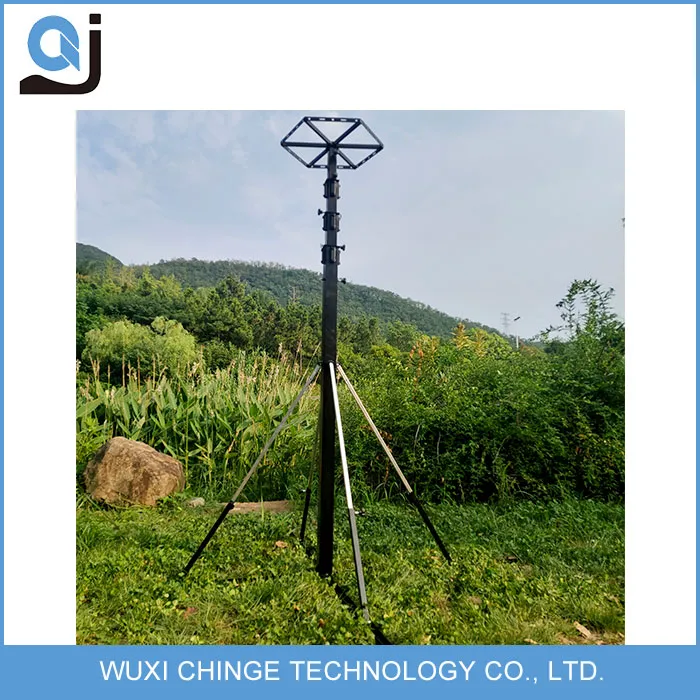
For example, our Aluminum Crank Up Mast is a prime example of a single - stage manual telescopic mast. The aluminum construction makes it lightweight and corrosion - resistant, making it suitable for outdoor use in various environments.
Advantages
- Simplicity: One of the most significant advantages of a single - stage mast is its simplicity. There are fewer moving parts, which means less maintenance and a lower chance of mechanical failure. This makes it an ideal choice for users who are not mechanically inclined or who prefer a hassle - free solution.
- Cost - Effective: Since the design is simpler and there are fewer components, single - stage masts are generally more cost - effective than multi - stage masts. This makes them a popular choice for budget - conscious projects.
- Stability: With only one section to support, single - stage masts tend to be more stable than multi - stage masts. This is especially important when the mast needs to support heavy equipment or when there are high winds or other environmental factors.
Disadvantages
- Limited Height: The main drawback of a single - stage mast is its limited height. Since it is a single section, it can only extend to a certain length. If you need a mast that can reach greater heights, a single - stage mast may not be the best option.
- Less Flexibility: Single - stage masts offer less flexibility in terms of height adjustment. You are limited to the fully extended or fully retracted position, which may not be suitable for all applications.
Multi - Stage Manual Telescopic Masts
Multi - stage manual telescopic masts are designed to overcome the height limitations of single - stage masts. They consist of multiple sections that slide inside each other, allowing for greater extension.
Design and Structure
A multi - stage mast typically has two or more sections that are nested within each other. The innermost section is the first to extend, followed by the outer sections in sequence. The mast is usually extended and retracted using a winch or a crank mechanism.
Our Winch Up Mast and Hand Winch Up Telescopic Mast are examples of multi - stage manual telescopic masts. These masts are designed to provide greater height and flexibility, making them suitable for a wide range of applications.
Advantages
- Greater Height: The most obvious advantage of a multi - stage mast is its ability to reach greater heights. By stacking multiple sections, the mast can extend to several times its retracted length. For example, our 30ft Hand Push Up Antenna Mast can provide the necessary height for antenna installations in areas where a single - stage mast would not be sufficient.
- Height Adjustment Flexibility: Multi - stage masts offer more flexibility in terms of height adjustment. You can extend the mast to different lengths depending on your needs, which is particularly useful in applications where the height requirements may vary.
- Portability: Despite their greater height, multi - stage masts can be relatively portable when retracted. This makes them easy to transport and set up in different locations.
Disadvantages
- Complexity: Multi - stage masts are more complex in design than single - stage masts. They have more moving parts, which means more maintenance and a higher chance of mechanical failure. This requires a certain level of technical knowledge and skill to operate and maintain.
- Cost: Due to their more complex design and additional components, multi - stage masts are generally more expensive than single - stage masts. This can be a significant factor for budget - sensitive projects.
- Stability: As the number of sections increases, the stability of the mast can be affected. The higher the mast is extended, the more it may sway in the wind or under the weight of the equipment it is supporting.
Applications
The choice between a single - stage and multi - stage manual telescopic mast depends largely on the application.
Single - Stage Mast Applications
- Small - Scale Antenna Installations: For applications where a relatively low height is sufficient, such as small - scale radio or Wi - Fi antenna installations, a single - stage mast is often a good choice.
- Light - Duty Surveillance: In situations where a simple surveillance camera needs to be mounted at a relatively low height, a single - stage mast can provide a stable and cost - effective solution.
Multi - Stage Mast Applications
- Large - Scale Antenna Installations: For applications such as large - scale radio or TV broadcasting, where greater height is required to ensure proper signal coverage, a multi - stage mast is essential.
- Military and Emergency Response: In military or emergency response scenarios, multi - stage masts are often used to set up communication equipment at various heights in different locations.
Conclusion
In summary, both single - stage and multi - stage manual telescopic masts have their own unique advantages and disadvantages. Single - stage masts are simple, cost - effective, and stable, but have limited height and flexibility. Multi - stage masts, on the other hand, offer greater height and flexibility, but are more complex and expensive.
As a supplier of Mechanical Telescoping Mast, we can provide you with a wide range of options to meet your specific needs. Whether you are looking for a simple single - stage mast or a more advanced multi - stage mast, we have the expertise and products to help you make the right choice.
If you are interested in learning more about our manual telescopic masts or would like to discuss your specific requirements, please feel free to reach out to us. Our team of experts is ready to assist you in finding the perfect solution for your project.