


As a supplier of portable cell towers, I often encounter inquiries about the frequency range supported by these remarkable devices. Portable cell towers, also known as mobile cell towers or cell on wheels (COWs), are crucial in providing temporary or emergency communication solutions. They are designed to be quickly deployed in various scenarios, such as disaster - affected areas, large events, or remote locations where traditional cell coverage is lacking.
Understanding Frequency Ranges
Before delving into the specific frequency ranges supported by portable cell towers, it's essential to understand the basic concept of frequency in the context of wireless communication. Frequency refers to the number of cycles of a periodic wave that occur per second, measured in Hertz (Hz). In wireless communication, different frequency bands are allocated for various services, including cellular, Wi - Fi, and radio.
The frequency bands used for cellular communication can be broadly categorized into low - band, mid - band, and high - band frequencies. Low - band frequencies typically range from 600 MHz to 900 MHz. These frequencies have long wavelengths, which allows them to travel long distances and penetrate buildings and obstacles easily. They are ideal for providing wide - area coverage, especially in rural or sparsely populated areas.

Mid - band frequencies usually fall between 1.7 GHz and 2.5 GHz. These frequencies offer a balance between coverage and capacity. They can provide a relatively large coverage area while also supporting high - speed data transfer, making them suitable for urban and suburban areas.
High - band frequencies, often referred to as millimeter - wave (mmWave) frequencies, range from 24 GHz to 100 GHz. These frequencies have very short wavelengths and offer extremely high data transfer rates. However, they have limited range and are more susceptible to interference from obstacles such as buildings and foliage.
Frequency Ranges Supported by Portable Cell Towers
Portable cell towers are designed to support a wide range of frequency bands to meet the diverse needs of different users and applications. Most modern portable cell towers support multiple frequency bands simultaneously, allowing them to provide seamless communication across different networks.
For low - band frequencies, portable cell towers can support frequencies in the 600 MHz to 900 MHz range. This enables them to provide reliable coverage in areas where traditional cell towers may not be present. For example, in rural areas where the population density is low, low - band frequencies can ensure that residents have access to basic cellular services such as voice calls and text messaging.
In the mid - band, portable cell towers typically support frequencies from 1.7 GHz to 2.5 GHz. These frequencies are commonly used by major cellular carriers for 4G LTE and early 5G deployments. By supporting mid - band frequencies, portable cell towers can provide high - speed data services to users in urban and suburban areas. This is particularly useful during large events, such as concerts or sports games, where there is a high demand for data connectivity.
When it comes to high - band frequencies, some advanced portable cell towers are starting to support millimeter - wave frequencies. While the range of mmWave frequencies is limited, they can provide extremely high data transfer rates, making them suitable for applications such as video streaming, virtual reality, and high - speed internet access. However, due to the challenges associated with mmWave propagation, the deployment of mmWave - enabled portable cell towers is still relatively limited.
Factors Affecting Frequency Range Support
Several factors can affect the frequency range supported by a portable cell tower. One of the primary factors is the design and capabilities of the tower's radio equipment. Different radio modules are designed to operate within specific frequency bands, and the tower's overall architecture must be able to support the integration of these modules.
Another factor is the regulatory environment. In different countries and regions, there are specific regulations regarding the use of frequency bands for wireless communication. Portable cell tower suppliers must ensure that their products comply with these regulations to operate legally.
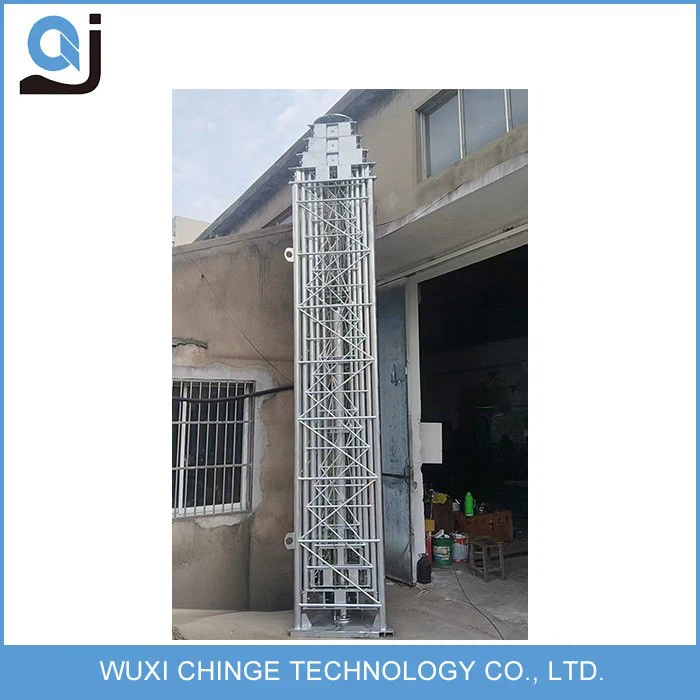
The antenna system of the portable cell tower also plays a crucial role in determining the frequency range support. Antennas are designed to be resonant at specific frequencies, and the type and configuration of the antennas can affect the tower's ability to transmit and receive signals within different frequency bands. For example, Telescoping Antenna Tower is a type of antenna tower that can be adjusted to different heights, which can optimize the signal coverage and frequency performance.
Applications of Portable Cell Towers Based on Frequency Range
The frequency range supported by a portable cell tower determines its applications in various scenarios. In disaster - affected areas, low - band frequencies are often used to provide basic communication services. Portable cell towers operating in the low - band can quickly establish a communication network, allowing emergency responders to coordinate their efforts and affected individuals to contact their loved ones.
For large events, mid - band frequencies are preferred. The high - speed data transfer capabilities of mid - band frequencies can support the large number of users who are likely to use their mobile devices simultaneously. Portable cell towers can be deployed around the event venue to ensure that attendees have access to reliable data connectivity for social media, live streaming, and other applications.
In the case of future - oriented applications such as smart cities and the Internet of Things (IoT), high - band frequencies, especially mmWave, will play an increasingly important role. Portable cell towers supporting mmWave frequencies can provide the high - speed and low - latency communication required for IoT devices and smart infrastructure.
Comparison with Other Types of Towers
When comparing portable cell towers with other types of towers, such as fixed - base cell towers and Military Telescopic Tower, there are some notable differences in frequency range support. Fixed - base cell towers are usually designed to cover a large and permanent area. They can support a wide range of frequencies and are often optimized for long - term, high - capacity operation.
Military telescopic towers, on the other hand, are designed for specific military applications. They may support a different set of frequency bands depending on the military's communication requirements. These towers are often built to be more rugged and reliable in harsh environments.
Portable cell towers offer the advantage of mobility and quick deployment. They can be easily transported to different locations and set up within a short period. While they may not have the same long - term capacity as fixed - base cell towers, they are more flexible and can be used in a variety of scenarios.
Conclusion and Call to Action
In conclusion, the frequency range supported by a portable cell tower is a critical factor in determining its performance and applications. Modern portable cell towers are designed to support a wide range of frequencies, from low - band to high - band, to meet the diverse needs of different users and scenarios.
If you are in need of a portable cell tower for your specific application, whether it's for disaster relief, large events, or remote area coverage, we are here to help. Our portable cell towers are designed with the latest technology to support a wide range of frequency bands and provide reliable communication solutions. We invite you to contact us to discuss your requirements and explore how our products can meet your needs. Let's work together to ensure seamless communication in any situation.