


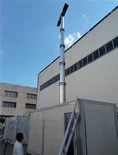

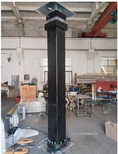
Antenna masts play a crucial role in supporting communication systems by elevating antennas to achieve stronger signals, wider coverage, and more stable performance. Whether used for mobile networks, broadcasting, emergency response, or outdoor surveillance, selecting the right mast type depends heavily on application requirements. This quick guide breaks down the most common antenna mast types and their key functions to help you make an informed decision.
1. Fixed Antenna Masts
Fixed antenna masts are permanently installed and designed for long-term operation.
Key Functions:
- Provide stable, high-elevation mounting for antennas
- Ideal for base stations, security networks, and radio towers
- Offer strong wind resistance and long service life
These structures are commonly used in telecom towers, building rooftops, and industrial monitoring systems.
2. Telescopic Antenna Masts
A telescopic mast extends and retracts easily, allowing adjustable height depending on the environment.
Key Functions:
- Rapid deployment for temporary communication networks
- Perfect for emergency response, events, and mobile command units
- Adjustable height improves line-of-sight and reduces interference
These masts are widely used in military communication, outdoor broadcasting, and surveying.
3. Portable Antenna Masts
Lightweight and easy to relocate, portable masts are designed for mobility.
Key Functions:
- Quick setup for field operations or remote locations
- Suitable for camping communication, disaster relief, and temporary setups
- Works with lightweight antennas such as omni or small panel antennas
- A portable mast is a must-have for teams needing reliable signal support on the move.
4. Guyed Antenna Masts
These masts use tensioned guy wires for added stability.
Key Functions:
- Provide high structural strength for tall or heavy antenna loads
- Lower material cost compared to self-supporting towers
- Ideal for rural, open-area installations
- Guyed masts are commonly used for broadcasting, meteorology, and large-area coverage systems.
5. Roof-Mounted Antenna Masts
Designed for installation on buildings.
Key Functions:
- Enhance signal reception in urban environments
- Maximize height using existing structures
- Ideal for Wi-Fi networks, surveillance systems, and small cell deployment
- Roof masts are perfect for cities where ground space is limited.
6. Vehicle-Mounted Antenna Masts
Installed on emergency vehicles, broadcast trucks, and mobile units.
Key Functions:
- Provide on-the-go communication capabilities
- Allow rapid height adjustment via telescopic mechanisms
- Great for public safety teams, live events, and field analysis
- These masts support antennas for LTE, 5G, radio, and surveillance cameras.
Understanding the various antenna mast types helps you select the appropriate structure for your communication needs. Whether you need a permanent solution, a rapid deployment system, or a mobile mast, each type offers unique benefits in coverage, stability, and efficiency.
If you're looking for reliable antenna mast solutions tailored to your project, contact Wuxi Qinge Technology Co., Ltd.