


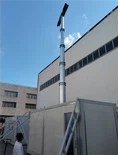

A cell tower can send signals to phones up to 20 miles away in rural areas. In densely populated cities with many physical obstructions like buildings, the range might be reduced to a mile or two. Cell towers can handle thousands of calls or internet connections at the same time.
When looking at how far cell towers reach, the range, technically referred to as the cell radius, can be significantly impacted by several factors. High frequency signals, such as those typically used in 5G networks, tend to have shorter ranges but higher capacities, while lower frequencies, often used in rural areas for 4G LTE, can travel further but carry less data. The height and type of the antenna also play an integral role in determining the coverage. Higher antennas can overcome obstructions and cover a larger area. Antenna types such as sector antennas can be used to provide targeted coverage in specific directions, while panel antennas offer broad coverage. Beamforming, a technique used in advanced MIMO setups, can also be employed to focus the signal toward specific users to extend the range and improve signal quality.
To cover thousands of simultaneous requests, modern cell towers employ sophisticated technologies to maximize the number of concurrent calls or data sessions. MIMO allows for the simultaneous transmission and reception of multiple data streams, effectively multiplying the capacity without requiring additional bandwidth. Advanced spectral efficiency techniques, such as quadrature amplitude modulation (QAM), are also employed to transmit more bits per Hz of bandwidth. The specific technology used changes capacity. mmWave technology offers room for higher bandwidths which in turn can increase capacity significantly. Additionally, the range of frequencies allocated for cell use in a specific area, also known as the amount of available spectrum, can affect capacity.