


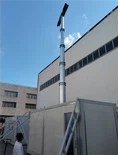

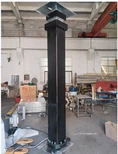
One of the core advantages of Cell on Wheels is its rapid deployment. Compared to the construction cycle of traditional fixed base stations, which typically takes weeks or even months, COW can complete the entire process from arrival at the site to official activation in a very short time.
1. On-site Deployment Available
Cell on Wheels typically integrates base station equipment, antenna systems, power supplies, and transmission modules. Once the vehicle arrives at the target area, no civil engineering work is required; only vehicle positioning, support deployment, and antenna raising are needed to begin deployment.
2. Deployment Time Typically Measured in Hours
Under ideal conditions (with available power or self-generated power, and a smooth transmission link), Cell on Wheels deployment can typically be completed within hours. Some highly integrated solutions can even achieve network activation within 1-2 hours for emergency communication or temporary capacity supplementation.
3. Flexible Transmission and Network Access
COW can access the core network via various methods such as fiber optics, microwave, or satellite, reducing reliance on on-site infrastructure. This flexible backhaul method significantly shortens the overall deployment time, making it particularly suitable for disaster-prone or remote areas.
4. Rapid Adaptation and Deployment
In addition to rapid deployment, Cell on Wheels also features rapid adaptation and deployment capabilities. When communication needs change or the mission ends, it can be dismantled and moved to the next location in a short time, greatly improving equipment utilization efficiency.
In practical applications, the deployment speed of Cell on Wheels is typically on the order of several hours, far faster than traditional fixed base stations. It is this rapid deployment capability that makes it an irreplaceable solution in scenarios such as emergency communications, major event support, and temporary network expansion.