




As a supplier of telescopic mobile towers, I often get asked about the frequency bands these towers can support. It's a crucial question, especially for folks in the communication industry who rely on these towers to keep things running smoothly. So, let's dig into it and see if there are any limitations on the frequency bands that a telescopic mobile tower can support.
First off, what exactly are frequency bands? In simple terms, frequency bands are specific ranges of electromagnetic frequencies used for different types of communication. For example, the low - frequency bands (LF) from 30 kHz to 300 kHz are used for things like navigation beacons. Medium - frequency bands (MF) from 300 kHz to 3 MHz are often used for AM radio. High - frequency bands (HF) from 3 MHz to 30 MHz are great for long - distance communication, and the ultra - high - frequency (UHF) and super - high - frequency (SHF) bands are used for mobile phones, Wi - Fi, and satellite communication.
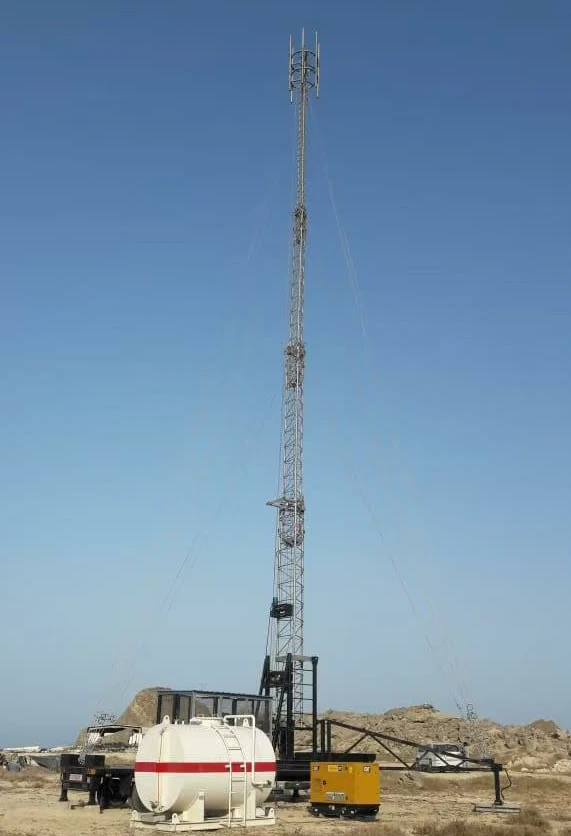

When it comes to telescopic mobile towers, they are designed to be flexible and adaptable. One of the key advantages of these towers is their ability to support a wide range of frequency bands. However, that doesn't mean there aren't any limitations.
One major limitation is the antenna that's installed on the tower. The antenna is like the "mouth" and "ears" of the communication system on the tower. Different antennas are designed to work best within specific frequency bands. For instance, a simple dipole antenna might work well in the HF band, but it won't be very effective in the SHF band. So, if you want your telescopic mobile tower to support a particular frequency band, you need to make sure you have the right antenna for it.
Another factor that can limit the frequency bands a telescopic mobile tower can support is the tower's construction materials. Some materials can absorb or reflect electromagnetic waves, which can interfere with the signal transmission. For example, if a tower is made of a metal that has high conductivity, it might cause signal losses in certain frequency bands. Manufacturers have to be careful about choosing the right materials to minimize these losses and ensure that the tower can support a wide range of frequencies.
Regulatory requirements also play a big role. Governments around the world have strict rules about which frequency bands can be used for different types of communication. For example, some frequency bands are reserved for military use, while others are for civilian communication. As a telescopic mobile tower supplier, we have to make sure that our towers comply with these regulations. If a customer wants to use a frequency band that's restricted in their area, we can't provide a tower that supports it legally.
Let's talk about some of the products we offer and how they relate to frequency bands. Our Amateur Radio Tower Crank Up is designed for amateur radio enthusiasts. These guys often operate in the HF and VHF (very high - frequency) bands. The tower is built with materials and an antenna system that can support these frequency ranges well. It's a great option for those who want to set up a reliable amateur radio communication system.
Our Military Telescopic Tower is a different story. Military communication often requires support for a wide range of frequency bands, including some that are highly secure and restricted. We work closely with military clients to ensure that the tower's design, antenna, and construction materials meet their specific frequency requirements. This tower has to be able to support communication in challenging environments, so we pay extra attention to factors like signal strength and interference resistance.
Then there's our 100ft Cell On Wheels (COW). This is a mobile tower that's often used to provide temporary mobile phone coverage. Mobile phones operate in the UHF and SHF bands. The tower is equipped with antennas that are optimized for these frequency bands to ensure strong and reliable signal coverage for mobile devices.
Despite these limitations, we're constantly working on improving our telescopic mobile towers. We invest in research and development to find new materials and antenna designs that can support even more frequency bands. We also keep a close eye on regulatory changes to make sure our products remain compliant.
If you're in the market for a telescopic mobile tower and have specific frequency band requirements, don't hesitate to reach out. We have a team of experts who can help you choose the right tower and antenna combination for your needs. Whether you're an amateur radio operator, a military organization, or a telecom company looking for temporary coverage, we've got a solution for you. Contact us today to start the procurement process and let's work together to get you the best telescopic mobile tower for your frequency band requirements.
References
- Communications Engineering textbooks
- Industry reports on wireless communication and tower technology
- Government regulations on frequency band usage