


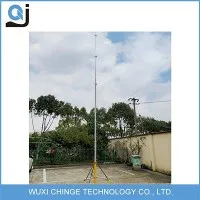

As a supplier of cell sites on wheels, I've witnessed firsthand the rapid evolution of communication technologies. One question that often arises in the industry is whether a cell site on wheels can be integrated with existing communication systems. In this blog post, I'll explore this issue in depth, discussing the technical aspects, benefits, challenges, and real - world applications.
Technical Compatibility
At the heart of the matter is technical compatibility. Modern cell sites on wheels are designed with flexibility in mind. They are equipped with a wide range of communication interfaces that can be configured to work with different types of existing communication systems. For example, most cell sites on wheels support multiple radio access technologies (RATs) such as GSM, CDMA, LTE, and 5G. This means that they can be easily integrated with existing base stations that use these technologies.
The key to successful integration lies in the standardization of communication protocols. Industry standards such as 3GPP (3rd Generation Partnership Project) ensure that different communication devices and systems can communicate with each other. Cell sites on wheels are built to comply with these standards, which allows them to interface seamlessly with existing network infrastructure. For instance, the backhaul connection of a cell site on wheels can be configured to use Ethernet, fiber - optic, or microwave links, depending on the availability and requirements of the existing system.


Benefits of Integration
Integrating a cell site on wheels with existing communication systems offers numerous benefits. Firstly, it provides a cost - effective solution for network expansion. Instead of building a permanent cell tower, which can be expensive and time - consuming, a cell site on wheels can be deployed quickly and at a lower cost. This is especially useful in areas where there is a temporary increase in demand, such as during large events or in disaster - affected areas.
Secondly, it enhances network resilience. In the event of a natural disaster or equipment failure, a cell site on wheels can be rapidly deployed to restore communication services. It can act as a backup system, ensuring that the network remains operational even under adverse conditions. For example, if a permanent cell tower is damaged by a hurricane, a cell site on wheels can be quickly dispatched to the area to provide temporary coverage.
Another benefit is the ability to test new technologies. Cell sites on wheels can be used as testbeds for emerging communication technologies. By integrating them with existing systems, operators can evaluate the performance of new technologies in a real - world environment without disrupting the existing network.
Challenges in Integration
Despite the many benefits, there are also challenges associated with integrating a cell site on wheels with existing communication systems. One of the main challenges is the issue of frequency coordination. Different communication systems operate on different frequency bands, and ensuring that the cell site on wheels does not cause interference with the existing network is crucial. This requires careful planning and coordination with the relevant regulatory authorities.
Another challenge is the power supply. Cell sites on wheels need a reliable power source to operate. In some cases, it may be difficult to connect the cell site on wheels to the existing power grid, especially in remote areas. This may require the use of alternative power sources such as generators or solar panels, which can add to the complexity and cost of the integration.
Interoperability is also a concern. Although most cell sites on wheels are designed to comply with industry standards, there may still be compatibility issues between different vendors' equipment. This can lead to problems such as signal degradation or communication failures.
Real - World Applications
Cell sites on wheels have been successfully integrated with existing communication systems in many real - world scenarios. For example, during large sporting events, such as the Olympics or the World Cup, cell sites on wheels are deployed to handle the increased demand for communication services. These mobile cell sites are integrated with the existing network infrastructure to provide seamless coverage for the event attendees.
In disaster - affected areas, cell sites on wheels play a crucial role in restoring communication services. After an earthquake or a flood, the existing communication infrastructure may be severely damaged. Cell sites on wheels can be quickly deployed to provide temporary coverage, allowing emergency responders to communicate and coordinate their efforts.
In rural areas, where the deployment of permanent cell towers may not be economically viable, cell sites on wheels can be used to provide intermittent coverage. They can be moved from one location to another as needed, ensuring that people in these areas have access to communication services.
Product Offerings
As a supplier, we offer a variety of cell sites on wheels to meet different customer needs. Our China Cell On Wheels Telecom Tower Telescoping 20m 600kg Payload is a highly versatile solution. It features a telescoping tower that can reach up to 20 meters, with a payload capacity of 600 kg. This allows for the installation of a wide range of communication equipment.
Our Open Trailer Towers Cell On Wheels are designed for easy deployment and transportation. They are built on an open - trailer platform, which provides flexibility in terms of equipment installation and maintenance.
The Telecom Tower On Trailer is another popular option. It combines the stability of a trailer - mounted tower with the mobility of a cell site on wheels, making it suitable for a variety of applications.
Conclusion and Call to Action
In conclusion, a cell site on wheels can be effectively integrated with existing communication systems. While there are challenges to overcome, the benefits of integration, such as cost - effectiveness, network resilience, and the ability to test new technologies, make it a viable option for many communication operators.
If you're interested in learning more about our cell sites on wheels or discussing how they can be integrated with your existing communication systems, we encourage you to reach out to us for a detailed consultation. Our team of experts is ready to assist you in finding the best solution for your specific needs.
References
- 3GPP Technical Specifications.
- Industry reports on mobile communication network expansion and resilience.