




If you've ever been stuck in a dead zone during a camping trip, a small event, or a sudden network outage, you know how frustrating it is to have no signal when you need it most. That's where portable cell towers come in-they're the quick fix for when standard network infrastructure can't keep up. But as someone who runs a portable cell tower supply business, I get asked one question more than any other: Can a portable cell tower be used for multiple carriers?
Let's cut to the chase: Yes, it absolutely can. But it's not as simple as just plugging it in and making calls. There's a lot of tech behind how these portable setups work, and why they're a game-changer for carriers, event organizers, and even disaster response teams. I've seen first-hand how businesses save time and money by using one portable tower instead of multiple ones for different networks, so let's break this down.
First, let's talk about what a portable cell tower actually is. You might have seen them at music festivals, hurricane zones, or construction sites-those tall, mobile units that pop up out of nowhere to boost signal. Our lineup here at the shop includes everything from lightweight units to more heavy-duty setups, like the Portable Signal Tower that's perfect for temporary events. What makes these different from a regular cell tower is their mobility-they can be transported anywhere in hours (even minutes, in some cases) and don't need permanent ground installation. That flexibility is why they're so popular, and it's also why multiple carriers can work on the same one.
Now, the main reason multiple carriers can share a portable cell tower is called "shared infrastructure" or "neutral host" technology. Think of it like renting a coworking space for your office-instead of each carrier building their own desk, they all use the same space and split the costs. Carriers have long used this for permanent towers in areas where building separate ones is too expensive, but portable towers are taking this a step further. Unlike permanent towers, portable ones can be moved to where the demand is, so when a 3-day festival has 50,000 people and three major carriers, one portable tower can handle all of them instead of three separate ones.
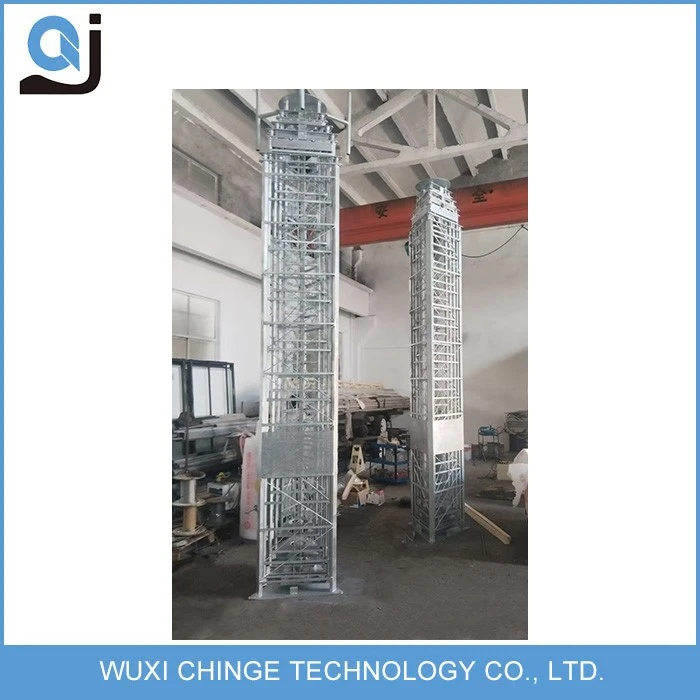
But it's not just about the physical tower. The actual equipment on top matters too. Most portable signal towers come with Telescopic Antenna Tower setups-these extend up to 30 or 40 feet to get above obstacles like trees or crowds, and their design makes it easy to swap out antenna units for different frequency bands. Every carrier uses different frequency bands (you've probably seen this in your phone settings under "LTE" or "5G" bands), so a portable tower needs antennas that can support multiple bands at once. That's why our team specifically designs our units with dual-band or tri-band capability-so one antenna can work for Verizon, AT&T, T-Mobile, and even smaller regional carriers.
Wait, but what about smaller, more portable units? Like the Light Weight Harm Radio Tower we sell for remote camping or small outdoor gatherings? Can those handle multiple carriers too? The short answer is yes, but with a few limits. These lightweight units aren't as powerful as the larger event-grade ones, so they work best for low-density areas. For example, if a group of campers uses a light weight harm radio tower, it can support all their phones-regardless of carrier-without any issues. The key here is that modern portable towers use "software-defined radios" (SDRs), which let you adjust the frequency bands through software instead of having to swap out hardware every time. That's a huge win for flexibility-we can set up a portable tower for three carriers in an hour, no extra parts needed.
I should also mention "Cell On Wheels" (COWs), which are a specific type of portable cell tower mounted on a truck or trailer. The China Cell On Wheels is one of our top sellers for disaster response teams. In situations like a wildfire or a hurricane, when multiple carriers' towers go down, COWs are deployed fast. The big COW units have the power and space for multiple carrier equipment racks, so each carrier can install their own gear on the same trailer. They share the tower and the power source, but keep their network traffic separate and secure. That's crucial-carriers care about their data not mixing with others, so modern portable towers are built with isolation technology to make sure that happens.
Let me share a real example to make this concrete. Last summer, we supplied a Portable Signal Tower to a major country music festival in Tennessee. The festival normally uses three separate towers for three carriers, but this year, we talked them into using one of our shared portable towers. They saved over $15,000 in setup and rental fees, and the festival attendees reported zero major signal outages all weekend. Our tech team spent 90 minutes setting up the Telescopic Antenna Tower, calibrated the SDRs to support all three carriers' bands, and the tower ran smoothly for 4 days straight. The festival organizers even asked if we could do the same for their fall festival-success story, right?
Now, I know some of you might be thinking: What about security? Can one carrier's network be hacked through a shared portable tower? The answer is no-neutral host portable towers use separate virtual networks for each carrier, just like how your work laptop and personal laptop can be on the same Wi-Fi without sharing files. The gear on the tower is isolated, so each carrier's data stays private. That's a big reason why carriers are now more open to sharing portable infrastructure-security risks are minimal these days, thanks to modern tech.
Another common question: Is there any downside to using a portable tower for multiple carriers? The only real limit is capacity. If a portable tower is underpowered and too many carriers are using it at once, everyone's signal might slow down a little. But that's why we size our portable towers based on the number of people and carriers-for a small event with 10,000 people, one medium-sized tower works. For a city-wide disaster zone, we send multiple heavy-duty units, each supporting two or three carriers. The key is matching the tower's power to the demand, which our team helps every customer figure out before they buy.
Let's also talk about 5G, since that's on everyone's mind right now. Can portable towers support 5G for multiple carriers? Absolutely. Our Telescoping Antenna Tower units are 5G-ready, with mmWave and sub-6GHz capabilities that work with all major U.S. carriers' 5G bands. For example, a recent college football game in Texas used two of our shared portable towers to support 5G for four carriers, and the players and attendees had no issues streaming or making high-speed video calls. 5G is perfect for portable towers because it uses small cells, which are easier to mount on telescopic antennas and adjust for different bands.
So why isn't every portable tower set up for multiple carriers? It comes down to planning. Some event organizers or disaster teams still stick to the old way of using separate towers for each carrier, because they don't know about shared infrastructure. That's where we come in-our team not only sells the portable towers, but also helps our customers design the right setup for their needs, whether that's a small Light Weight Harm Radio Tower for a backcountry trip or a large China Cell On Wheels for a major emergency.
If you're someone who's in the market for a portable cell tower-whether you're planning an event, managing a construction site, or working in disaster response-let me be clear: using a shared tower for multiple carriers is not only possible, it's the most cost-effective and efficient way to go. You don't have to deal with multiple vendors, multiple delivery schedules, or multiple setup teams. One portable tower from us, properly calibrated, will handle all the carriers you need.
At the end of the day, the whole point of portable cell towers is to solve a problem fast. When there's a crowd, a natural disaster, or a remote location, you need signal now. Using one tower for multiple carriers cuts down on time, saves money, and makes sure more people stay connected. That's why we've focused our entire business on building portable towers that are flexible, powerful, and ready to work with any carrier.

If you're ready to find the right portable cell tower for your needs, or have more questions about how shared infrastructure works, feel free to reach out. We're here to help you get connected, no matter where you are.