




Hey there, fellow astronomy enthusiasts and radio gear buffs! I'm in the business of supplying push up antenna masts, and I've been getting a lot of questions lately about whether these masts can be used for radio astronomy. So, I thought I'd dive deep into this topic and share my thoughts.
First off, let's talk about what radio astronomy is. It's all about studying celestial objects by detecting the radio waves they emit. Unlike optical astronomy, which relies on visible light, radio astronomy can peer through dust clouds and other obstacles that block visible light. This allows us to observe things like pulsars, quasars, and even the cosmic microwave background radiation left over from the Big Bang.
Now, when it comes to radio astronomy, having a good antenna setup is crucial. The antenna needs to be positioned at an optimal height to get the best signal reception. That's where push up antenna masts come in. These masts are designed to be easily extended and retracted, making them super convenient for setting up and taking down your antenna.
One of the main advantages of using a push up antenna mast for radio astronomy is its portability. If you're into mobile radio astronomy, where you like to set up your equipment in different locations, a push up mast can be a game - changer. You can quickly set it up at a dark - sky site away from city lights, where radio interference is minimal. And when you're done, you can pack it up and take it with you.
Let's take a look at some of the products we offer. Our Push Up Pole Mast is a great option. It's lightweight yet sturdy, and it can be extended to a decent height. This means you can get your antenna up in the air where it can pick up those faint radio signals from space.
Another option is our Light Tower Mast. While it's often used for lighting purposes, it can also be adapted for radio astronomy. It has a robust structure that can support larger antennas, which might be necessary if you're looking to detect more distant or weaker radio sources.
We also have Aluminium Telescopic Masts - Various Lengths. Aluminium is a great material for antenna masts because it's corrosion - resistant and has good electrical conductivity. With different lengths available, you can choose the one that suits your specific needs, whether you're working in a small backyard or a large open field.
But, of course, there are some things to consider before using a push up antenna mast for radio astronomy. One of the biggest challenges is radio interference. Even if you're in a remote location, there can still be sources of interference, such as nearby power lines or other electronic devices. You'll need to make sure your mast is properly grounded to reduce the impact of this interference.
The height of the mast is also important. In radio astronomy, the higher the antenna, the better the signal reception in many cases. However, you need to balance this with the stability of the mast. A very tall mast might be more prone to swaying in the wind, which can affect the performance of your antenna.
Another factor is the type of antenna you're using. Different antennas have different requirements in terms of height, orientation, and support. Some antennas might need a more rigid and precise mounting system than a push up mast can provide. You'll need to do some research to make sure your chosen antenna and mast combination work well together.
When it comes to the technical aspects, the frequency range of the radio waves you're trying to detect is crucial. Different frequencies have different propagation characteristics, and the height and design of the mast can affect how well the antenna picks up these frequencies. For example, lower frequencies might require a taller mast to achieve good signal strength.
In terms of installation, setting up a push up antenna mast for radio astronomy is relatively straightforward. Most of our masts come with clear instructions, and you don't need any special tools or skills. However, it's always a good idea to have someone help you, especially when extending the mast to its full height.
Once your mast is set up, you'll need to align your antenna correctly. This might involve using a compass or other alignment tools to point the antenna in the right direction. You'll also need to adjust the height of the mast to optimize the signal reception.
Now, let's talk about maintenance. Push up antenna masts are generally low - maintenance. You just need to make sure they're kept clean and dry to prevent corrosion. Check the joints regularly to make sure they're tight and secure. If you notice any signs of wear and tear, it's a good idea to replace the parts as soon as possible to ensure the safety and performance of your mast.
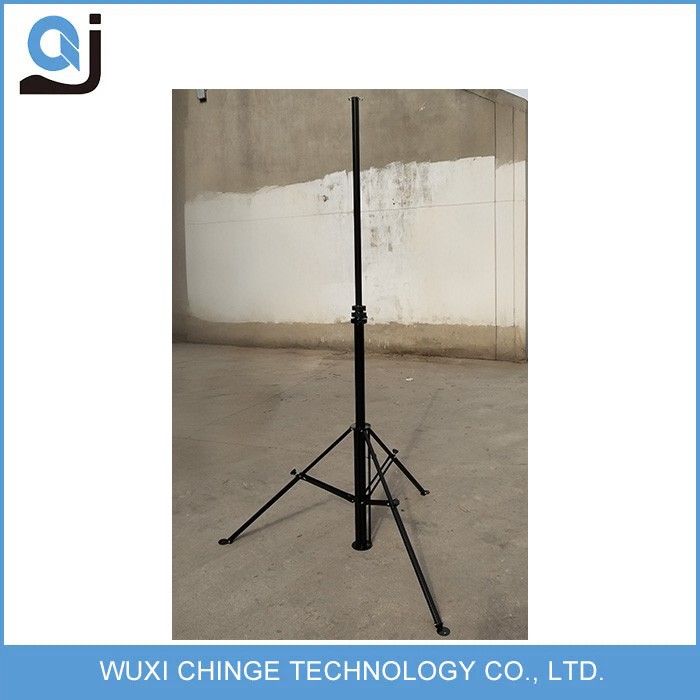

In conclusion, a push up antenna mast can definitely be used for radio astronomy, but it has its pros and cons. It offers portability and ease of use, which are great for mobile setups. However, you need to be aware of the challenges, such as radio interference and the compatibility with your antenna.
If you're interested in using our push up antenna masts for your radio astronomy projects, I encourage you to reach out. We're here to help you choose the right product for your needs and answer any questions you might have. Whether you're a beginner or an experienced radio astronomer, we've got the products and the expertise to support you.
References
- Thompson, A. R., Moran, J. M., & Swenson, G. W. (2017). Interferometry and Synthesis in Radio Astronomy. Springer.
- Rohlfs, K., & Wilson, T. L. (2004). Tools of Radio Astronomy. Springer.