


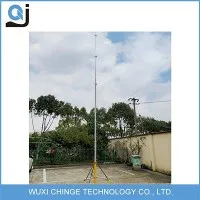


Can a telescopic aerial mast be used in desert environments? That's a question I've been getting a lot lately, and as a supplier of telescopic aerial masts, I'm more than happy to dive into this topic.
First off, let's talk about what a telescopic aerial mast is. It's a type of mast that can be extended or retracted, which is super handy for a bunch of different applications. We've got different kinds, like the Crank Up Mast, the Electric Telescopic Mast, and the Aluminum Telescopic Pole. Each has its own unique features and benefits, but the main idea is that they're flexible and can be adjusted to fit your specific needs.
Now, let's get to the heart of the matter: can these masts be used in the desert? The answer is a big fat yes, but there are a few things you need to keep in mind.
The Challenges of Desert Environments
Deserts are no joke. They're hot, dry, and full of sand and dust. These conditions can really take a toll on equipment, and telescopic aerial masts are no exception.
Extreme Temperatures
One of the biggest challenges is the extreme temperatures. During the day, it can get scorching hot, sometimes reaching over 100°F (38°C). At night, it can drop down to freezing or even below. These rapid temperature changes can cause materials to expand and contract, which can lead to structural damage over time.
But don't worry, we've got solutions. Our masts are made from high - quality materials that can withstand a wide range of temperatures. For example, the aluminum used in our Aluminum Telescopic Pole has good thermal stability. It doesn't expand or contract too much with temperature changes, so it can hold up well in the desert heat and cold.
Sand and Dust
Sand and dust are everywhere in the desert. They can get into the moving parts of the mast, causing wear and tear. If the sand gets into the gears of a Crank Up Mast, it can make it harder to turn the crank, and over time, it can even damage the gears.
To combat this, we design our masts with sealed components. The moving parts are protected by special seals that keep sand and dust out. We also use lubricants that are resistant to sand and dust, so the mast can keep working smoothly even in the harshest desert conditions.


Wind
Deserts are known for their strong winds. High - speed winds can put a lot of stress on the mast, especially when it's fully extended. If the mast isn't properly designed and installed, it could tip over.
Our masts are engineered to be wind - resistant. We use advanced design techniques to calculate the wind loads and make sure the mast can handle them. For example, the base of the mast is designed to be heavy and stable, and we can also provide additional guy wires for extra support.
How Our Telescopic Aerial Masts Excel in the Desert
Despite the challenges, our telescopic aerial masts have some features that make them a great choice for desert environments.
Portability
In the desert, you might need to move your equipment around a lot. Our telescopic masts are lightweight and easy to transport. You can easily load them onto a truck and move them to different locations. The Crank Up Mast is especially portable because it doesn't require electricity to operate. You can set it up in no time, even in remote desert areas.
Ease of Installation
Setting up equipment in the desert can be a hassle, but our masts are designed to be easy to install. You don't need a team of experts to get them up and running. The telescopic design allows you to quickly adjust the height of the mast without any complicated tools. And with the simple instructions that come with each mast, you'll have it installed in no time.
Durability
As I mentioned earlier, our masts are made from high - quality materials. Aluminum is a popular choice for our Aluminum Telescopic Pole because it's lightweight, strong, and resistant to corrosion. Even in the dry and dusty desert environment, the aluminum won't rust or corrode easily. This means your mast will last for a long time, saving you money in the long run.
Applications in the Desert
There are many applications for telescopic aerial masts in the desert.
Communication
In the desert, communication can be a challenge. Cell phone signals are often weak or non - existent. Our masts can be used to install communication antennas, such as radio antennas or satellite dishes. By raising the antenna to a higher position, you can improve the signal strength and range, allowing for better communication in remote desert areas.
Surveillance
Deserts are often used for military and security purposes. Our masts can be used to mount surveillance cameras, allowing you to monitor a large area. The telescopic feature is especially useful because you can adjust the height of the camera to get the best view.
Scientific Research
Scientists often conduct research in the desert. Our masts can be used to install various scientific instruments, such as weather stations or environmental sensors. By placing these instruments at a higher altitude, you can get more accurate data about the desert environment.
Why Choose Us
As a supplier of telescopic aerial masts, we've got a lot of experience and expertise. We've been in the business for a while, and we know what it takes to make a mast that can handle the toughest conditions.
We offer a wide range of products to suit different needs and budgets. Whether you need a simple Crank Up Mast for a small - scale project or a high - tech Electric Telescopic Mast for a large - scale operation, we've got you covered.
Our customer service is top - notch. We're always here to answer your questions and help you choose the right mast for your application. We also offer after - sales support, so if you have any problems with your mast, we'll be there to help you fix it.
If you're thinking about using a telescopic aerial mast in a desert environment, we'd love to talk to you. We can provide you with more information about our products and help you find the perfect solution for your needs. Whether you're in the communication, surveillance, or scientific research field, our masts can make a big difference. So don't hesitate to reach out and start a conversation about your procurement needs.
References
- Engineering Principles for Desert Equipment Design. A collection of industry best - practices on designing equipment for desert conditions.
- Aluminum in Extreme Environments. Research on the performance of aluminum materials in harsh climates.
- Wind Load Calculations for Aerial Structures. Technical guide on calculating wind loads for masts and poles.