




Hey there! If you're into antennas or working on any project that requires boosted antenna height, then you've probably heard of an antenna push up pole. I'm in the business of supplying these handy gadgets, and today, I'm gonna walk you through how they work.
What's an Antenna Push Up Pole Anyway?
First things first, let's get clear on what an antenna push up pole is. It's a device designed to lift antennas to a higher position. Why do we need to do that? Well, the higher an antenna is, the better its signal reception and transmission can be. It helps to avoid obstacles like buildings and trees that can block or interfere with the signal.
The Basic Components
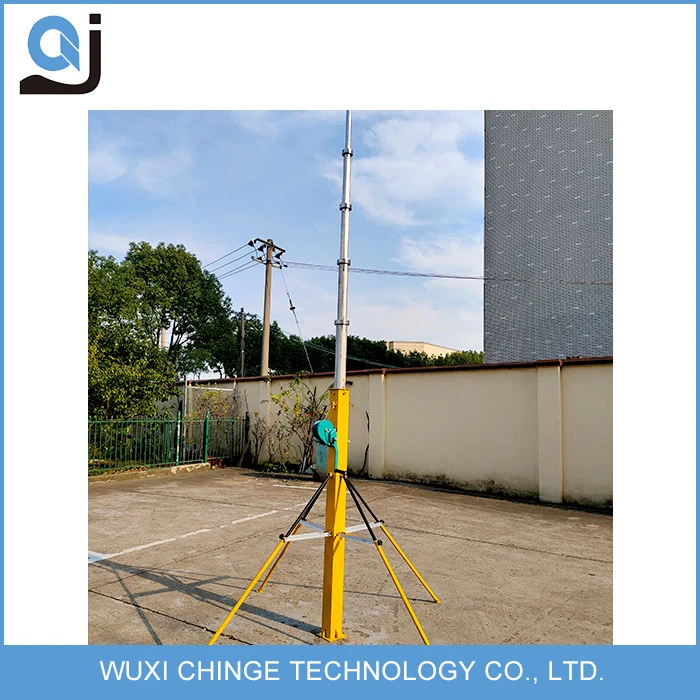
An antenna push up pole typically consists of a few key parts. There's the mast itself, which is the long, vertical structure that holds the antenna. The mast is usually made of lightweight but strong materials like aluminum. This makes it easy to handle and transport, while still being able to support the weight of the antenna.
Then there's the base. The base is what keeps the pole stable and upright. It can be a simple tripod or a more complex mounting system, depending on the type of pole and where it's going to be used. A good base is crucial because if the pole isn't stable, it could tip over and damage the antenna or even cause injury.
Another important part is the lifting mechanism. This is what allows you to raise and lower the mast. There are different types of lifting mechanisms, but we'll get into the details of those in a bit.
Types of Lifting Mechanisms
Manual Winch
One of the most common types of lifting mechanisms for antenna push up poles is the manual winch. It's a simple and reliable system. The winch is usually attached to the base of the pole, and it has a cable that's connected to the top of the mast. To raise the mast, you simply turn a crank on the winch, which winds the cable in and pulls the mast up. To lower it, you unwind the cable. It's a pretty straightforward process, but it does require some physical effort, especially if you're working with a tall or heavy pole.
Hydraulic System
Some antenna push up poles use a hydraulic system for lifting. Hydraulic systems work by using fluid pressure to move a piston. In the case of an antenna pole, the piston is connected to the mast, and when the fluid pressure is increased, the piston moves and raises the mast. Hydraulic systems are great because they can provide a lot of power, which means they can lift heavy antennas and masts with ease. They also offer a smooth and controlled lifting motion. However, they can be more complex and expensive than manual winch systems.
Mechanical Telescoping
Now, let's talk about Mechanical Telescoping Mast. This type of lifting mechanism is really cool. The mast is made up of multiple sections that fit inside each other like a telescope. To raise the mast, you simply extend the sections one by one. This can be done manually or with the help of a winch or a motor. Mechanical telescoping masts are great because they're easy to set up and take down, and they can be adjusted to different heights. They're also relatively lightweight, which makes them portable.
How Does It All Work Together?
Let's say you've got a Portable Telescoping Antenna Mast that uses a manual winch system. First, you'll need to set up the base. Make sure the ground is level and stable, and then attach the base to the ground using stakes or weights. Once the base is secure, you can start assembling the mast.
If it's a telescoping mast, you'll extend the sections until it reaches the desired height. Then, you'll attach the antenna to the top of the mast. Now, it's time to use the winch. Attach the cable to the top of the mast and start turning the crank. As you turn the crank, the cable will wind in, and the mast will start to rise. Keep turning the crank until the mast is fully extended.
Once the mast is up, you can adjust the position of the antenna to get the best signal. You might need to tilt it up or down or turn it to face a different direction. And that's it! Your antenna is now up and running.
Benefits of Using an Antenna Push Up Pole
There are several benefits to using an antenna push up pole. One of the main benefits is improved signal strength. As I mentioned earlier, the higher the antenna is, the better its signal reception and transmission. This can be especially important in areas with a lot of interference or obstacles.

Another benefit is flexibility. You can easily adjust the height of the antenna using the push up pole. This means you can experiment with different heights to find the best position for your signal. And if you need to move the antenna to a different location, you can simply take down the pole and set it up again.
Antenna push up poles are also relatively easy to install and use. You don't need a lot of technical knowledge or special tools to set them up. And most of them are designed to be portable, so you can take them with you wherever you go.
Our Products
We offer a wide range of antenna push up poles to suit different needs and budgets. One of our popular products is the 30ft Telescopic Winch Up Mast. This mast is made of high-quality aluminum, which makes it lightweight and durable. It has a easy-to-use winch system that allows you to raise and lower the mast quickly and easily. And it can be extended up to 30 feet, which is great for getting a high signal.
Let's Talk
If you're in the market for an antenna push up pole, we'd love to hear from you. Whether you're a professional installer or a DIY enthusiast, we've got the right product for you. Just drop us a line, and we can discuss your specific requirements and help you choose the best pole for your project. We're here to make your antenna installation as easy and successful as possible.
References
- Antenna Engineering Handbook, Fourth Edition, by Richard C. Johnson
- Practical Antenna Handbook, Fourth Edition, by Joseph J. Carr