




As a supplier of telescopic mobile towers, I've witnessed firsthand the pivotal role that telescopic functions play in a tower's ability to withstand strong winds. In this blog post, I'll delve into the scientific principles behind this relationship and explore how our telescopic mobile towers are engineered to offer superior wind resistance.
Understanding the Basics of Wind Resistance in Towers
Before we discuss the impact of the telescopic function, it's essential to understand the basic factors that influence a tower's wind resistance. Wind exerts both static and dynamic forces on a tower. Static forces are the constant pressures exerted by the wind on the tower's surface, while dynamic forces result from changes in wind speed and direction, such as gusts.
The shape, size, and material of a tower all contribute to its wind resistance. A streamlined shape can reduce drag, which is the force that opposes the motion of the tower through the air. The size of the tower affects the amount of surface area exposed to the wind, with larger towers generally experiencing greater wind forces. The material's strength and stiffness also play a crucial role in maintaining the tower's structural integrity under wind loads.
How the Telescopic Function Affects Wind Resistance
The telescopic function of a tower allows it to change its height. This ability has several significant implications for wind resistance.
Reducing the Exposed Surface Area
One of the primary advantages of a telescopic tower is its ability to reduce the exposed surface area to the wind. When strong winds are forecasted, the tower can be retracted to a lower height. By reducing the height, the amount of surface area that the wind can act upon is decreased. According to fluid dynamics principles, the drag force acting on an object is proportional to its cross - sectional area perpendicular to the wind direction. A shorter tower has a smaller cross - sectional area, which means less drag force is exerted on it. For example, a fully extended tower may have a height of 30 meters, but when retracted, it can be reduced to 10 meters. This significant reduction in height can lead to a substantial decrease in the wind load on the tower.
Adjusting to Wind Conditions
Telescopic towers can be adjusted in real - time to adapt to changing wind conditions. Wind speeds and directions can vary significantly over time, especially during storms. With a telescopic tower, operators can monitor the wind conditions and adjust the tower's height accordingly. If the wind speed suddenly increases, the tower can be quickly retracted to a safer height. This flexibility gives telescopic towers an edge over fixed - height towers, which are stuck with a constant height and are more vulnerable to high - wind events.
Improving Structural Stability
The telescopic design often incorporates a nested structure. This structure provides additional stability to the tower. When the tower is retracted, the nested sections support each other, creating a more rigid and stable structure. The internal bracing and locking mechanisms in telescopic towers also contribute to their stability. These features help distribute the wind forces more evenly throughout the tower, reducing the stress on individual components. For instance, the locking mechanisms ensure that the nested sections remain securely in place, preventing any unwanted movement that could compromise the tower's stability.

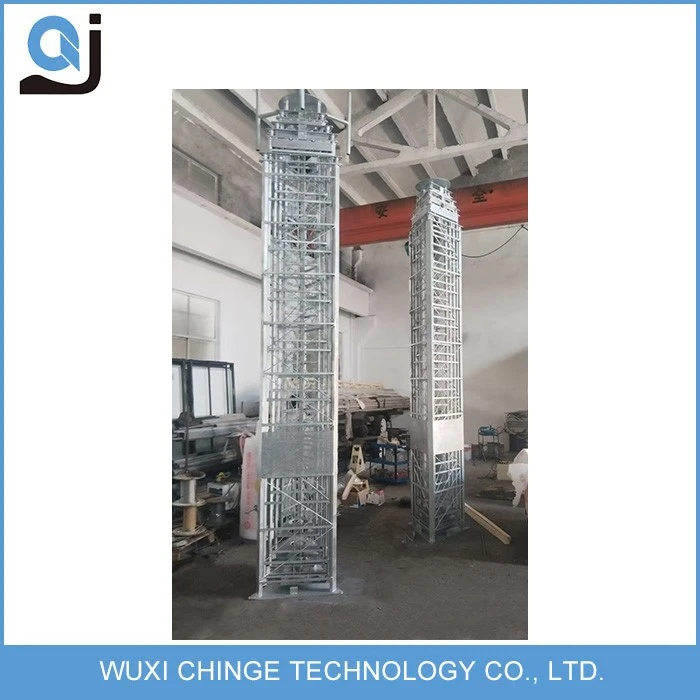
Our Telescopic Mobile Towers: Engineered for Wind Resistance
At our company, we take pride in our telescopic mobile towers, which are designed with wind resistance in mind.
Advanced Materials
We use high - strength, lightweight materials in the construction of our towers. These materials offer excellent strength - to - weight ratios, which is crucial for wind resistance. Lightweight materials reduce the overall weight of the tower, making it easier to retract and extend. At the same time, their high strength allows the tower to withstand significant wind loads. For example, our Light Weight Harm Radio Tower is constructed using advanced alloys that provide both strength and lightness.
Aerodynamic Design
Our towers feature an aerodynamic design that minimizes drag. The smooth surfaces and streamlined shapes of our towers reduce the wind forces acting on them. This design not only improves the tower's wind resistance but also enhances its overall performance. For instance, the rounded edges and tapered shapes of our Portable Cell Tower help the wind flow smoothly around the tower, reducing turbulence and drag.
Precise Engineering
We employ precise engineering techniques to ensure the stability and reliability of our telescopic towers. The nested sections are carefully designed to fit together perfectly, providing maximum support and stability. The locking mechanisms are engineered to be strong and reliable, ensuring that the tower remains secure at all times. Our Military Telescopic Tower is a prime example of our precise engineering, with its robust construction and high - quality locking systems.
Case Studies: Real - World Performance
To illustrate the effectiveness of our telescopic mobile towers in windy conditions, let's look at some real - world case studies.
In a coastal area prone to hurricanes, a telecommunications company installed one of our telescopic mobile towers. During a recent hurricane, the tower was retracted to a lower height as soon as the high - wind warnings were issued. Despite the strong winds and heavy rain, the tower remained stable and continued to provide communication services. In contrast, nearby fixed - height towers suffered significant damage, with some even being toppled over by the wind.
Another case involved a military operation in a desert region where sudden sandstorms with high - wind gusts were common. Our military telescopic tower was quickly adjusted to a lower height when the sandstorms approached. The tower's stability allowed the military to maintain their communication and surveillance equipment, ensuring the success of the operation.
Conclusion and Call to Action
In conclusion, the telescopic function has a profound impact on a tower's resistance to strong winds. By reducing the exposed surface area, adjusting to wind conditions, and improving structural stability, telescopic towers offer a more reliable solution in windy environments.
Our telescopic mobile towers are the result of years of research and development, combining advanced materials, aerodynamic design, and precise engineering. Whether you need a Light Weight Harm Radio Tower, a Portable Cell Tower, or a Military Telescopic Tower, we have the perfect solution for your needs.
If you're interested in learning more about our telescopic mobile towers or would like to discuss a potential purchase, please don't hesitate to reach out. Our team of experts is ready to assist you in finding the right tower for your specific requirements.
References
- "Fluid Mechanics" by Frank M. White
- "Structural Engineering Handbook" by Arthur H. Nilson
- Industry reports on tower design and wind resistance from leading engineering associations.