


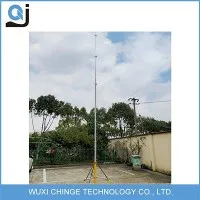


Hey there! I'm a supplier of mobile cells on wheels, and today I'm gonna share some cool ways to expand the functionality of these bad boys. Mobile cells on wheels, also known as Cell Site On Wheels (you can check out more info here: Cell Site On Wheels), are super handy for providing temporary or emergency cellular coverage. But they can do a whole lot more than just that!
Adding Advanced Antenna Systems
One of the first things you can do to expand the functionality of a mobile cell on wheels is to upgrade its antenna system. A better antenna can significantly improve the signal strength and coverage area. You can go for high - gain antennas that are designed to focus the signal in a specific direction. This is great if you're trying to cover a particular area, like a large outdoor event or a construction site.
For example, if you're setting up a mobile cell at a music festival, a directional antenna can be pointed towards the main stage and the seating areas. This ensures that festival - goers can stay connected and share their amazing experiences on social media. You can also consider using multiple antennas in a MIMO (Multiple - Input Multiple - Output) configuration. MIMO technology allows for better data transfer rates and improved signal quality by using multiple antennas to send and receive data simultaneously.
Another option is to use reconfigurable antennas. These antennas can change their characteristics, such as their radiation pattern or frequency band, depending on the specific needs of the situation. This means that your mobile cell on wheels can adapt to different environments and user demands.
Integrating IoT Capabilities
The Internet of Things (IoT) is all the rage these days, and integrating IoT capabilities into your mobile cell on wheels can open up a whole new world of possibilities. IoT devices are everywhere, from smart sensors in industrial settings to wearables in the healthcare industry.
By enabling your mobile cell to support IoT connectivity, you can provide a communication platform for these devices. For instance, in a smart city project, your mobile cell on wheels can be used to connect various sensors like traffic sensors, environmental sensors, and waste management sensors. This data can then be collected and analyzed to improve city services and efficiency.
In an agricultural setting, IoT - enabled mobile cells can connect sensors that monitor soil moisture, temperature, and nutrient levels. Farmers can use this data to make more informed decisions about irrigation, fertilization, and crop management. It's like having a high - tech farm assistant on wheels!
Enhancing Power Management
Power is crucial for the proper functioning of a mobile cell on wheels. To expand its functionality, you need to ensure that it has a reliable and efficient power supply. One way to do this is by using hybrid power systems. These systems combine different power sources, such as diesel generators, solar panels, and batteries.
During the day, solar panels can charge the batteries, reducing the reliance on the diesel generator. This not only saves on fuel costs but also makes the mobile cell more environmentally friendly. At night or in low - light conditions, the batteries can power the cell, and the diesel generator can kick in as a backup if needed.
You can also implement smart power management systems. These systems can monitor the power consumption of the mobile cell and adjust the power output accordingly. For example, if there are fewer users connected to the cell, the system can reduce the power consumption to save energy.
Offering Value - Added Services
In addition to basic cellular coverage, you can offer value - added services to make your mobile cell on wheels more attractive. One such service is Wi - Fi hotspot integration. Many people prefer to connect to Wi - Fi networks for faster and more stable internet access. By providing Wi - Fi hotspots on your mobile cell, you can meet this demand.
You can also offer content delivery services. For example, at a sports event, you can provide live stats, replays, and exclusive content to the fans through the mobile cell's network. This enhances the overall fan experience and makes your mobile cell a valuable asset for event organizers.
Another value - added service is security monitoring. You can install cameras and sensors on the mobile cell to monitor its surroundings. This is especially useful in areas where the cell is at risk of theft or vandalism. The security footage can be accessed remotely, allowing you to keep an eye on the cell at all times.
Upgrading Software and Firmware
Regularly upgrading the software and firmware of your mobile cell on wheels is essential for expanding its functionality. Software updates can bring new features, improved performance, and enhanced security.
For example, new software versions may support the latest cellular standards, such as 5G. By upgrading to 5G - capable software, your mobile cell can provide faster data speeds and lower latency, which is crucial for applications like virtual reality, augmented reality, and autonomous vehicles.
Firmware updates can also optimize the hardware performance of the mobile cell. They can fix bugs, improve power efficiency, and enhance the compatibility with different devices. Make sure to stay up - to - date with the latest software and firmware releases from your equipment manufacturers.
Customizing for Specific Industries
Different industries have different needs when it comes to mobile cell on wheels. By customizing your mobile cells for specific industries, you can expand their functionality and make them more useful.
In the healthcare industry, for example, you can customize the mobile cell to support telemedicine applications. This may involve ensuring high - quality video conferencing capabilities, secure data transmission, and compatibility with medical devices.
In the education sector, mobile cells can be customized to provide reliable internet access for schools in remote areas. You can set up content filtering systems to ensure a safe and appropriate online environment for students.
In the media and entertainment industry, mobile cells can be customized to support live streaming and high - definition video production. This requires high - speed data transfer and low latency to ensure a seamless viewing experience for the audience.
Partnering with Other Service Providers
Partnering with other service providers can also help expand the functionality of your mobile cell on wheels. For example, you can partner with cloud service providers. By integrating cloud services, your mobile cell can store and process large amounts of data more efficiently.
You can also partner with system integrators. These companies can help you integrate different technologies and services into your mobile cell, creating a more comprehensive solution. For instance, a system integrator can help you combine IoT capabilities, security monitoring, and power management into a single, cohesive system.
Another option is to partner with content providers. By offering exclusive content through your mobile cell's network, you can attract more users and increase the value of your service.
Conclusion
Expanding the functionality of a mobile cell on wheels is all about thinking outside the box and leveraging the latest technologies. Whether it's upgrading the antenna system, integrating IoT capabilities, enhancing power management, or offering value - added services, there are plenty of ways to make your mobile cell more versatile and useful.


If you're interested in learning more about how we can customize and expand the functionality of our mobile cells on wheels for your specific needs, don't hesitate to reach out. We're always happy to have a chat and see how we can help you get the most out of these amazing mobile communication solutions. Let's work together to take your connectivity to the next level!
References
- "Cellular Communication Systems: Principles and Design"
- "Internet of Things: A Comprehensive Overview"
- "Power Management in Mobile Devices"