


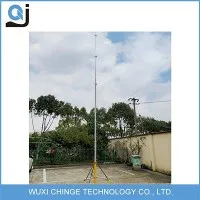

When it comes to the process of winching up, the diameter of the pole plays a crucial role in determining the overall efficiency, safety, and performance of the operation. As a leading supplier of winch up poles, I have witnessed firsthand the significant impact that pole diameter can have on various winching applications. In this blog post, I will delve into the effects of pole diameter on winching up, exploring how different diameters can influence factors such as load capacity, stability, and maneuverability.
Load Capacity
One of the most obvious effects of pole diameter on winching up is its impact on load capacity. Generally speaking, a larger diameter pole can support a greater amount of weight compared to a smaller diameter pole. This is because a larger diameter provides more surface area for the load to be distributed across, reducing the stress on any one point of the pole. As a result, winching up operations that involve heavy loads are often better suited for poles with larger diameters.
For example, in industrial settings where large equipment or materials need to be lifted, poles with diameters of 6 inches or more are commonly used. These poles can handle substantial loads without compromising their structural integrity, ensuring a safe and efficient winching process. On the other hand, for lighter loads such as small antennas or lighting fixtures, poles with smaller diameters of 2 to 4 inches may be sufficient. These smaller poles are more lightweight and easier to handle, making them ideal for applications where portability is a key consideration.
It's important to note that the load capacity of a pole is not solely determined by its diameter. Other factors such as the material of the pole, its length, and the type of winching equipment being used also play a role. However, in general, a larger diameter pole will have a higher load capacity than a smaller diameter pole of the same material and length.
Stability
Another important effect of pole diameter on winching up is its influence on stability. A larger diameter pole provides greater stability during the winching process, reducing the risk of the pole tipping over or swaying. This is especially important when winching up in windy conditions or on uneven terrain.
When a pole is winched up, it is subjected to various forces, including the weight of the load, the tension from the winch cable, and the wind resistance. A larger diameter pole has a lower center of gravity and a wider base, which helps to counteract these forces and keep the pole stable. In addition, a larger diameter pole is less likely to bend or flex under the weight of the load, further enhancing its stability.
For example, in outdoor events where portable lighting masts or antenna masts are used, poles with larger diameters are preferred to ensure stability in all weather conditions. These poles can withstand strong winds and provide a secure platform for the lighting or antenna equipment. Similarly, in construction sites where heavy equipment is being winched up, poles with larger diameters are used to prevent the pole from toppling over and causing damage to the surrounding area.


Maneuverability
While a larger diameter pole offers advantages in terms of load capacity and stability, it may also have some drawbacks when it comes to maneuverability. A larger diameter pole is generally heavier and more difficult to handle than a smaller diameter pole, which can make it more challenging to transport and set up.
In applications where portability is a key requirement, such as in military operations or emergency response situations, smaller diameter poles are often preferred. These poles are lighter and more compact, making them easier to transport and deploy quickly. They can also be more easily maneuvered in tight spaces or difficult terrain.
For example, Portable Telescopic Lighting Mast and Portable Telescopic Antenna Mast with smaller diameters are commonly used in military camps and disaster relief areas. These poles can be easily carried by a single person and set up in a matter of minutes, providing immediate lighting or communication capabilities.
On the other hand, in applications where load capacity and stability are the primary concerns, such as in industrial or construction settings, the benefits of a larger diameter pole often outweigh the challenges of maneuverability. In these cases, specialized equipment and techniques can be used to handle the larger poles safely and efficiently.
Cost
The diameter of the pole also has an impact on the cost of the winching up operation. Generally speaking, a larger diameter pole will be more expensive than a smaller diameter pole due to the increased amount of material used and the higher manufacturing costs.
In addition to the cost of the pole itself, there may also be additional costs associated with transporting and installing a larger diameter pole. These costs can include the cost of specialized equipment, such as cranes or forklifts, as well as the cost of labor.
When considering the cost of a winching up operation, it's important to weigh the benefits of a larger diameter pole against the additional costs. In some cases, the increased load capacity and stability provided by a larger diameter pole may justify the higher cost. In other cases, a smaller diameter pole may be a more cost-effective option, especially if the load requirements are relatively low.
Conclusion
In conclusion, the diameter of the pole has a significant impact on the winching up process. A larger diameter pole offers advantages in terms of load capacity and stability, but may be more difficult to maneuver and more expensive. A smaller diameter pole, on the other hand, is more lightweight and portable, but may have limitations in terms of load capacity and stability.
As a winch up pole supplier, I understand the importance of choosing the right pole diameter for each specific application. By considering factors such as load capacity, stability, maneuverability, and cost, we can help our customers select the most suitable pole for their needs. Whether you're looking for a Portable Telescopic Lighting Mast, a Portable Telescopic Antenna Mast, or an Electric Telescoping Mast, we have a wide range of options available to meet your requirements.
If you have any questions or would like to discuss your winching up needs further, please don't hesitate to contact us. Our team of experts is here to provide you with the information and support you need to make an informed decision. We look forward to working with you to find the perfect winch up pole for your application.
References
- "Engineering Mechanics: Statics and Dynamics" by J.L. Meriam and L.G. Kraige
- "Structural Analysis" by R.C. Hibbeler
- "Materials Science and Engineering: An Introduction" by W.D. Callister Jr. and D.G. Rethwisch