




Hey there! As a supplier of telescopic masts, I'm super excited to chat with you about the safety features of these awesome pieces of equipment. Telescopic masts are used in a wide range of applications, from surveillance and communication to lighting and photography. Ensuring their safety is not just important; it's crucial for both the users and the longevity of the masts themselves.
Structural Integrity
One of the most fundamental safety features of a telescopic mast is its structural integrity. We use high - quality materials like aluminum alloys and steel to build our masts. These materials are chosen for their strength - to - weight ratio. Aluminum is lightweight, which makes the mast easy to transport and set up, but it's also incredibly strong. Steel, on the other hand, provides even more durability, especially for larger and heavier - duty masts.
The design of the mast is also carefully engineered. Each section of the telescopic mast fits precisely into the next, creating a stable and secure structure when extended. Our engineers use advanced computer - aided design (CAD) software to ensure that the mast can withstand various environmental conditions and loads. For example, we test the masts in wind tunnels to simulate high - wind situations. This helps us determine the maximum wind speed at which the mast can operate safely.
Locking Mechanisms
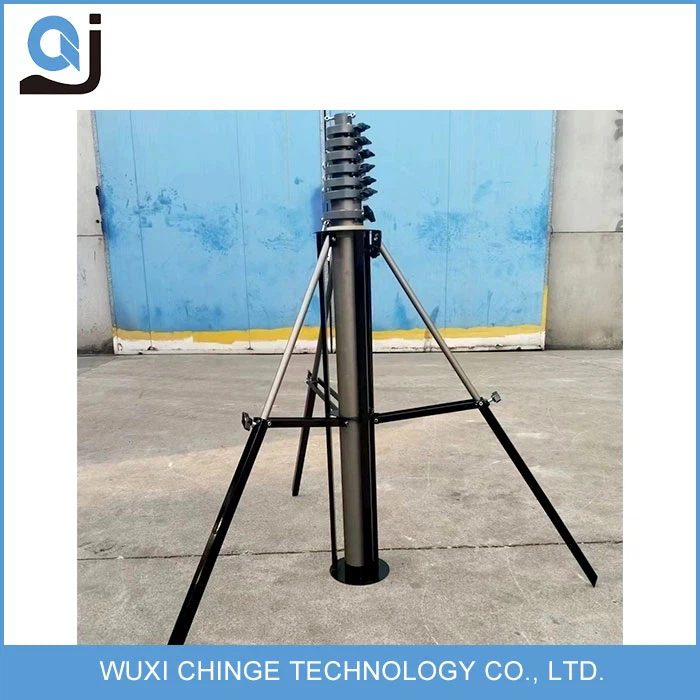
Another vital safety feature is the locking mechanism. When you extend a telescopic mast, you need to make sure that each section stays in place. Our masts are equipped with reliable locking systems. There are different types of locking mechanisms available. One common type is the pin - and - hole system. In this system, a pin is inserted through a hole in one section of the mast and into a corresponding hole in the adjacent section. This effectively locks the two sections together, preventing any accidental collapse.
We also offer masts with a ratchet - style locking mechanism. This type of mechanism allows for more precise adjustment of the mast height. The ratchet system engages as you extend the mast, and it can be easily released when you need to lower the mast. These locking mechanisms are designed to be easy to use, even in challenging conditions. Whether you're setting up a mast in the middle of a field or on a rooftop, you can quickly and securely lock the mast at the desired height.
Stability and Base Design
The base of a telescopic mast is just as important as the mast itself. A stable base ensures that the mast doesn't tip over during operation. Our masts come with a variety of base options to suit different applications. For portable applications, we offer lightweight and compact bases that can be easily transported. These bases often have adjustable legs, which allow you to level the mast on uneven ground.
For more permanent installations, we have heavy - duty bases that are bolted to the ground or a solid surface. These bases are designed to withstand high winds and heavy loads. Some of our bases also include counterweights to further enhance stability. For example, if you're using a mast for a large - scale lighting system, the additional weight from the counterweights helps keep the mast upright, even when the wind is blowing strongly.
Electrical Safety (for Electric and Motorized Masts)
If you're interested in Electric Telescoping Mast or Motorized Telescopic Mast, electrical safety is a top priority. Our electric and motorized masts are designed with multiple safety features to prevent electrical hazards. First of all, all electrical components are properly insulated to prevent electric shocks.
We also include overload protection in the motor control systems. This means that if the motor is overloaded, for example, if the mast gets stuck during extension or retraction, the system will automatically shut off to prevent damage to the motor and any potential fire hazards. Additionally, the wiring in our masts is designed to be durable and resistant to environmental factors such as moisture and UV radiation. This ensures that the electrical system remains safe and reliable over time.
Emergency Stop and Safety Sensors
In some of our more advanced telescopic masts, we incorporate emergency stop buttons and safety sensors. The emergency stop button is a simple yet effective safety feature. If something goes wrong during the operation of the mast, such as a sudden obstruction or an abnormal movement, the user can quickly press the emergency stop button to halt the mast's movement.
Safety sensors are also used to detect potential hazards. For example, some masts are equipped with proximity sensors. These sensors can detect if there are any objects or people too close to the mast during operation. If an object is detected, the mast will automatically stop moving to prevent collisions. This is especially important in crowded areas or when the mast is being used in a confined space.
Maintenance and Inspection
Proper maintenance and inspection are essential for the continued safety of telescopic masts. We provide detailed maintenance guides with each mast we sell. Regular maintenance includes checking the locking mechanisms, inspecting the base for any signs of damage, and testing the electrical components (if applicable).

We also recommend periodic inspections by a qualified technician. A professional inspection can identify any potential safety issues that may not be obvious to the user. By following our maintenance and inspection guidelines, you can ensure that your telescopic mast remains safe and reliable for years to come.
Conclusion
In conclusion, the safety features of our telescopic masts are designed to provide you with peace of mind. Whether you're using a Portable Telescoping Mast for a short - term project or a heavy - duty motorized mast for a long - term installation, we've got you covered. From structural integrity and locking mechanisms to electrical safety and emergency stop features, we've thought of everything to keep you and your equipment safe.
If you're interested in purchasing a telescopic mast or have any questions about our products, I encourage you to reach out to us. We're always happy to help you find the right mast for your needs and answer any safety - related questions you may have. Let's work together to ensure that your projects are successful and safe.
References
- Engineering Principles of Structural Design for Telescopic Masts, Journal of Industrial Engineering
- Electrical Safety Standards for Motorized Equipment, National Electrical Code Handbook