


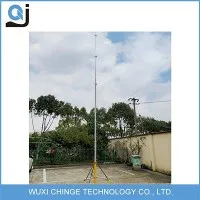
What is the Cold - Resistance of a Telescopic CCTV Mast?
As a supplier of telescopic CCTV masts, I've been frequently asked about the cold - resistance capabilities of these essential pieces of equipment. Telescopic CCTV masts are widely used in various industries, from security surveillance to environmental monitoring, and their performance in cold conditions can significantly impact their effectiveness and lifespan.
Understanding the Importance of Cold - Resistance
In regions with harsh winter climates, temperatures can drop well below freezing. For telescopic CCTV masts, this cold environment presents several challenges. First, extreme cold can affect the mechanical components of the mast. Metals become more brittle at low temperatures, increasing the risk of fractures and failures. The lubricants used in the moving parts of the mast may thicken or even solidify, impeding smooth operation.
Electrical components are also vulnerable. Batteries lose their charge more quickly in the cold, and electronic circuits may experience malfunctions due to thermal stress. Moreover, ice and snow accumulation on the mast can add extra weight, potentially causing structural damage or affecting the stability of the mast.
Factors Affecting Cold - Resistance
- Material Selection
- The choice of materials for the telescopic CCTV mast is crucial for its cold - resistance. High - quality steel alloys are commonly used due to their strength and durability. However, not all steels perform equally well in cold conditions. Some steels are specifically designed to maintain their toughness at low temperatures. For example, certain low - alloy steels have excellent impact resistance even in sub - zero environments.
- Aluminum is another popular material for telescopic masts. It is lightweight and corrosion - resistant. Aluminum alloys with good cold - resistance properties can withstand cold temperatures without significant loss of strength.
- Lubrication
- Lubricants play a vital role in ensuring the smooth operation of the telescopic mechanism. In cold weather, standard lubricants may thicken, making it difficult for the mast to extend and retract. Specialized cold - weather lubricants are designed to remain fluid at low temperatures. These lubricants have a lower viscosity at cold temperatures, allowing them to flow freely and provide adequate lubrication to the moving parts.
- Electrical System Design
- The electrical components of a telescopic CCTV mast, such as motors, sensors, and control systems, need to be designed to operate in cold conditions. Heated enclosures can be used to protect sensitive electronic components from the cold. These enclosures maintain a stable temperature around the electronics, preventing malfunctions due to cold - induced thermal stress. Additionally, batteries with a high cold - cranking amp (CCA) rating should be used to ensure reliable power supply in cold weather.
Testing Cold - Resistance
To ensure the cold - resistance of our telescopic CCTV masts, we conduct rigorous testing. Our masts are tested in climate chambers where the temperature can be precisely controlled. We simulate extreme cold conditions, similar to those found in the harshest winter environments.
During these tests, we monitor the performance of the mast's mechanical and electrical components. We check for any signs of mechanical failure, such as jamming or excessive wear. The electrical system is also closely monitored to ensure that all components are functioning correctly. We measure the power consumption, motor performance, and sensor accuracy at different cold temperatures.
Our Product Range and Cold - Resistance
We offer a wide range of telescopic CCTV masts, including Electric Telescopic Mast, Telescopic Lighting Mast, and Manual Telescoping Mast. Each of these masts is designed with cold - resistance in mind.
Our electric telescopic masts are equipped with high - quality motors and control systems that are tested to operate in cold conditions. The telescopic mechanism uses cold - resistant lubricants and high - strength materials to ensure reliable performance.
The telescopic lighting masts are designed to provide stable lighting even in cold weather. The lighting fixtures are protected from the cold, and the mast structure is strong enough to withstand the additional weight of ice and snow.
Our manual telescoping masts are also built to last in cold environments. The mechanical components are made from cold - resistant materials, and the hand - operated mechanism is easy to use even when wearing gloves in cold weather.


Conclusion and Call to Action
In conclusion, the cold - resistance of a telescopic CCTV mast is determined by a combination of factors, including material selection, lubrication, and electrical system design. Our telescopic CCTV masts are engineered to meet the challenges of cold weather, ensuring reliable performance in various applications.
If you are in need of a telescopic CCTV mast that can withstand cold temperatures, we invite you to contact us for a detailed discussion. Our team of experts can provide you with the best solutions based on your specific requirements. Whether you need a mast for a security project in a cold climate or an environmental monitoring application, we have the right product for you. Let's work together to ensure that your surveillance needs are met, even in the coldest of conditions.
References
- ASM Handbook Committee. (2005). ASM Handbook Volume 1: Properties and Selection: Irons, Steels, and High - Performance Alloys. ASM International.
- Shigley, J. E., Mischke, C. R., & Budynas, R. G. (2004). Mechanical Engineering Design. McGraw - Hill.
- Society of Automotive Engineers. (2010). SAE Handbook. SAE International.