


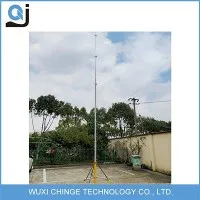


Hey there! As a supplier of portable towers, I often get asked about the differences between small and large portable towers. It's a great question, and today, I'm gonna break it down for you.
Let's start with the basics. What exactly is a portable tower? Well, it's a structure that can be easily moved from one place to another. These towers are used in a variety of industries, from telecommunications to event management. They're designed to provide a stable platform for antennas, cameras, and other equipment.
Size and Portability
The most obvious difference between small and large portable towers is, of course, their size. Small portable towers are typically more compact and lightweight. They're easy to transport and set up, making them ideal for quick deployments. You can throw them in the back of a truck and take them to a job site without much hassle.


On the other hand, large portable towers are, well, larger. They're usually heavier and require more equipment to transport and set up. But don't let that scare you! These towers offer a lot of benefits, especially when you need a taller structure or more stability.
Height and Reach
One of the main reasons you might choose a large portable tower is for its height. Large towers can reach much higher than small ones, which means they can provide better coverage for antennas and other equipment. This is especially important in industries like telecommunications, where you need to reach a wide area.
For example, our Self - Supporting Antenna Tower is a large portable tower that can reach impressive heights. It's designed to be self - supporting, which means you don't need to worry about guy wires or other external support structures. This makes it a great option for areas where space is limited or where you need to set up quickly.
Small portable towers, on the other hand, are better suited for applications where you don't need a lot of height. They're perfect for small - scale events, like local festivals or community gatherings. You can set them up in a matter of minutes and start using them right away.
Stability and Durability
Another important factor to consider is stability and durability. Large portable towers are generally more stable than small ones, especially in windy conditions. They're built with stronger materials and have a larger base, which helps them withstand the elements.
Our Mobile Tower Trailer is a great example of a large, stable portable tower. It's mounted on a trailer, which makes it easy to transport and set up. The trailer also provides a stable base for the tower, ensuring that it stays upright even in challenging conditions.
Small portable towers are still durable, but they may not be able to handle as much wind or other environmental factors. However, they're often more affordable and easier to maintain, which makes them a popular choice for many users.
Cost
Cost is always a factor when it comes to purchasing a portable tower. Small portable towers are generally less expensive than large ones. They require less material and labor to manufacture, which means they can be sold at a lower price.
If you're on a tight budget or only need a tower for occasional use, a small portable tower might be the way to go. You can get a decent quality tower for a relatively low cost, and you won't have to worry about spending too much money.
On the other hand, large portable towers are more expensive. They require more materials and labor to build, and they often come with additional features and accessories. However, if you need a tower for a long - term project or if you require a high - performance tower, the investment may be worth it.
Applications
The applications for small and large portable towers can vary widely. Small portable towers are often used for:
- Small - scale events: As I mentioned earlier, small towers are great for local festivals, community gatherings, and other small - scale events. They can be used to provide Wi - Fi coverage, set up security cameras, or support other equipment.
- Field research: Scientists and researchers often use small portable towers to collect data in the field. They can be easily transported to remote locations and set up quickly.
Large portable towers, on the other hand, are commonly used for:
- Telecommunications: Large towers are essential for providing cellular coverage in rural or remote areas. They can reach higher and cover a wider area, which is crucial for ensuring reliable communication.
- Broadcasting: TV and radio stations use large portable towers to transmit their signals. These towers need to be tall and stable to ensure a clear and strong signal.
- Military and emergency response: In times of crisis, large portable towers can be quickly deployed to provide communication and support. Our 100ft Cell On Wheels (COW) is a great example of a large portable tower that can be used in emergency situations.
Conclusion
So, what's the bottom line? The choice between a small and a large portable tower depends on your specific needs and requirements. If you need a tower for quick, small - scale applications and you're on a budget, a small portable tower might be the best option. But if you need a tall, stable tower for long - term projects or for providing wide - area coverage, a large portable tower is the way to go.
If you're interested in learning more about our portable towers or if you have any questions, don't hesitate to reach out. We're here to help you find the perfect tower for your needs. Whether you're a small business owner, a researcher, or part of a large organization, we have the expertise and the products to meet your requirements.
Let's start a conversation and see how we can work together to get you the right portable tower. Looking forward to hearing from you!
References
- Industry knowledge and experience in the portable tower supply business.
- Product specifications and features of our portable tower offerings.