



Hey there! As a supplier of manual telescoping masts, I often get asked about the electrical conductivity of these nifty pieces of equipment. So, I thought I'd take a deep dive into this topic and share what I've learned over the years.
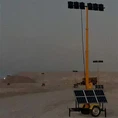
First off, let's talk about what a manual telescoping mast is. It's a type of mast that can be extended and retracted manually, usually using a crank or a similar mechanism. These masts are super handy in a bunch of different situations, like setting up temporary communication systems, mounting cameras for surveillance, or even for supporting antennas for radio or TV signals. You can check out our Manual Telescoping Mast on our website to get a better idea of what they look like and what they can do.
Now, onto the main question: what's the electrical conductivity of a manual telescoping mast? Well, it all boils down to the materials used to make the mast. Most manual telescoping masts are made from metals like aluminum or steel. These metals are known for their relatively good electrical conductivity, but there are some differences between them.
Aluminum is a popular choice for making telescoping masts because it's lightweight, corrosion-resistant, and has a decent electrical conductivity. The electrical conductivity of aluminum is about 37.7 x 10^6 S/m (siemens per meter) at room temperature. This means that aluminum can conduct electricity quite well, which is important if you're using the mast to support an antenna or other electrical equipment. The lightweight nature of aluminum also makes it easier to handle and transport the mast, especially if you need to set it up in different locations.
On the other hand, steel is another common material for telescoping masts. Steel is stronger and more durable than aluminum, but it's also heavier. The electrical conductivity of steel varies depending on its composition, but it's generally lower than that of aluminum. For example, mild steel has an electrical conductivity of about 6.9 x 10^6 S/m at room temperature. While this is still conductive enough for many applications, it might not be as efficient as aluminum when it comes to transmitting electrical signals.
So, why does the electrical conductivity of the mast matter? Well, if you're using the mast to support an antenna, the conductivity of the mast can affect the performance of the antenna. A mast with good electrical conductivity can help to improve the signal strength and quality of the antenna by providing a better path for the electrical current to flow. This is especially important in applications where you need a strong and reliable signal, like in radio communication or TV broadcasting.
Another factor to consider is the connection between the mast and the electrical equipment. Even if the mast itself has good electrical conductivity, a poor connection between the mast and the antenna or other equipment can reduce the overall electrical performance. That's why it's important to make sure that the connections are clean, tight, and properly grounded.
In addition to the material and the connections, the length and diameter of the mast can also affect its electrical conductivity. Generally, a shorter and thicker mast will have lower electrical resistance and better conductivity than a longer and thinner mast. This is because the resistance of a conductor is directly proportional to its length and inversely proportional to its cross-sectional area.
Now, let's talk about some real-world applications of manual telescoping masts and how their electrical conductivity plays a role. One common application is in emergency communication systems. During natural disasters or other emergencies, it's crucial to have a reliable communication system in place. Manual telescoping masts can be quickly set up to support antennas for radio or satellite communication. The good electrical conductivity of the mast ensures that the signals can be transmitted and received effectively, even in challenging conditions.
Another application is in the field of surveillance. Manual telescoping masts can be used to mount cameras at a higher elevation, providing a better view of the surrounding area. The electrical conductivity of the mast is important for powering the cameras and transmitting the video signals back to the monitoring station. A mast with good conductivity can help to ensure that the video quality is clear and the connection is stable.
If you're interested in our Crank Up Pole or Telescopic Aerial Mast, we've got a wide range of options to suit your needs. We can provide you with masts made from different materials, with various lengths and diameters, and with different levels of electrical conductivity.


If you're thinking about purchasing a manual telescoping mast for your project, I'd love to chat with you. Whether you have questions about the electrical conductivity, the materials, or the installation process, I'm here to help. Just reach out to us, and we can start a conversation about how our masts can meet your specific requirements.
In conclusion, the electrical conductivity of a manual telescoping mast is an important factor to consider, especially if you're using the mast for electrical applications. The choice of material, the connections, and the dimensions of the mast all play a role in determining its electrical performance. By understanding these factors, you can make an informed decision when choosing a manual telescoping mast for your project.
References
- "Electrical Conductivity of Metals." Engineering ToolBox.
- "Aluminum Properties." The Aluminum Association.
- "Steel Properties." American Iron and Steel Institute.