


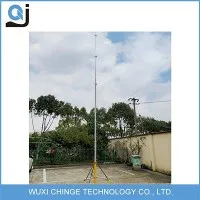
Hey there! As a supplier of Military Telescopic Towers, I often get asked about all sorts of things related to these bad - boys. One question that pops up quite frequently is, "What is the noise level of a military telescopic tower during operation?" Let's dig into this topic and find out what's really going on.
First off, it's important to understand what a military telescopic tower is. These towers are super handy in the military world. They can be quickly deployed, and they're designed to reach different heights as needed. Whether it's for communication purposes, surveillance, or other military operations, they're a crucial piece of equipment. You can check out some of our great options like the Telescopic Antenna Tower and the Telescoping Antenna Tower.
When it comes to the noise level during operation, there are a few factors that play a role. The first one is the type of mechanism used to extend and retract the tower. Most military telescopic towers use either hydraulic or electric systems.
Hydraulic systems are pretty common. They work by using fluid pressure to move parts. When a hydraulic military telescopic tower is in operation, the noise mainly comes from the hydraulic pump. The pump creates a constant humming sound as it pressurizes the fluid. The noise level of a hydraulic pump can vary depending on its size and power. Smaller pumps might produce around 60 - 70 decibels (dB) of noise. That's about as loud as a normal conversation. But larger, more powerful pumps can go up to 80 - 90 dB, which is similar to the noise level of a lawnmower.
On the other hand, electric systems rely on motors to move the tower. Electric - driven military telescopic towers are generally quieter than their hydraulic counterparts. The motor in an electric system usually makes a high - pitched whirring sound. The noise level of an electric motor in a tower can range from 50 - 60 dB. That's a bit softer than a normal conversation, so it's less likely to draw unwanted attention.
Another factor that affects the noise level is the speed of operation. If the tower is being extended or retracted quickly, it's going to make more noise. The rapid movement causes more vibrations, and these vibrations translate into sound. For example, if you try to extend a hydraulic tower at its maximum speed, the noise level can increase by 10 - 15 dB compared to a slow, steady operation.
The environment where the tower is operating also plays a part. In an open field, there are fewer obstacles to reflect and amplify the sound. So, the noise level might seem lower. But in a confined space like a building or a canyon, the sound waves bounce off the walls, making the tower seem louder than it actually is.
Now, why does the noise level matter in a military context? Well, stealth is often crucial in military operations. If a tower makes too much noise during deployment or operation, it can give away the position of troops. Enemies could detect the noise and use it to locate the military unit. So, having a relatively quiet tower is a big advantage.
Our company understands the importance of noise control. That's why we've been working hard to develop quieter military telescopic towers. We've made improvements to the hydraulic pumps, adding better insulation and vibration - dampening materials. For the electric models, we've optimized the motor design to reduce the whirring noise.
We also offer different models to suit different needs. If you're in a situation where absolute silence is key, our electric Telescopic Unguyed Tower might be the perfect choice. It's designed to operate with minimal noise, so you can carry out your operations without being detected.
If you need a more powerful tower that can handle heavy - duty tasks, our hydraulic models are up to the challenge. And while they do make a bit more noise, we've done our best to keep it at a reasonable level.
In addition to the noise level during extension and retraction, there's also the question of noise when the tower is stationary. Once the tower is in place and doing its job, the noise level drops significantly. There might be a small amount of background noise from any equipment attached to the tower, like antennas or sensors, but it's usually very low.
Now, let's talk about some other aspects of our military telescopic towers. We also offer Mobile Tower Trailer options. These trailers make it easy to transport the tower to different locations. They're designed to be rugged and reliable, so you don't have to worry about the tower getting damaged during transit.
And if you're in the market for a more versatile solution, our Portable Cell Tower is a great choice. It combines the functionality of a telescopic tower with the ability to provide mobile communication services.
If you're interested in learning more about our military telescopic towers or any of our other products, we'd love to hear from you. Whether you have questions about the noise level, the technical specifications, or the pricing, just reach out to us. We're here to help you find the perfect solution for your military needs.
In conclusion, the noise level of a military telescopic tower during operation depends on several factors, including the type of mechanism, the speed of operation, and the environment. But with our innovative designs and continuous improvements, we're able to offer towers that balance performance with noise control. So, if you're in the military or involved in related operations, don't hesitate to get in touch with us to discuss your requirements.
References

