




Hey there, fellow mast enthusiasts! As a supplier of winch up masts, I've been in the thick of the action for quite a while, and one question that keeps popping up is, "What is the proper angle for winching up a mast?" Well, buckle up because we're about to dive deep into this topic.
First off, let's talk about why the angle matters. When you're winching up a mast, the angle at which you do it can have a huge impact on the safety and efficiency of the operation. If the angle is too steep, you're putting a lot of stress on the winch, the mast, and the mounting points. This can lead to premature wear and tear, and in the worst-case scenario, it could even cause a failure, which is definitely not something you want. On the other hand, if the angle is too shallow, you might not be able to get the mast up to the desired height, or it could take a lot longer and use more energy.
So, what's the sweet spot? Well, it depends on a few factors. The type of mast you're using is a big one. For example, Antenna Push Up Pole is a popular choice, and it has its own set of requirements. These poles are usually designed to be relatively lightweight and easy to handle, so they can tolerate a wider range of angles compared to heavier, more rigid masts.
Another factor is the weight and length of the mast. A longer and heavier mast will require a more precise angle to ensure a smooth and safe winching process. If you're dealing with a Stainless Steel Telescopic Mast, which can be quite heavy, you'll need to be extra careful. Generally, a good rule of thumb is to aim for an angle between 30 and 60 degrees. This range allows for a good balance between the force required to lift the mast and the stress on the equipment.
The terrain where you're setting up the mast also plays a role. If you're on flat, stable ground, you have more flexibility in choosing the angle. However, if you're on a slope or uneven surface, you'll need to adjust the angle accordingly to compensate for the incline. You don't want the mast to tip over or get stuck during the winching process.
Let's take a closer look at the physics behind it. When you're winching up a mast, you're essentially using a combination of force and leverage. The angle affects how much of the force is directed vertically to lift the mast and how much is wasted in other directions. A steeper angle means more of the force is used to lift the mast directly, but it also increases the stress on the winch and the mounting points. A shallower angle spreads the force out more, but it might require more pulling to get the mast up.
Now, I know what you're thinking. "That's all well and good, but how do I actually measure the angle?" Well, there are a few ways to do it. You can use a protractor or an angle finder, which are relatively inexpensive and easy to use. Just place the device on the mast or the winch line and read the angle. Another option is to use a smartphone app that can measure angles. There are plenty of these apps available for both iOS and Android, and they can be quite accurate.
Once you've determined the proper angle, it's time to start winching. Make sure you have all the necessary safety equipment, such as gloves and safety glasses. Also, have someone else on standby to help you in case something goes wrong. Start by slowly pulling the winch line, and keep an eye on the mast to make sure it's moving smoothly. If you notice any signs of stress or instability, stop immediately and adjust the angle or the tension on the winch.
As a winch up mast supplier, I've seen it all. I've helped customers with all sorts of masts, from small 30ft Hand Push Up Antenna Mast to large industrial masts. And let me tell you, getting the angle right is crucial for a successful installation. It not only ensures the safety of the equipment and the people involved but also extends the lifespan of the mast and the winch.
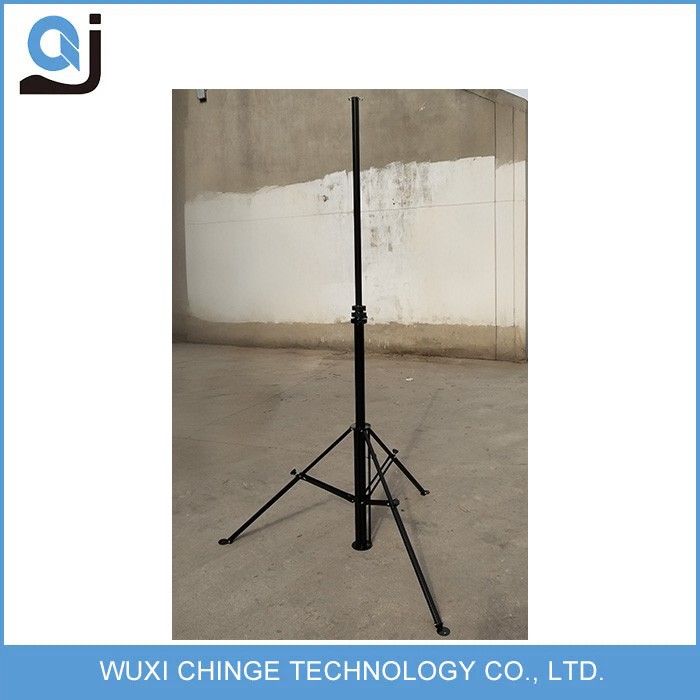

If you're in the market for a winch up mast, or if you have any questions about the proper angle for winching, don't hesitate to reach out. We're here to help you make the right choice and ensure that your mast installation goes smoothly. Whether you're a hobbyist setting up an antenna for your backyard or a professional in the telecommunications industry, we have the expertise and the products to meet your needs.
In conclusion, the proper angle for winching up a mast depends on several factors, including the type of mast, its weight and length, the terrain, and the physics involved. A good starting point is to aim for an angle between 30 and 60 degrees, but you'll need to adjust it based on your specific situation. By taking the time to measure the angle and following the proper procedures, you can ensure a safe and efficient winching process.
So, what are you waiting for? Contact us today to discuss your winch up mast needs, and let's get your project off the ground!
References
- Engineering principles of mast installation and winching
- Manufacturer's guidelines for different types of masts