


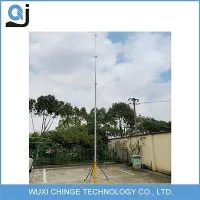
The coverage range of a portable tower is a crucial factor that determines its effectiveness and suitability for various applications. As a leading portable tower supplier, we understand the significance of this parameter and are committed to providing high - quality products with optimal coverage. In this blog, we will explore the factors that influence the coverage range of a portable tower and the typical ranges you can expect.
Factors Affecting the Coverage Range of a Portable Tower
Antenna Height
One of the most significant factors influencing the coverage range of a portable tower is the height of the antenna. Generally, the higher the antenna is placed on the tower, the greater the coverage area. This is because a higher antenna can transmit and receive signals over a longer distance without being obstructed by obstacles on the ground. For example, a radio signal transmitted from an antenna at a height of 10 meters will have a more limited range compared to the same signal transmitted from an antenna at a height of 30 meters. As a result, our Light Weight Harm Radio Tower is designed to reach substantial heights, ensuring extended coverage for your communication needs.
Frequency of Operation
The frequency at which the portable tower operates also plays a vital role in determining its coverage range. Different frequencies have different propagation characteristics. Lower frequencies, such as those in the HF (High Frequency) band (3 - 30 MHz), can travel longer distances by bouncing off the ionosphere. These frequencies are suitable for long - range communication, especially for applications like amateur radio and some military communications. On the other hand, higher frequencies, such as those in the VHF (Very High Frequency) and UHF (Ultra High Frequency) bands, are more line - of - sight. They are suitable for shorter - range, local communication, such as in a city or a small rural area. Our Portable Signal Tower can be configured to operate at different frequencies, allowing you to customize the coverage based on your specific requirements.
Transmitter Power
The power of the transmitter connected to the portable tower is another critical factor. A higher - power transmitter can send stronger signals, which can travel further and penetrate obstacles more effectively. However, increasing the transmitter power also has its limitations, including regulatory restrictions in many countries. For example, in the United States, the Federal Communications Commission (FCC) regulates the maximum power levels for different types of radio transmissions. When choosing a portable tower, it is essential to consider the power requirements and ensure compliance with local regulations. Our team can assist you in selecting the appropriate transmitter power for your Amateur Radio Tower Crank Up to achieve the desired coverage.
Environmental Conditions
The environment in which the portable tower is installed can significantly impact its coverage range. Obstacles such as buildings, mountains, and dense forests can block or absorb radio signals, reducing the coverage area. In an urban environment with tall buildings, the signal may be reflected and scattered, causing interference and reducing the effective range. In a rural or open - field environment, the signals can travel more freely, resulting in a larger coverage area. Additionally, weather conditions such as rain, fog, and snow can also affect signal propagation. Rain, for example, can absorb and scatter radio waves, especially at higher frequencies.
Typical Coverage Ranges
Short - Range Applications
For short - range applications, such as local communication within a small community or a construction site, portable towers can provide coverage in the range of a few kilometers. For instance, a portable tower operating in the VHF band with a relatively low - power transmitter (around 10 - 50 watts) and an antenna height of 5 - 10 meters can cover a radius of 1 - 5 kilometers. These types of towers are often used for communication between workers on a construction site or for local event management.
Medium - Range Applications
In medium - range applications, such as amateur radio communication over a region or a small - scale wireless network, the coverage range can extend from 10 to 100 kilometers. A portable tower operating in the HF or lower - VHF bands with a medium - power transmitter (50 - 200 watts) and an antenna height of 10 - 30 meters can achieve this range. This is suitable for communication between ham radio operators in different towns or for setting up a local wireless internet network in a rural area.
Long - Range Applications
For long - range applications, such as international amateur radio communication or long - distance military communication, portable towers can cover hundreds or even thousands of kilometers. Using lower frequencies in the HF band and high - power transmitters (over 200 watts), along with a tall antenna (30 meters or more), it is possible to communicate across continents. The ionospheric propagation of HF signals allows for long - distance communication without the need for a direct line - of - sight.

How Our Portable Towers Can Meet Your Coverage Needs
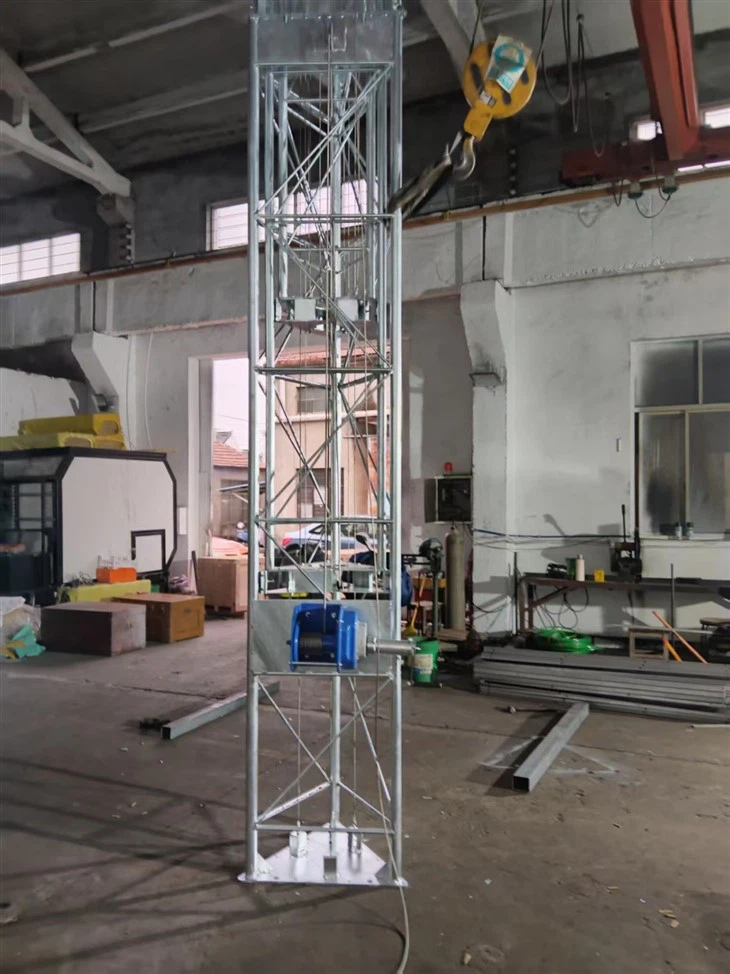
As a portable tower supplier, we offer a wide range of products designed to meet different coverage requirements. Our towers are built with high - quality materials to ensure stability and durability, even at great heights. We provide customizable options for antenna height, frequency of operation, and transmitter power, allowing you to tailor the tower to your specific needs.
Our engineering team has extensive experience in the field of communication towers and can provide professional advice on selecting the right tower for your application. Whether you need a short - range tower for a local event or a long - range tower for international communication, we have the solution for you.
Contact Us for Your Portable Tower Needs
If you are interested in learning more about our portable towers and how they can provide the coverage you need, we encourage you to contact us. Our sales team is ready to answer your questions, provide detailed product information, and assist you in the procurement process. We can also arrange a demonstration or provide a customized quote based on your specific requirements.
Investing in the right portable tower is essential for ensuring reliable and effective communication. Let us help you find the perfect solution for your coverage needs.
References
- "Radio Communication Handbook" by the RSGB (Radio Society of Great Britain)
- "Antenna Theory: Analysis and Design" by Constantine A. Balanis
- Federal Communications Commission (FCC) regulations on radio transmissions