




Hey there! As a supplier of portable towers, I often get asked about the signal strength of these nifty devices. So, I thought I'd take a deep dive into this topic and share some insights with you all.
First off, let's understand what we mean by a portable tower. These are compact, movable structures that are designed to support antennas and other communication equipment. They come in different types, like Portable Signal Tower, Telescopic Mobile Tower, and Self-Supporting Antenna Tower. Each type has its own unique features and is suitable for different applications.
Now, the signal strength of a portable tower is a crucial factor. It determines how well the tower can transmit and receive signals, which in turn affects the quality of communication. There are several factors that can influence the signal strength of a portable tower.
Antenna Quality
The antenna is like the heart of the portable tower. A high - quality antenna can significantly boost the signal strength. Antennas come in different shapes, sizes, and frequencies. For example, a directional antenna focuses the signal in a specific direction, which can increase the signal strength in that area. On the other hand, an omnidirectional antenna broadcasts the signal in all directions, which is great for covering a wide area but might have a lower signal strength in a particular direction compared to a directional one.
When choosing an antenna for your portable tower, you need to consider the frequency band you'll be operating in. Different communication systems use different frequency bands, such as VHF (Very High Frequency), UHF (Ultra High Frequency), and microwave frequencies. Make sure the antenna is designed to work efficiently in the frequency band of your choice.
Tower Height
The height of the portable tower also plays a major role in signal strength. Generally, the higher the tower, the better the signal. This is because a taller tower can overcome obstacles like buildings, trees, and hills that might block or weaken the signal. When the antenna is placed at a greater height, it has a clearer line - of - sight to the receiving or transmitting devices, which improves the signal propagation.
However, there are some limitations to increasing the tower height. For one, taller towers can be more difficult to transport and set up. They also need to be more stable to withstand wind and other environmental factors. So, you need to find a balance between the desired signal strength and the practicality of the tower height.
Environmental Conditions
The environment in which the portable tower is placed can have a big impact on the signal strength. For instance, if the tower is located in an urban area with a lot of tall buildings, the signal can be reflected, refracted, or absorbed by these structures. This can cause signal interference and reduce the overall signal strength.
In a rural area, on the other hand, there are fewer obstacles, but factors like weather can still affect the signal. Rain, snow, and fog can absorb or scatter the signal, especially at higher frequencies. So, when setting up a portable tower, it's important to take the environmental conditions into account and choose a location that minimizes signal interference.
Power Supply
The power supply to the antenna on the portable tower is another important factor. A strong power supply can provide the necessary energy for the antenna to transmit the signal effectively. If the power supply is weak, the signal strength will also be weak.
There are different types of power supplies available for portable towers, such as batteries, generators, and solar panels. Batteries are convenient for short - term use and are easy to transport. Generators can provide a more powerful and continuous power supply but are noisy and require fuel. Solar panels are an eco - friendly option, but their performance depends on the amount of sunlight available.
Signal Amplifiers
Signal amplifiers are devices that can be used to increase the signal strength of a portable tower. They work by taking the weak input signal and boosting it to a stronger output signal. There are two main types of signal amplifiers: pre - amplifiers and post - amplifiers.
A pre - amplifier is placed before the antenna and amplifies the incoming signal. This can be useful in areas where the signal is very weak. A post - amplifier is placed after the antenna and amplifies the outgoing signal. It can help to increase the range of the transmitted signal.
Testing and Optimization
Once you've set up your portable tower, it's important to test the signal strength. You can use a signal strength meter to measure the signal level at different points around the tower. This will help you identify any areas where the signal is weak and take steps to improve it.
If you find that the signal strength is not up to par, you can try adjusting the antenna position, changing the tower height, or adding a signal amplifier. You might also need to consider the orientation of the antenna. Sometimes, a small adjustment in the antenna's angle can make a big difference in the signal strength.
Applications and Signal Requirements
Different applications have different signal strength requirements. For example, in a wireless local area network (WLAN) setup, a relatively weak signal might be sufficient to cover a small office or home. However, for a large - scale outdoor event or a mobile communication network in a remote area, a much stronger signal is needed.
If you're using the portable tower for emergency communication during a disaster, the signal strength needs to be reliable and strong enough to reach rescue teams and other emergency responders. On the other hand, if it's for a temporary event like a concert or a sports game, you need to ensure that the signal can cover the entire event area and support a large number of users.
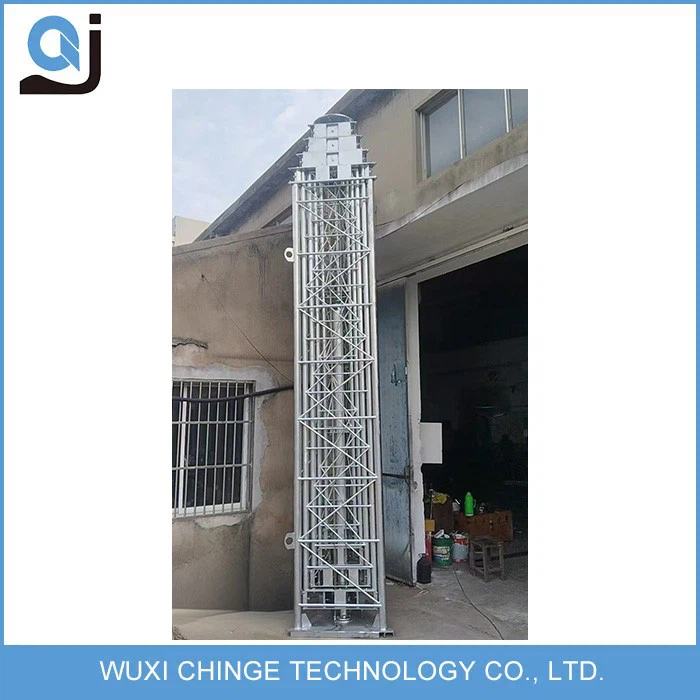

Our Portable Towers and Signal Strength
At our company, we understand the importance of signal strength when it comes to portable towers. That's why we offer a wide range of portable towers, each designed to provide excellent signal performance. Our Portable Signal Tower is easy to set up and can be customized with high - quality antennas to meet your specific signal requirements.
The Telescopic Mobile Tower is a great option if you need to adjust the tower height according to the situation. It allows you to quickly change the height of the antenna to optimize the signal strength. And our Self - Supporting Antenna Tower is stable and can support large - scale antennas for high - strength signal transmission.
If you're in the market for a portable tower and have questions about signal strength or any other aspect, don't hesitate to reach out. We're here to help you choose the right portable tower for your needs and ensure that you get the best possible signal strength. Whether you're a small business looking to set up a local communication network or a large organization in need of a reliable emergency communication solution, we've got you covered.
Contact us today to start the conversation about your portable tower requirements. We're excited to work with you and help you find the perfect portable tower with the ideal signal strength for your application.
References
- "Antenna Engineering Handbook" by John L. Volakis
- "Wireless Communication Systems" by Theodore S. Rappaport
- "RF Circuit Design" by Chris Bowick