


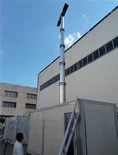

Cell on Wheels (COWs) are designed to handle interference in crowded areas, where high user density and overlapping signals can degrade network performance. Here's how they manage interference effectively:
Advanced Antenna Technology: COWs use directional antennas and beamforming techniques to focus signals precisely where needed, reducing overlap with other cells and minimizing interference.
Frequency Management: COWs can operate on multiple frequency bands, including low-band, mid-band, and high-band (e.g., mmWave for 5G). By dynamically selecting less congested frequencies, they optimize performance in crowded environments.
Small Cell Integration: In dense areas, COWs can be equipped with small cells to provide hyper-localized coverage. These small cells offload traffic from the main COW, reducing congestion and interference.
Power Control: COWs adjust transmission power levels to ensure optimal signal strength without causing unnecessary interference with nearby cells. This is particularly important in urban areas with many overlapping networks.
Interference Cancellation Algorithms: Modern COWs use sophisticated software algorithms to detect and mitigate interference in real time, ensuring stable connections even in high-density scenarios.
Network Coordination: COWs can be integrated with existing network infrastructure, allowing for coordinated resource allocation and interference management across multiple cells.
If you have any questions or need more details about Cell on Wheels, feel free to contact us, we will serve you wholeheartedly!