


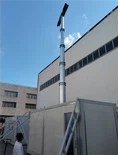

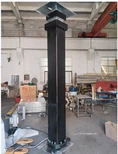
When customers first reach out to us at Wuxi Qinge Technology Co., Ltd., one of the most common questions is straightforward: "How much does a cell tower on wheels actually cost?" It sounds like a simple number question, but in reality, it's closer to asking the price of a fully equipped vehicle-there's no single answer without understanding how and where it will be used.
We've worked with clients across Southeast Asia, the Middle East, and parts of Africa, and almost every project starts with a different context. One customer from Indonesia, for example, needed a rapid deployment solution after seasonal flooding disrupted local communication infrastructure. Another client in Eastern Europe was planning temporary coverage for a large outdoor event lasting just two weeks. Both asked about price first, but what they actually needed were very different systems.
From our experience, the cost of a cell tower on wheels (COW) is mainly driven by five key factors: mast height, payload capacity, power system, communication equipment integration, and mobility configuration.
Mast height is usually the first major cost variable. A basic 10–15 meter telescopic mast is sufficient for short-range or low-density coverage, but once you move into 20–30 meters-especially with higher wind resistance requirements-the engineering complexity increases significantly. We've seen projects where clients initially wanted a lower-cost option, only to realize later that coverage gaps would cost them more in lost connectivity.
Payload capacity is another often underestimated factor. It's not just about lifting an antenna-it's about safely supporting multiple devices, including sector antennas, microwave links, and sometimes even surveillance equipment. In one project we handled for a remote mining site, the client underestimated the total load. We had to redesign the mast configuration midway to ensure long-term stability, which slightly increased the upfront cost but avoided operational risks later.
Power systems also vary widely. Some clients choose simple diesel generators, while others require hybrid systems with batteries or even solar integration. For example, a customer in a remote desert region requested a low-maintenance power solution due to limited fuel supply. The initial investment was higher, but the long-term operational savings made it worthwhile.
Then there's the communication equipment itself. Some customers already have their own telecom gear and only need the mobile tower platform. Others require a fully integrated solution, including antennas, RRUs, and cabling. Naturally, a turnkey system will cost more, but it also reduces deployment time significantly. We've seen cases where clients saved days-sometimes weeks-by choosing a pre-integrated setup.
Mobility and deployment design also affect pricing. Trailer-mounted systems are the most common, but even within that category, there are differences. Reinforced chassis, hydraulic leveling systems, and automated mast lifting mechanisms all add to the cost but improve ease of use and safety. One of our long-term partners specifically requested a system that could be deployed by just two technicians within 30 minutes. That requirement shaped the entire design-and the pricing.
So what's the realistic price range? Based on our past projects, a basic cell tower on wheels system may start from a lower budget level for simple configurations, while fully equipped, high-performance units can go significantly higher depending on customization. The key point is not the number itself, but how well the configuration matches your actual application.
From an ROI perspective, the value of a COW system becomes clear when you consider what it enables. For emergency response, it restores communication when it matters most. For events, it ensures network stability for thousands of users. For remote operations, it provides connectivity where fixed infrastructure is not practical. We've had clients tell us that a single deployment prevented major operational downtime-something that easily justified the investment.
At Wuxi Qinge Technology Co., Ltd., we don't approach projects with a "one-size-fits-all" mindset. Our role is to understand how the system will be used in the real world, and then recommend a configuration that balances cost, performance, and reliability. Sometimes that means advising a simpler solution. Other times, it means explaining why a slightly higher upfront investment will pay off over time.
If you're currently evaluating a cell tower on wheels, the most effective way to estimate cost is to start with your actual use case: Where will it be deployed? How long will it operate? What equipment needs to be supported? Once those questions are clear, the pricing becomes much more predictable-and meaningful.
If you'd like, you can share your project details with us. We're always open to discussing practical configurations based on real deployment scenarios, not just specifications on paper.