


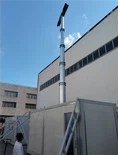

We've towed these units through ankle-deep mud after a typhoon, set them up in 42°C heat on a remote mining site, and watched a dead zone pull itself back online in under two hours. If you've only seen photos of a Cell Tower on Wheels (COW), it's easy to assume it's just a mast bolted to a trailer. In practice, it's a self-contained, rapidly deployable network node-and when traditional infrastructure fails, it's often the difference between silence and a working connection.
At Wuxi Qinge Technology, we've designed, built, and field-tested dozens of these systems over the years. This isn't a textbook breakdown. It's how they actually work, what goes wrong in the field, and why certain engineering choices matter when lives or operations are on the line.
It's Not Just a "Tower on a Trailer" - Here's What's Actually Inside
Strip away the marketing language, and a Cell Tower on Wheels is a mobile base station packaged for rapid deployment. It carries everything needed to create a temporary coverage bubble:
- Antenna array & radios (4G/5G NR, multi-band, often 3-sector configuration)
- Baseband unit (BBU) & remote radio heads (RRH) mounted inside a climate-controlled shelter
- Backhaul link (satellite terminal, microwave dish, fiber patch, or even 5G fixed wireless)
- Power system (diesel generator + battery bank, often with solar/hybrid option)
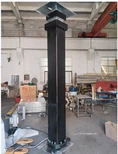
- Telescopic or guyed mast (typically 15m–30m, engineered for wind load and fast raise/lower cycles)
- Shelter & cable management (IP55/IP65 rated, vibration-dampened racks, quick-disconnect harnesses)
When we design ours at Wuxi Qinge, we don't treat these as separate components. We integrate them as a single system. The mast isn't just for height-it's tuned to the antenna weight and wind profile. The power system isn't just "a generator"-it's sized for peak RU load, BBU idle draw, and backhaul overhead, with automatic transfer switching that doesn't drop active calls. That integration is where most field failures actually happen.
How It Works When Disaster Strikes (The Real Deployment Sequence)
Emergency deployments don't follow a manual. They follow physics, logistics, and whatever weather is happening. Here's how a typical COW comes online when the grid goes down:
1. Day 0: The trigger – Flood, earthquake, wildfire, or severe storm knocks out fixed sites. Local carriers or emergency management request rapid coverage restoration.
2. Day 1: Roll-out & site prep – The unit is towed to a pre-surveyed location (or an ad-hoc spot if time is critical). Ground leveling, stabilizer jacks, and guy-wire anchors (if using a guyed mast) are deployed first. Safety and wind rating dictate everything here.
3. Day 2: Power & backhaul go live – Generator starts, batteries charge, backhaul terminal aligns. If it's a satellite backhaul, we're waiting on clear sky and orbital pass windows. Microwave needs line-of-sight. Fiber needs a surviving splice point. We always design for at least two backhaul fallbacks.
4. Day 3: Network registration & optimization – The BBU registers with the core network. Sector antennas are azimuth/elevation-tuned. Load balancing and handover parameters are adjusted so phones don't fight for the same cell. Then it's live.
5. Ongoing: Telemetry & maintenance – Remote monitoring tracks fuel, temperature, VSWR, backhaul latency, and alarm status. Field techs rotate in for filter changes, cable checks, and fuel top-offs. Most units run 7–14 days continuously before needing a full service window.
We learned early that cable routing kills more deployments than bad weather. In high wind, unsecured fiber and RF jumpers act like sails. Now we route everything internally where possible, use strain-relief clamps at every bend, and torque every connector to spec before it leaves our floor.
Temporary Networks Aren't Just for Emergencies
COWs spend most of their working lives outside disaster zones. We've deployed them for:
Large-scale events – Music festivals, sports tournaments, and trade shows where 50,000+ devices hit a 2km² area simultaneously. The challenge isn't power; it's capacity planning and interference management.
- Construction & mining sites – Remote locations where permanent towers won't be ROI-positive for 3–5 years. COWs bridge the gap until civil works finish.
- Military & logistics corridors – Temporary command posts, border monitoring, or supply route comms where security and rapid relocation matter more than permanent infrastructure.
- Network testing & optimization – Carriers use them to validate 5G SA rollout plans, test mMTC density, or measure handover performance before committing to permanent sites.
In temporary setups, the mast height and sector tilt are often dialed differently than in emergency mode. You're not trying to blanket a wide area-you're shaping a precise coverage polygon to match crowd flow or equipment zones. That's where software-defined radio (SDR) features and remote tilt control actually pay for themselves.
What Actually Breaks in the Field (And How We Design Around It)
After years of field feedback, we stopped chasing the lowest BOM cost and started chasing the lowest downtime. Here's what we changed:
- Generators – Standard commercial units failed in high humidity and dust. We switched to marine-grade alternators, sealed control panels, and automatic load-sharing controllers.
- Mast mechanisms – Telescopic hydraulic systems jam when seals dry out. Now we spec stainless guide rails, grease nipples accessible without disassembly, and manual override crank points for power-loss scenarios.
- Cooling – Shelter AC units clog in sandy or coastal environments. We moved to negative-pressure filtration with washable pre-filters and redundant fans that auto-switch on fault.
- Backhaul alignment – Satellite dishes drift in wind. We added motorized fine-tune actuators and remote azimuth/elevation feedback so techs don't need to climb in bad weather.
- Cable harnesses – Military-style quick-disconnects replaced standard telecom plugs. Color-coded, keyed, and rated for 500+ mating cycles. If a tech can swap it blindfolded, it's field-ready.
Reliability isn't about over-engineering. It's about knowing which component will fail first, and making the fix take 15 minutes instead of 4 hours.
Quick Answers to the Questions Planners Keep Asking
How long does it actually take to deploy?
2–4 hours for a trained crew on flat ground. Add 1–2 hours if terrain is uneven or wind exceeds 15 m/s and guy-wires are required.
Can it run on solar alone?
Technically yes, but practically no. A full 3-sector 4G/5G load draws 8–12 kW peak. Solar can offset 20–40% depending on latitude and panel area, but generators or grid tie remain primary. We design hybrid systems that extend runtime without adding complexity.
Does it support both 4G and 5G?
Yes. Modern COWs use multi-band RRUs and software-upgradable BBUs. You can run LTE anchor bands with 5G NR overlay, or go standalone if the backhaul and core support it.
What happens if the backhaul drops?
The shelter doesn't go dark. Local routing keeps emergency services and priority traffic alive on the edge. Once backhaul restores, sessions re-sync automatically. We also cache critical routing tables locally to speed recovery.
How do you handle maintenance during deployment?
Remote telemetry covers 80% of diagnostics. For physical swaps, we design hot-swappable RF modules, tool-less filter access, and front-panel service points. No one should need a lift truck to change an air filter.
Why We Build Them the Way We Do at Wuxi Qinge
We don't manufacture COWs to check a spec sheet. We build them to survive the gap between planning and reality. That means:
- Designing for the technician who's working in rain, at 2 AM, with gloves on
- Testing mast raise/lower cycles to 5,000+ operations before sign-off
- Validating power systems under sudden load spikes (hello, morning rush hour)
- Writing deployment checklists that actually match field conditions, not lab conditions
- Keeping spare part inventories aligned with real failure modes, not theoretical MTBF
If you're mapping coverage gaps, planning event comms, or building emergency response protocols, we're happy to share deployment logs, power curves, and backhaul compatibility matrices. No sales pitch. Just engineering notes from the field.