


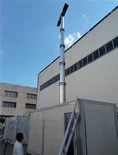

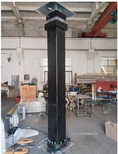
The user groups requiring Cell on Wheels solutions primarily include the following types, whose core needs focus on rapid deployment, temporary coverage, emergency response, and flexible expansion:
1. Government and Public Safety Agencies
Application Scenarios: Natural disaster relief, public safety incidents, security for large events
Pain Points:
Natural disasters (earthquakes, floods, typhoons) damage fixed base stations, requiring rapid restoration of communication to coordinate rescue efforts.
Large gatherings (such as political rallies, counter-terrorism drills) require temporary enhancement of network capacity to prevent signal congestion.
Emergency communication coverage in remote areas or areas without signal (such as forests, deserts).
Case Studies: After the 2004 Florida hurricane, US carriers deployed COW to provide temporary voice and data services to disaster areas.
During the 2020 Australian bushfires, COW was used to support fire command and resident evacuation communications.
2. Telecommunications Operators
Application Scenarios: Network expansion, fault repair, temporary coverage
Pain Points: Sudden traffic surges (such as sporting events, music festivals) overload fixed base stations, requiring rapid expansion of COW capacity.
During fixed base station maintenance or upgrades, COW can temporarily take over services to prevent user churn.
For trial operations in remote or newly developed areas, COW can be used to validate market demand at low cost.
Case Study: SaskTel in Canada deployed portable COWs with a coverage radius of approximately 1 kilometer to alleviate pressure when the LTE network was congested.
Indian operators used COWs to provide 4G services in rural areas to test user acceptance before building fixed base stations.
3. Large Event Organizers
Application Scenarios: Music festivals, sporting events, exhibitions
Pain Points: High-density crowds lead to insufficient capacity of fixed base stations, requiring COWs to enhance signal coverage and bandwidth.
Event venues may be located in areas with no signal (such as suburbs or mountains), requiring temporary network deployment.
Ensuring the stable operation of critical services such as live event broadcasts, mobile payments, and security communications.
Case Study: 26 COWs were deployed for Obama's 2009 inauguration to handle the communication needs of over one million attendees.
During the Brazil World Cup, operators deployed COWs around stadiums to support viewers sharing match videos in real time.
4. Energy and Infrastructure Companies
Application Scenarios: Oil exploration, mining, construction
Pain Points: Remote operating areas (e.g., offshore drilling platforms, desert oilfields) lack fixed network coverage, requiring dedicated communication via COW.
Temporary construction sites (e.g., bridge construction, tunnel excavation) require short-term network support for personnel dispatch and equipment monitoring.
Ensuring safe production communication (e.g., emergency calls, video inspections) is not limited by geographical conditions.
Case Studies: CNPC deployed COW in the Tarim Oilfield to provide voice and data services to drilling teams, improving operational efficiency.
A German construction company used COW on large construction sites to support drone inspections and BIM (Building Information Modeling) collaboration.
5. Military and Defense Sector
Application Scenarios: Field operations, humanitarian aid, disaster response
Pain Points: Battlefield environments require rapid establishment of tactical communication networks; COW can integrate satellite backhaul to achieve global coverage.
Disaster relief requires dedicated communication independent of civilian networks to avoid signal interference or congestion.
Flexible network deployment is required for temporary bases or mobile command centers, supporting real-time intelligence sharing and command and dispatch.
Case Study: NATO forces used COW in Afghanistan to establish temporary communication nodes, supporting drone operations and ground troop coordination.
The US Federal Emergency Management Agency (FEMA) deployed COW in hurricane-stricken areas to coordinate interagency relief operations.
6. Media and Broadcasting Companies
Application Scenarios: Outdoor live streaming, news reporting, film shooting
Pain Points: Stable networks are needed in remote areas or mobile scenarios (such as racing, marathons) to support high-definition live streaming and real-time transmission.
Temporary news centers or broadcast vans need to quickly establish network environments to ensure smooth reporting and editing.
Case Study: The BBC used COW during the 2012 London Olympics to support 4K live streaming of outdoor events.
Disney deployed COW on film sets to enable real-time video conferencing between the crew and production company.
Summary: Core Values of COW
Rapid Response: Deployment can be completed within hours to meet emergency needs.
Flexible Coverage: Adaptable to scenarios with no signal, high density, or temporary coverage.
Cost-controllable: Used on demand, avoiding the high initial investment of fixed base stations.
Technology integration: Supports 5G, satellite backhaul, private networks, etc., meeting diverse needs.
Future trend: With the integration of 5G, satellite, and edge computing, COW will evolve into an integrated air-space-ground emergency communication platform, providing more efficient solutions for smart cities, industrial internet, and other scenarios.