


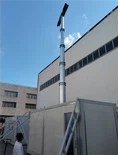

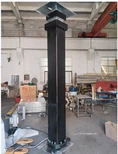
A customer once asked us to recommend a Telescopic Mobile Tower for a remote communication project.
The requirement looked simple:
"We need the tallest tower available with the highest payload capacity."
This is a common request.
Many buyers believe that a taller tower with a stronger structure must always be the better choice.
But after years of working with mobile communication towers, we know the reality is different.
A tower is not selected by looking at one specification.
A successful deployment depends on whether the tower matches the actual project conditions:
How much height is really required?
What equipment will be installed?
How often will the tower move?
What weather conditions will it face?
A Telescopic Mobile Tower that is perfect for a construction site may not be suitable for emergency communication. A tower designed for an outdoor event may not meet the requirements of a remote industrial project.
The right choice is always based on application.
1. Choosing the Right Tower Height: Coverage vs Practical Operation
Height is usually the first thing customers consider.
A higher telescopic mobile mast can provide:
Better line-of-sight communication
Wider coverage area
Improved antenna performance
Reduced signal blockage from terrain or buildings
However, maximum height is not always the best solution.
We have seen projects where customers initially requested a 30-meter tower, but after reviewing the site conditions, a 20-meter configuration was more suitable.
Why?
Because increasing height also affects:
Wind load
Structural requirements
Trailer size
Transportation difficulty
Deployment stability
For example:
A temporary event in an open area may only require moderate height.
A remote mining project surrounded by mountains may need a higher mast to achieve reliable coverage.
The correct question is not:
"How tall can the tower reach?"
The correct question is:
"What height is required to achieve the communication objective?"
A well-designed Telescopic Mobile Tower provides the necessary elevation without creating unnecessary complexity.
2. Payload Capacity: The Tower Must Support the Complete System
Height gets attention.
Payload gets overlooked.
But in real projects, payload capacity is one of the most important factors.
A mobile telecom tower is not only supporting the mast itself.
It must carry all installed equipment, including:
LTE antennas
5G antennas
Microwave dishes
Wireless transmission equipment
CCTV cameras
Sensors
Emergency communication devices
One common mistake is calculating only today's requirements.
For example:
A project starts with two communication antennas.
After six months, the customer adds:
Additional network equipment
Surveillance systems
Data transmission devices
The tower that worked initially may no longer have enough reserve capacity.
When selecting a Telescopic Mobile Tower, experienced engineers usually consider future expansion.
A slightly higher payload capacity at the beginning can prevent expensive upgrades later.
3. Trailer Selection: Mobility Starts With the Right Platform
A telescopic tower is only useful if it can reach the location where it is needed.
This is why the trailer system is just as important as the mast itself.
A trailer mounted tower used on city roads has very different requirements from one used in remote industrial areas.
Before choosing the trailer configuration, consider:
Transportation Conditions
Ask:
How far will the tower travel?
How frequently will it move?
Are roads paved or unpaved?
Are there access limitations?
A tower used for temporary events may only move occasionally.
A tower used for pipeline, mining or infrastructure projects may need frequent relocation.
Deployment Environment
The final deployment location also matters.
Consider:
Ground conditions
Available space
Slope
Weather exposure
A suitable trailer helps improve:
Transportation safety
Deployment efficiency
Overall system stability
The trailer is not simply a transport tool.
It is part of the complete engineering solution.
4. Wind Rating: The Specification Experienced Engineers Check First
Many buyers focus on tower height and payload.
Experienced engineers often focus on wind rating.
Why?
Because once a Telescopic Mobile Tower is fully extended, wind becomes one of the most important environmental factors affecting the structure.
The actual wind load depends on:
- Mast height
- Antenna size
- Equipment quantity
- Installation position
- Local weather conditions
A tower carrying multiple large antennas experiences significantly different forces compared with an empty mast.
We once reviewed a project where the customer focused mainly on coverage requirements.
After checking the local environment, we found that the coastal location had strong seasonal winds.
The tower configuration had to be adjusted-not because the height was wrong, but because the environmental conditions required a different design approach.
This is why wind rating should always be evaluated together with payload and installation location.
5. Consider Deployment Speed and Operating Frequency
Another important question is often ignored:
How often will the tower move?
A tower used once for a temporary event has different requirements from one relocated every month.
For frequent deployment projects, factors become important:
- Transportation efficiency
- Setup simplicity
- Hydraulic system reliability
- Operator requirements
Typical frequent-movement applications include:
- Emergency communication
- Highway construction
- Mining operations
- Temporary network expansion
For these projects, deployment efficiency can directly affect operating costs.
6. Match the Tower With the Communication Equipment
A Telescopic Mobile Tower is only the supporting structure.
The final performance depends on the complete communication system.
Before selecting a tower, confirm:
- LTE or 5G requirements
- Antenna quantity
- Antenna weight
- Mounting method
- Backhaul equipment
- Power supply requirements
A tower designed for a basic wireless system may not be suitable for a high-capacity 5G deployment.
The tower and communication equipment must be designed together.
A Practical Selection Checklist
Before purchasing a Telescopic Mobile Tower, we recommend evaluating:
Height Requirements
Required coverage area
Terrain conditions
Antenna installation height
Payload Requirements
Current equipment weight
Future expansion plans
Trailer Requirements
Transportation distance
Road conditions
Deployment frequency
Environmental Requirements
Wind conditions
Ground stability
Operating temperature
Communication Requirements
LTE or 5G system
Antenna configuration
Power supply
This approach usually leads to a much better solution than simply comparing catalogue specifications.
How Wuxi Qinge Helps Customers Select the Right Tower
At Wuxi Qinge Technology Co., Ltd., we have worked with customers from telecom, construction, emergency response and industrial sectors.
Each project has different priorities.
An emergency communication project needs rapid deployment.
A construction project needs flexibility.
A remote industrial site needs reliability.
A telecom operator may need network expansion capability.
Our engineering team evaluates the complete application, including:
Required tower height
Payload capacity
Trailer design
Wind environment
Deployment conditions
The goal is not to provide the biggest tower.
The goal is to provide the tower that performs reliably in the customer's actual environment.
Final Thoughts
Choosing a Telescopic Mobile Tower is not simply a comparison of height, payload or specifications.
It is a balance between:
Height for coverage.
Payload for equipment capability.
Trailer design for mobility.
Wind rating for safety and reliability.
When these factors are properly matched, a telescopic mobile tower can provide dependable support for temporary cellular coverage, emergency communication, industrial monitoring and remote network deployment.
The best tower is not always the tallest one.
It is the one designed for the real conditions of the project.