



A customer once asked us a practical question:
"Why do we need a telescopic mobile tower instead of a normal fixed mast?"
The answer came from their own project situation.
They were supporting a temporary industrial site where communication requirements changed every few months. The working area moved, the equipment configuration changed, and building permanent infrastructure at every location was not realistic.
The problem was not whether they needed a tower.
The problem was whether the tower could move with the project.
This is where a Telescopic Mobile Tower provides a real advantage.
Unlike permanent towers that are installed in one location for years, a telescopic mobile tower is designed for flexibility. It can be transported, extended when needed, lowered for relocation and redeployed at another site.
For industries where communication, monitoring or lighting requirements change frequently, mobility becomes more valuable than permanent installation.
What Is a Telescopic Mobile Tower?
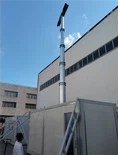
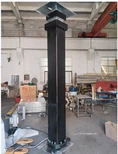
A Telescopic Mobile Tower is a movable tower system that uses a telescoping mast structure, allowing the tower height to be adjusted by extending or retracting multiple mast sections.
The system is usually mounted on:
- Trailer chassis
- Vehicle platform
- Skid base
- Portable foundation system
When deployed, the mast extends to the required working height.
When transportation is required, the mast retracts into a compact position.
This design allows companies to create temporary elevated platforms for different applications, including:
Cellular communication
LTE and 5G network coverage
Wireless transmission
Surveillance systems
Emergency communication
Temporary lighting
A Mobile Cell on Wheels Tower (COW Tower) is one of the most common applications of telescopic mobile tower technology.
Why Choose a Telescopic Mobile Tower?
The main reason companies choose telescopic designs is simple:
The project location changes faster than permanent infrastructure can follow.
A fixed tower works well when:
- The location is permanent
- Long-term operation is expected
- Infrastructure investment is justified
However, many modern projects have different requirements.
For example:
A highway construction project may move several kilometers.
An emergency response team may need communication in different locations.
A temporary event may require coverage for only a few days.
A mining operation may expand into new areas.
In these cases, a portable telecom tower provides the flexibility that fixed infrastructure cannot.
Main Types of Telescopic Mobile Towers
1. Trailer Mounted Telescopic Tower
This is one of the most widely used configurations.
The telescopic mast is installed on a trailer platform, allowing the entire system to be transported by vehicle.
Typical applications include:
Mobile communication towers
Emergency response systems
Temporary network coverage
Large events
Advantages include:
Easy transportation
Fast deployment
Flexible relocation
A trailer mounted tower is especially suitable for projects requiring repeated movement between locations.
2. Vehicle Mounted Telescopic Tower
In this configuration, the mast is installed directly on a vehicle.
The main advantage is faster mobility.
Common applications include:
- Emergency communication vehicles
- Military communication systems
- Broadcasting systems
- Field operations
Because the tower and transportation system are integrated, deployment can be faster in situations where response time is critical.
3. Fixed Base Telescopic Tower
Although less mobile than trailer systems, some telescopic towers are installed on temporary or semi-permanent foundations.
They are used when:
The tower remains in one location for a longer period
Height adjustment is required
Future relocation is possible
This configuration provides a balance between stability and flexibility.
Key Features of Telescopic Mobile Towers
## Adjustable Height
The biggest feature is height flexibility.
Different projects require different coverage ranges.
A telescopic mast can be extended according to:
- Terrain conditions
- Antenna requirements
- Coverage area
- Equipment load
This avoids the need to install multiple fixed-height structures.
Rapid Deployment Capability
A rapid deployment tower is designed to reduce installation time.
Compared with traditional tower construction, telescopic mobile towers eliminate many steps:
Foundation construction
Heavy lifting equipment
Long installation periods
After arriving at the site, the main tasks are positioning, stabilization, mast extension and equipment connection.
Mobility and Reusability
One of the biggest economic advantages is reuse.
A permanent tower usually serves one location.
A mobile communication tower can support multiple projects throughout its service life.
For companies managing several temporary sites, this can significantly improve investment efficiency.
Support for Multiple Equipment Types
Modern telescopic mobile towers can support various equipment configurations:
- LTE antennas
- 5G antennas
- Microwave antennas
- CCTV cameras
- Sensors
- Lighting equipment
The required payload capacity depends on the application.
A tower designed for a simple communication antenna may not be suitable for a system carrying multiple devices.
Industrial Applications of Telescopic Mobile Towers
1. Telecommunications and Temporary Network Coverage
Telecom is one of the most common applications.
Operators use telescopic mobile towers for:
- Temporary LTE coverage
- 5G network expansion
- Network maintenance
- Capacity enhancement during peak demand
When permanent infrastructure cannot be completed quickly enough, a mobile solution fills the coverage gap.
2. Emergency Communication
During natural disasters or emergency situations, communication becomes a priority.
A telescopic mobile tower can support:
- Rescue teams
- Command centers
- Medical response units
- Public safety communication
The ability to deploy quickly makes it valuable in time-sensitive situations.
3. Construction and Infrastructure Projects
Large construction projects often operate in changing environments.
Examples include:
- Highways
- Railways
- Bridges
- Industrial plants
A fixed communication tower may become unnecessary once the project moves.
A telescopic mobile tower follows the project instead.
4. Mining and Remote Industrial Sites
Remote industrial operations require reliable communication but often lack existing infrastructure.
Applications include:
- Worker communication
- Equipment monitoring
- Security systems
- Data transmission
A mobile tower provides connectivity during project development and expansion.
5. Events and Temporary Facilities
Large outdoor events require additional communication capacity.
Examples include:
- Festivals
- Sports competitions
- Exhibitions
- Temporary camps
A telescopic mobile tower provides temporary coverage without permanent construction.
How to Select the Right Telescopic Mobile Tower?
From our experience at Wuxi Qinge Technology Co., Ltd., selecting a tower starts with understanding the working environment.
Important factors include:
Required Height
The tower height should match the actual coverage requirement.
Higher is not always better because it also increases:
Wind load
Transportation requirements
Structural requirements
Payload Capacity
Consider all equipment that will be installed:
- Antennas
- Cameras
- Microwave systems
- Future upgrades
Choosing sufficient payload capacity at the beginning avoids limitations later.
Deployment Environment
Consider:
- Road conditions
- Ground stability
- Weather conditions
- Relocation frequency
A tower used at an urban event has different requirements from one operating at a remote mining site.
Power and Communication Requirements
The tower must match the communication system.
Consider:
LTE or 5G requirements
Power availability
Backhaul connection
Equipment compatibility
Final Thoughts
A Telescopic Mobile Tower is not simply a smaller version of a permanent tower.
It is designed for a different purpose:
Providing reliable elevated communication and monitoring capability wherever and whenever it is needed.
For telecom operators, construction companies, emergency teams and industrial users, the biggest advantage is flexibility.
The best tower is not always the tallest or strongest one.
It is the one that matches the project environment, deployment requirements and future changes.
At Wuxi Qinge Technology Co., Ltd., we focus on helping customers select the right mobile tower solution based on real application conditions-not just technical specifications.