



A few years ago, we worked with a customer developing a remote industrial project located far away from existing communication infrastructure.
The project team had already solved many challenges-equipment transportation, workforce management and site construction.
But one problem remained:
There was no reliable mobile network coverage.
Without stable communication, workers could not coordinate efficiently, remote monitoring systems could not operate properly, and daily operations became more difficult.
The original plan was to build permanent telecom infrastructure.
The problem was time.
The project needed connectivity immediately, while a permanent tower would require months of planning, approval and construction.
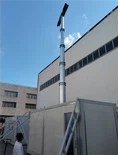
The solution was a Mobile Cell on Wheels.
This experience reflects why more companies are using mobile cell towers to improve LTE and 5G coverage in remote areas.
The purpose is not to replace permanent networks.
It is to provide reliable communication where traditional infrastructure cannot arrive quickly enough.
Why Remote Areas Often Have Poor LTE and 5G Coverage
Urban areas usually benefit from dense telecom infrastructure.
There are existing:
Base stations
Fiber connections
Power facilities
Maintenance networks
Remote areas are different.
Locations such as:
Mining sites
Oil and gas fields
Construction zones
Rural communities
Renewable energy projects
Emergency operation areas
often face several challenges:
- Long Distance From Existing Towers
A single permanent tower may not economically justify the investment if the population or project duration is limited.
- Difficult Terrain
Mountains, forests and large open areas can create coverage gaps even when nearby infrastructure exists.
- Fast-Changing Requirements
Some projects need communication only for a limited period.
Building permanent infrastructure may not make financial sense.
This is where a Mobile Cell on Wheels Tower becomes valuable.
How Mobile Cell on Wheels Improve LTE Coverage
The basic principle is simple:
A Mobile Cell on Wheels brings the cellular infrastructure closer to the users.
Instead of waiting for a permanent tower to be constructed, operators can deploy a temporary communication platform directly at the required location.
A typical COW Tower includes:
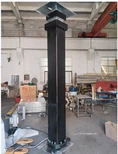
- Telescopic mobile tower mast
- Antenna mounting system
- Equipment cabinet
- Power supply solution
- Trailer system for transportation
Once deployed, the tower provides a platform for LTE antennas and communication equipment.
The result is improved:
- Signal strength
- Coverage range
- Network availability
- User connectivity
For remote construction sites or industrial projects, this can significantly improve daily communication efficiency.
Supporting 5G Deployment in Areas Without Permanent Infrastructure
5G networks require more flexible deployment strategies because higher-frequency signals often have shorter transmission distances compared with traditional networks.
This creates additional challenges in remote areas.
A mobile telecom tower helps operators test and expand 5G coverage without immediately committing to permanent construction.
Typical applications include:
- Temporary 5G Coverage Testing
Before investing in permanent infrastructure, operators can evaluate:
- Signal performance
- User demand
- Coverage requirements
- Equipment configuration
A rapid deployment tower allows real-world testing in the actual environment.
Remote Industrial 5G Applications
Modern industries increasingly depend on wireless connectivity.
Examples include:
- Remote equipment monitoring
- Autonomous machinery
- Video surveillance
- IoT sensors
- Digital operation systems
A portable telecom tower provides the temporary network foundation needed before permanent solutions are installed.
Why Mobile Cell on Wheels Are Ideal for Remote Projects
1. Fast Deployment Where Infrastructure Is Missing
The biggest advantage is speed.
A permanent tower involves:
- Site selection
- Permits
- Foundation construction
- Tower installation
- Network commissioning
A Mobile Cell on Wheels avoids many of these steps.
For emergency communication or early-stage projects, this difference can be critical.
2. Flexible Relocation as Projects Change
Remote projects rarely remain static.
A mining operation may move.
A construction site may expand.
A temporary event may finish.
A permanent tower cannot easily follow these changes.
A trailer mounted tower can be transported to the next required location.
This makes it especially useful for projects where communication demand moves over time.
3. Lower Risk Before Permanent Investment
One challenge companies face is uncertainty.
A project may not yet know:
- How long the site will operate
- How much network capacity will be required
- Whether permanent infrastructure is justified
A mobile cell tower allows companies to establish communication first and make long-term decisions later.
This reduces investment risk.
- Real Project Factors That Affect Coverage Performance
A common misunderstanding is that simply placing a tower in a remote area guarantees excellent coverage.
In reality, several engineering factors determine performance.
- Tower Height
A higher mast can improve line-of-sight coverage, especially in open terrain.
However, the correct height depends on:
Terrain
Antenna type
Coverage target
Wind conditions
Higher is not always better.
Antenna Configuration
The tower itself does not create network capacity.
The antenna system and communication equipment determine performance.
Important considerations include:
- LTE or 5G frequency bands
- Antenna direction
- Equipment power
- Network architecture
Power Availability
Remote locations often lack reliable electricity.
Depending on the project, a Mobile Cell on Wheels may require:
- Generator power
- Solar power systems
- Battery backup
- Hybrid solutions
Power planning should be completed before deployment.
Backhaul Connection
A cellular tower needs a connection back to the core network.
Possible solutions include:
- Fiber connection
- Microwave link
- Satellite communication
- Wireless backhaul
The correct option depends on site conditions.
Common Applications for Remote LTE and 5G Coverage
Mining Operations
Mining companies use mobile communication towers to support:
- Worker communication
- Equipment monitoring
- Safety systems
- Remote operations
Oil and Gas Projects
Remote energy projects often require temporary communication before permanent facilities are completed.
A COW Tower provides connectivity during development and expansion.
Construction Sites
Large infrastructure projects benefit from flexible coverage that can move with the work.
Applications include:
- Highway construction
- Railway projects
- Bridge construction
- Remote engineering sites
Emergency Response
After disasters, restoring communication is often one of the first priorities.
A rapid deployment tower helps emergency teams establish communication quickly.
Choosing the Right Mobile Cell on Wheels Solution
At Wuxi Qinge Technology Co., Ltd., we have found that remote coverage projects are never identical.
A mining project, emergency response deployment and temporary 5G expansion project may all require a Mobile Cell on Wheels, but the technical requirements are different.
Before selecting a solution, engineers usually evaluate:
- Required coverage area
- Tower height
- Antenna payload
- Power supply
- Network compatibility
- Environmental conditions
- Deployment frequency
The objective is not simply installing a tower in a remote location.
The objective is creating reliable communication that supports the actual operation.
Final Thoughts
A Mobile Cell on Wheels provides an effective bridge between today's communication needs and tomorrow's permanent infrastructure.
For remote areas where building fixed towers is too slow, too expensive or impractical, COW Towers offer a flexible way to improve LTE and 5G network coverage.
The real value is not only mobility.
It is the ability to bring reliable communication to places where it is needed most.
Whether supporting mining operations, emergency response, construction projects or remote industrial facilities, a well-designed mobile communication tower helps organizations stay connected even in the most challenging environments.