


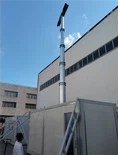

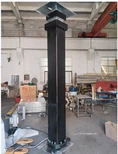
A customer once contacted us for a Mobile Cell on Wheels project and sent a very simple requirement:
"We need a 30-meter tower with maximum capacity."
It sounds clear, but from an engineering perspective, it actually tells us very little.
A mobile communication system is not successful because the tower is the tallest or carries the most equipment.
It is successful because the tower matches the actual working conditions.
After supporting customers in construction, emergency communication, telecom expansion and remote industrial projects, we have found that choosing the right Mobile Cell on Wheels (COW) usually depends on four questions:
How high does the antenna system really need to be?
How much equipment will the tower support?
How will the system be powered?
Can it work with the required network equipment?
These four factors determine whether a mobile tower will perform reliably after deployment.
1. Tower Height: Higher Is Not Always Better
Height is usually the first specification customers ask about.
It is easy to understand why.
A higher mast can improve signal coverage, increase line-of-sight distance and help overcome obstacles such as buildings, trees or uneven terrain.
However, choosing the highest available mobile cell tower is not always the best decision.
We have seen customers request taller towers because they believed more height automatically meant better coverage.
After reviewing their actual site conditions, we sometimes recommended a shorter tower.
Why?
Because tower height affects many other factors:
- Wind load
- Transportation requirements
- Trailer size
- Deployment complexity
- Overall system stability
For example, a temporary construction site surrounded by low buildings may not require the same height as a remote valley project where line-of-sight communication is critical.
The correct question is not:
"How tall can the tower go?"
The correct question is:
"What height is required to achieve reliable coverage at this location?"
A properly selected telescopic mobile tower provides the right balance between coverage performance and practical operation.
2. Payload Capacity: Plan for Today's Equipment and Tomorrow's Expansion
The second important factor is payload.
A Mobile Cell on Wheels Tower does not only support the mast itself.
It supports everything installed on top.
Depending on the project, equipment may include:
- LTE antennas
- 5G antennas
- Microwave dishes
- Wireless backhaul equipment
- Surveillance cameras
- Emergency communication devices
One mistake we often see is designing only for the current requirement.
A project starts with two antennas.
One year later, additional equipment is added.
Suddenly, the original payload calculation is no longer sufficient.
This is especially common in:
- Mining operations
- Large construction projects
- Industrial sites
- Long-term temporary deployments
When selecting a mobile telecom tower, experienced engineers usually leave enough capacity for future upgrades.
A small increase in initial capacity can prevent major modifications later.
3. Power Supply: The Part Many Projects Underestimate
A tower can have the perfect height and payload capacity, but without reliable power, the communication system cannot operate.
Power requirements depend on the installed equipment.
A basic temporary network setup may have very different requirements from a fully equipped 5G communication system.
Common power options include:
- Grid Power
If the deployment location has access to electricity, connecting to the local power supply is usually the simplest solution.
Typical applications:
Construction sites
Industrial facilities
Long-term temporary locations
- Generator Power
For remote locations without stable electricity, generators are commonly used.
Applications include:
Emergency response
Mining sites
Disaster recovery
The generator must be correctly sized according to:
Communication equipment load
Operating hours
Backup requirements
- Hybrid Power Systems
Some projects combine multiple energy sources, such as:
Solar power
Battery storage
Generator backup
This approach is becoming more common for remote communication applications where fuel delivery is difficult.
When evaluating a portable telecom tower, power planning should happen at the same time as tower selection-not after installation.
4. Network Compatibility: The Tower Must Match the Communication System
A common misunderstanding is that the tower itself determines network performance.
It does not.
The tower is the platform.
The communication equipment determines the network capability.
Before choosing a Mobile Cell on Wheels, customers need to confirm:
LTE or 5G requirements
Frequency bands
Antenna types
Backhaul method
Operator compatibility
For example:
A tower designed for emergency voice communication may have completely different requirements from a system supporting high-speed 5G data services.
A project requiring microwave backhaul may also need different mounting arrangements compared with a standard cellular antenna installation.
The best mobile communication tower is the one designed around the communication equipment, not the other way around.
5. Transportation Requirements: Can the Tower Reach the Site?
Mobility is the biggest advantage of a COW Tower.
But mobility depends on the trailer design.
Before selecting a trailer mounted tower, consider:
Road conditions
Transportation distance
Towing vehicle capability
Deployment frequency
Site accessibility
A tower that performs perfectly in a factory environment may face challenges in remote areas.
For example:
A highway project may require easy relocation along paved roads.
A mining project may require stronger transportation capability for rough terrain.
The trailer is not just a transportation component.
It is part of the deployment strategy.
6. Wind Rating: Safety Depends on the Complete System
Wind rating is another factor that should never be ignored.
A common mistake is looking only at the tower structure.
In reality, wind loading depends on the entire system:
- Mast height
- Antenna size
- Equipment weight
- Installation position
- Local weather conditions
A tower carrying multiple antennas and communication devices experiences much higher wind forces than an empty mast.
This is why experienced engineers evaluate wind conditions before finalizing the configuration.
A reliable rapid deployment tower must be designed for the environment where it will actually operate.
A Practical Checklist Before Buying a Mobile Cell on Wheels
Before selecting a Mobile Cell on Wheels, we recommend answering these questions:
- Project Requirements
How long will the tower be used?
Will it stay in one location or move frequently?
- Coverage Requirements
What coverage area is needed?
What obstacles exist around the site?
- Equipment Requirements
What antennas will be installed?
What is the total payload?
- Power Requirements
Is grid power available?
Is backup power required?
- Environmental Conditions
What are the wind conditions?
What are the ground conditions?
These answers usually provide a much clearer direction than simply comparing product specifications.
How Wuxi Qinge Helps Customers Select the Right Solution
At Wuxi Qinge Technology Co., Ltd., we have learned that every Mobile Cell on Wheels project starts with a different challenge.
An emergency communication project needs speed.
A construction project needs flexibility.
A telecom expansion project needs network compatibility.
A remote industrial project needs reliability.
Instead of recommending the largest tower available, our engineering team evaluates the actual application and selects the appropriate configuration based on:
- Tower height
- Payload requirement
- Power system
- Network equipment
- Deployment environment
The goal is not just to supply a mobile tower.
The goal is to provide a communication solution that works when and where customers need it.
Final Thoughts
Choosing the right Mobile Cell on Wheels is not about selecting the biggest mast or the highest capacity model.
It is about matching four key factors:
- Height determines coverage.
- Payload determines capability.
- Power supply determines operation.
- Network compatibility determines performance.
When these elements are considered together, a COW Tower can provide reliable temporary cellular coverage for emergency response, construction projects, events and remote operations.
The right mobile communication solution is not the one with the most impressive specifications.
It is the one that fits the real conditions of the project.