



When a communication network fails, the biggest challenge is usually not repairing the damaged infrastructure.
It is restoring connectivity before the situation creates bigger problems.
We experienced this during a project where a customer needed temporary communication coverage for an emergency operation area. The original plan was to repair the damaged network infrastructure, but the recovery timeline was uncertain. Emergency teams were already working on-site, and reliable communication was becoming critical.
The solution was not to build a permanent tower.
It was to deploy a Mobile Cell on Wheels.
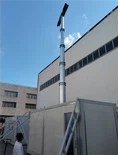
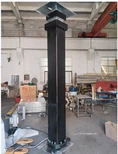
A Mobile Cell on Wheels Tower provides a practical way to restore or expand wireless communication without waiting for permanent construction. It can be transported, deployed and relocated according to changing project requirements.
From emergency response to large public events, the common requirement is always the same:
Communication must be available when and where it is needed.
Below are the most common applications where a mobile cell tower provides real value.
1. Disaster Recovery and Emergency Response
This is one of the most important applications of a Mobile Cell on Wheels.
After hurricanes, floods, earthquakes or wildfires, existing communication infrastructure may be damaged or overloaded.
Emergency teams need reliable connectivity for:
- Rescue coordination
- Field command centers
- Medical response
- Government communication
- Public safety operations
In these situations, waiting weeks for permanent repairs is not realistic.
A rapid deployment tower allows operators and emergency organizations to restore temporary cellular coverage quickly while permanent infrastructure is being repaired.
The key advantage is not only mobility.
It is response speed.
2. Temporary Communication During Natural Disasters
Large-scale disasters often create communication demand in areas where networks are completely unavailable.
A temporary communication system must be:
- Easy to transport
- Fast to install
- Reliable under difficult conditions
- Flexible enough to support changing locations
A portable telecom tower mounted on a trailer can be moved into affected areas and provide temporary LTE or 5G connectivity.
For disaster management teams, this means they can establish communication before normal services return.
3. Large Concerts and Music Festivals
A normal day at a concert venue may have no network issues.
But when tens of thousands of people arrive at the same time, mobile traffic can increase dramatically.
People are:
- Uploading videos
- Sharing photos
- Streaming content
- Making calls
- Using payment applications
The problem is usually not coverage.
It is network capacity.
A Mobile Cell on Wheels Tower allows telecom operators to add temporary network capacity exactly when demand increases.
After the event, the equipment can be removed and deployed elsewhere.
This makes it a much more practical solution than building permanent infrastructure for a temporary crowd.
4. Sporting Events and Public Gatherings
Major sporting events create the same challenge.
Stadiums and public areas may have sufficient network capacity during normal operation, but special events create unexpected pressure on the system.
Examples include:
- Football matches
- Marathons
- Outdoor competitions
- National celebrations
- Public ceremonies
A mobile communication tower can support additional users during peak periods and maintain better user experience.
For event organizers, reliable communication also supports:
- Security systems
- Staff coordination
- Emergency response
- Video monitoring
5. Construction Sites and Infrastructure Projects
Construction projects often change faster than communication infrastructure can follow.
A highway project may move several kilometers.
A railway project may expand section by section.
A mining operation may relocate working areas.
Building permanent telecom infrastructure at every stage is expensive and inefficient.
A Mobile Cell on Wheels Tower allows communication coverage to move together with the project.
Typical applications include:
- Highway construction
- Bridge projects
- Large industrial facilities
- Remote construction sites
The tower becomes a reusable communication asset instead of a fixed installation.
6. Remote Mining, Oil and Gas Operations
Remote industrial sites often face a common problem:
The project starts before permanent infrastructure is available.
Mining, oil fields and energy projects require communication for:
- Worker coordination
- Equipment monitoring
- Safety systems
- Remote operations
A trailer mounted tower can provide temporary network access during early project stages.
Once permanent communication facilities are completed, the tower can move to another location.
This flexibility helps companies avoid delays during project development.
7. Military and Defense Communication
Military operations often require communication systems that can be deployed quickly and relocated when necessary.
A fixed tower is not always practical in temporary operational environments.
A mobile telecom tower can support:
- Temporary bases
- Field operations
- Command communication
- Remote monitoring
The ability to move communication infrastructure with operational requirements is a major advantage.
8. Network Maintenance and Temporary Coverage Expansion
Mobile operators also use Cell on Wheels Towers when maintaining existing networks.
For example:
A base station requires equipment upgrades.
A tower needs repairs.
A network area requires temporary expansion.
Instead of leaving users without service, operators deploy a mobile cell tower nearby.
The temporary system maintains coverage until permanent work is completed.
This application shows an important point:
A COW Tower does not replace permanent infrastructure.
It supports it.
9. Temporary Coverage for Remote Events
Many outdoor events are held in locations without sufficient network infrastructure.
Examples include:
- Outdoor exhibitions
- Camping events
- Agricultural shows
- Racing events
- Temporary markets
Installing a permanent tower for a short-term event is usually unrealistic.
A portable telecom tower provides the flexibility needed for temporary locations.
After the event finishes, the system can be moved to another project.
10. Smart Construction and Temporary Digital Infrastructure
Modern projects increasingly depend on digital communication.
Construction sites now use:
- Remote monitoring
- IoT devices
- Wireless sensors
- Video surveillance
- Automated equipment
Without reliable connectivity, these systems cannot operate effectively.
A Mobile Cell on Wheels Tower provides the temporary network foundation needed during project development.
It allows companies to introduce digital tools before permanent communication infrastructure is completed.
How to Decide If You Need a Mobile Cell on Wheels
After working with different industries, we usually find that a Mobile Cell on Wheels is the right choice when three conditions exist:
1. Communication is needed quickly
Permanent infrastructure cannot be completed fast enough.
2. The location may change
The project does not stay in one place permanently.
3. The demand is temporary
The network requirement exists for weeks, months, or a few years rather than decades.
If these conditions apply, a mobile solution is often more practical than a fixed tower.
Choosing the Right Mobile Cell on Wheels Solution
At Wuxi Qinge Technology Co., Ltd., we have found that successful deployments start with understanding the application.
An emergency response project, a music festival, and a construction site may all require a Mobile Cell on Wheels, but the ideal configuration will be different.
Before recommending a solution, our engineering team considers:
- Required tower height
- Antenna and equipment payload
- Deployment frequency
- Transportation conditions
- Wind environment
- Expected service period
The objective is not simply to provide a tower.
It is to provide a communication solution that works reliably in the actual operating environment.
Final Thoughts
A Mobile Cell on Wheels is valuable because it solves one specific problem:
How do you provide reliable communication when permanent infrastructure is too slow, too expensive or simply impossible?
From emergency response and disaster recovery to temporary events, construction projects and remote industries, a COW Tower provides the flexibility modern projects increasingly require.
The best communication systems are not always the ones that stay in one location.
Sometimes, the best solution is the one that can move when the project moves.