


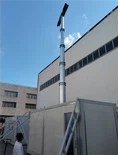

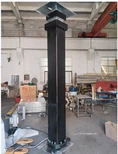
A customer once asked us a question that sounds simple:
"Why should we use a Mobile Cell on Wheels if we can just build a permanent cell tower?"
At first glance, the permanent tower seems like the obvious choice. It is fixed, designed for long-term operation and does not need to be moved.
But in real projects, the answer is not that simple.
A permanent tower and a Mobile Cell on Wheels (COW) are designed for two completely different situations.
The mistake many buyers make is comparing them as competing products.
They are not.
The real decision comes down to one question:
Do you need communication infrastructure for a fixed location over many years, or do you need coverage that can follow a changing project?
After working with telecom contractors, construction companies and emergency response teams, we have found that understanding this difference is the key to choosing the right solution.
The First Question Is Not "Which Tower Is Better?"
It is:
"How long will you need the coverage?"
This is where most projects are decided.
A few years ago, we supported two customers with very similar requirements.
Both needed reliable mobile network coverage.
Both needed LTE communication.
Both were operating in areas where existing infrastructure was insufficient.
But their solutions were completely different.
The first customer was developing a large industrial facility expected to operate for decades.
A permanent cell tower was the logical choice.
The second customer was building a highway section that would move gradually across different locations over eighteen months.
A Mobile Cell on Wheels Tower was the better option.
The difference was not technical performance.
It was project duration.
When Is a Mobile Cell on Wheels the Better Choice?
A Mobile Cell on Wheels Tower is designed for situations where network requirements change faster than permanent infrastructure can be built.
Typical examples include:
Emergency communication after disasters
Temporary construction sites
Large public events
Remote mining and energy projects
Temporary LTE or 5G network expansion
Network maintenance support
In these situations, companies usually face one of three problems:
1. The Location Is Temporary
A construction site today may become a different site next year.
A pipeline project may extend hundreds of kilometers.
A mining operation may move as extraction areas change.
Installing permanent towers everywhere is expensive and often unnecessary.
A mobile cell tower can move with the project.
The communication system follows the work instead of limiting the work.
2. Communication Is Needed Immediately
Building a permanent tower requires time.
Before construction starts, there may be:
Site approval
Land preparation
Foundation work
Tower installation
Network commissioning
For some projects, this timeline is acceptable.
For others, it is impossible.
During emergency response operations, waiting several months is not an option.
A rapid deployment tower provides a faster way to restore communication when time matters most.
3. The Network Demand Is Temporary
A large event may create a huge increase in mobile traffic for only a few days.
A festival, sporting event or exhibition may bring tens of thousands of users into one area.
The existing network may work perfectly under normal conditions but struggle during peak demand.
A portable telecom tower allows operators to increase capacity temporarily and remove the equipment after demand returns to normal.
When Is a Permanent Cell Tower the Better Solution?
A permanent cell tower remains the better choice when the communication requirement is stable and long-term.
Examples include:
- Urban telecom networks
- Airports
- Industrial parks
- Long-term factories
- Residential developments
If a site will require coverage for ten, twenty or more years, permanent infrastructure usually provides better long-term value.
A fixed tower offers:
- Long service life
- Continuous operation
- Higher long-term capacity potential
- No relocation requirements
The key point is that permanent towers are optimized for stability.
Mobile towers are optimized for flexibility.
The Cost Comparison Is More Complicated Than It Looks
Many buyers compare only the initial equipment price.
That can lead to the wrong conclusion.
A permanent tower may appear economical when looking only at the structure itself.
But the total project cost also includes:
- Foundation construction
- Civil engineering
- Permits
- Installation equipment
- Labor
- Site preparation
These costs can become significant.
A Mobile Cell on Wheels avoids many of these requirements.
More importantly, it can be reused.
One customer may use the same trailer mounted tower for several projects over multiple years.
Instead of building three permanent towers for three temporary locations, one mobile solution can support all three.
The right question is not:
"Which tower costs less?"
The better question is:
"Which solution creates more value during the entire project lifecycle?"
Deployment Speed: The Biggest Difference
The biggest advantage of a mobile communication tower is not simply that it can move.
It is that it can respond quickly.
A permanent tower is a construction project.
A COW Tower is a deployment project.
That difference matters.
For emergency response teams, every hour without communication creates problems.
For construction companies, delayed connectivity can affect productivity.
For telecom operators, network outages affect customers.
A Cell on Wheels Tower provides a bridge between today's communication needs and tomorrow's permanent infrastructure.
What About Performance? Is Mobile Coverage Good Enough?
This is another common concern.
Some buyers assume temporary solutions must sacrifice performance.
That is not necessarily true.
A properly designed Mobile Cell on Wheels Tower can support:
- LTE networks
- 5G networks
- Microwave transmission
- Emergency communication systems
Performance depends on factors such as:
- Antenna selection
- Tower height
- Equipment payload
- Site location
- Network configuration
The tower type alone does not determine coverage quality.
Engineering design does.
How We Usually Help Customers Choose
At Wuxi Qinge Technology Co., Ltd., we normally do not start with tower specifications.
We start with the project.
Before recommending a solution, our engineers usually ask:
- How long will coverage be required?
- Will the site move?
- What equipment needs to be installed?
- How quickly must the network become operational?
- What are the environmental conditions?
Because a construction project, emergency deployment and telecom expansion project may all require a Mobile Cell on Wheels, but the ideal configuration will be completely different.
Final Thoughts
Choosing between a Mobile Cell on Wheels and a permanent cell tower is not about deciding which technology is better.
It is about choosing the solution that matches the project.
If the location is permanent and communication demand will remain stable for many years, a fixed tower is usually the right investment.
If the project is temporary, the location changes, or communication is needed quickly, a Mobile Cell on Wheels Tower provides the flexibility that permanent infrastructure cannot offer.
The best communication solution is not the one that stays in one place forever.
It is the one that delivers coverage exactly where and when the project needs it.