


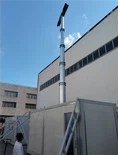

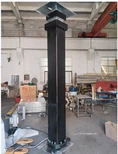
When people hear the term Mobile Cell on Wheels, they often imagine a simple telecom tower mounted on a trailer.
That description is not wrong-but it misses the real reason companies invest in this equipment.
A Mobile Cell on Wheels (COW) is not just a movable tower. It is a temporary communication solution designed for situations where network demand appears faster than permanent infrastructure can be built.
Over the years, we've worked with customers who needed communication coverage for very different reasons: a construction site moving through different locations, an emergency team restoring connectivity after a storm, or a telecom operator preparing for a major public event.
The projects were different, but the requirement was always the same:
Reliable communication, available quickly, wherever it is needed.
What Is a Mobile Cell on Wheels?
A Mobile Cell on Wheels, also called a COW Tower, is a trailer-mounted communication system that carries wireless network equipment and can be transported to different locations.
Unlike a permanent cell tower, which requires foundations, construction permits and long-term installation, a mobile cell tower is designed for flexibility.
A typical system includes:
Telescopic mobile tower or mast
Trailer chassis with stabilizing supports
Antenna mounting structure
Equipment cabinet
Power supply system
Communication equipment installation space
Once transported to the required location, the tower can be positioned, stabilized, raised and connected to the network.
The purpose is not to replace permanent telecom infrastructure.
The purpose is to provide temporary cellular coverage when speed and mobility are more important than permanent construction.
Why Do Companies Use Mobile Cell on Wheels?
A few years ago, a customer working on a remote construction project contacted us because their communication requirements changed much faster than expected.
The original plan was to build permanent infrastructure after the site was fully developed.
But during the early construction phase, hundreds of workers and machines were already operating in an area with poor network coverage.
Waiting months for a permanent tower wasn't realistic.
A portable telecom tower allowed them to establish communication immediately and relocate the system later as the project moved.
This is the main value of a Mobile Cell on Wheels:
It allows communication infrastructure to follow the project instead of forcing the project to wait for infrastructure.
Key Features of a Mobile Cell on Wheels Tower
1. Rapid Deployment Capability
The biggest advantage of a rapid deployment tower is speed.
Traditional towers require:
- Site preparation
- Foundation work
- Construction approval
- Installation activities
A mobile solution removes many of these steps.
Once delivered to the site, the main tasks are positioning the trailer, stabilizing the system, extending the mast and installing communication equipment.
However, experienced engineers know that fast deployment does not mean skipping preparation.
Ground conditions, weather, power availability and equipment compatibility still determine whether the project succeeds.
2. Telescopic Mast Design
Most modern mobile communication towers use a telescopic mast system.
The mast can be extended during operation and lowered during transportation.
This provides several advantages:
- Easier transportation
- Faster installation
- Flexible deployment height
- Reduced site requirements
The required height depends on the application.
A temporary event in an urban area may need a different configuration from a remote mining project.
Higher is not always better.
The correct height is the one that provides sufficient coverage while maintaining practical transportation and stability requirements.
3. Flexible Equipment Integration
A Mobile Cell on Wheels must support different communication requirements.
Depending on the project, customers may install:
- LTE antennas
- 5G antennas
- Microwave links
- Wireless backhaul systems
- Security cameras
Emergency communication equipment
This is why payload capacity is an important consideration.
A tower designed for basic coverage may not be suitable for a project requiring multiple antennas and additional equipment.
Planning future upgrades before purchase can prevent expensive modifications later.
4. Easy Transportation Between Sites
Mobility is the reason these systems exist.
A trailer mounted tower can be moved when project requirements change.
This is especially valuable for:
- Highway construction
- Pipeline projects
- Mining operations
- Temporary military facilities
- Disaster recovery
One customer used the same mobile tower system across multiple project locations instead of purchasing separate communication towers for every site.
The ability to reuse the equipment significantly improved the overall project value.
Main Applications of Mobile Cell on Wheels
Emergency Communication
During hurricanes, floods, earthquakes or other disasters, existing communication infrastructure may become unavailable.
Emergency teams need communication before permanent repairs are completed.
A Mobile Cell on Wheels can provide temporary network coverage for:
- Rescue operations
- Government response teams
- Medical facilities
- Temporary command centers
In these situations, deployment speed can directly affect response efficiency.
Large Events and Public Gatherings
Concerts, festivals and sporting events create unusual network demand.
The problem is often not the lack of coverage.
It is network capacity.
Thousands of people using mobile data at the same time can overload existing systems.
A COW Tower allows operators to increase capacity during the event and remove the equipment afterward.
This makes it a more practical option than building permanent infrastructure for temporary demand.
Construction and Infrastructure Projects
Construction sites often change faster than telecom infrastructure can follow.
A mobile telecom tower is commonly used for:
- Highway construction
- Railway projects
- Remote buildings
- Large industrial developments
As the project moves, the tower can move with it.
Remote Industrial Sites
Mining, oil and gas, renewable energy and other remote industries often require reliable communication before permanent facilities are completed.
A portable telecom tower provides connectivity during the early stages of development and can continue supporting operations as requirements change.
Mobile Cell on Wheels vs Permanent Tower: The Real Difference
The question is not:
"Which one is better?"
The better question is:
"Which one fits the project?"
A permanent tower is usually better when:
The location is fixed for many years
Long-term capacity is required
Construction investment is justified
A Mobile Cell on Wheels is usually better when:
Coverage is temporary
The location may change
Fast deployment is required
Permanent construction is impractical
Many experienced telecom operators actually use both solutions together.
Permanent towers provide the foundation.
Mobile towers provide flexibility.
Choosing the Right Mobile Cell on Wheels Solution
At Wuxi Qinge Technology Co., Ltd., we have found that successful deployments start with understanding the application, not selecting a product from a catalogue.
Before recommending a Mobile Cell on Wheels, our engineering team usually evaluates:
- Required coverage area
- Antenna and equipment load
- Deployment frequency
- Transportation conditions
- Wind environment
- Expected project duration
A tower used for emergency response has different requirements from one used for a long-term construction project.
The right solution is always the one that matches the actual working environment.
Final Thoughts
A Mobile Cell on Wheels provides something permanent infrastructure cannot always offer: flexibility.
Whether it is supporting emergency response, expanding network capacity during major events, connecting remote construction sites or providing temporary LTE and 5G coverage, a COW Tower helps organizations deploy communication where and when it is needed.
After years of working with different projects, one lesson has remained consistent:
The best mobile tower is not the tallest one or the most expensive one. It is the one designed around the real conditions of the project.