


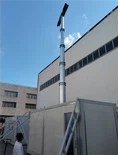

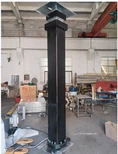
One of the biggest myths about a Cell on Wheels Tower (COW Tower) is that deployment is simply a matter of parking the trailer, raising the mast and switching on the equipment.
If only it were that easy.
A customer once called us after watching a promotional video from another supplier. The video showed a mobile cell tower going from transport mode to full height in less than 30 minutes.
His question was simple:
"Can your tower do that?"
Our answer surprised him.
"The tower probably can. Whether the project can is a different question."
After supporting temporary communication projects for years, we've learned that deployment speed isn't determined by the hydraulic system alone. In most cases, the mast is actually the quickest part of the job. What takes time is preparing everything around it.
So, how long does it really take to deploy a Cell on Wheels Tower?
The honest answer is: it depends on how well the site is prepared.
Step 1: Arriving on Site Is Only the Beginning
The deployment clock doesn't start when the mast begins to rise.
It starts when the trailer arrives.
One mistake first-time users make is parking the trailer mounted tower at the first available location. Experienced crews rarely do that.
Instead, they spend the first few minutes walking around the site.
They're looking for things that aren't shown on engineering drawings:
Is the ground level?
Can the towing vehicle leave safely after positioning?
Are there overhead power lines?
Will nearby buildings block antenna coverage?
Is there enough space for stabilizers?
We've seen crews spend ten minutes choosing a better position and save several hours of adjustment later.
Good deployment starts before any equipment is unloaded.
Step 2: Stabilizing the Trailer Usually Takes Longer Than Raising the Mast
If you ask experienced field engineers which part of the installation deserves the most attention, very few will say the mast.
Most will say the outriggers.
A Cell on Wheels Tower is only as stable as the ground supporting it.
During one infrastructure project, everything appeared ready for deployment until one stabilizer slowly settled into soft soil after recent rain. The tower hadn't even been extended yet, but it was already clear that continuing would create problems.
The solution was simple-steel support plates were placed beneath each outrigger before leveling the trailer.
It added twenty minutes to the installation.
It probably prevented a full day's delay.
People often underestimate this step because nothing dramatic happens.
In reality, it's one of the most important parts of the entire deployment process.
Step 3: Raising the Telescopic Tower Is the Easy Part
Once the trailer is level and secure, extending the telescopic mobile tower is usually straightforward.
Modern hydraulic systems allow the mast to be raised smoothly while operators monitor alignment and locking mechanisms.
Ironically, this is the part many customers worry about most.
From our experience, it's also the part that causes the fewest problems.
The real challenges almost always happen before the mast moves-or after it's already standing.
Step 4: Installing Communication Equipment Takes Longer Than Most People Expect
Getting the tower upright doesn't mean the network is ready.
Antennas still need to be installed.
Feeders and power cables must be connected.
The equipment cabinet requires configuration.
The LTE or 5G equipment has to communicate with the operator's network.
Signal strength and antenna orientation need verification.
We've worked on projects where the mast reached full height in under thirty minutes, yet commissioning the communication equipment required another two hours.
That's completely normal.
A mobile communication tower isn't considered deployed because it's standing.
It's deployed when users can actually make a phone call.
So, How Long Does Deployment Really Take?
This is the question every customer eventually asks.
Rather than giving a single number, we normally explain it like this.
If the site has already been prepared, the crew is experienced and all communication equipment has been tested before arrival, deployment can often be completed within a few hours.
If the location is remote, ground conditions are poor or communication equipment still needs configuration, installation naturally takes longer.
In other words, deployment time is determined far more by project preparation than by the tower itself.
Whenever someone advertises an installation time without mentioning site conditions, it's worth asking one more question:
"Under what conditions?"
Because that's where the real answer usually begins.
What Usually Causes Delays?
Interestingly, delays are rarely caused by the Cell on Wheels Tower itself.
Most projects lose time because of issues around the tower.
From what we've seen, the most common causes include:
Uneven or unstable ground
Poor trailer positioning
Last-minute antenna changes
Missing power supply
Communication equipment configuration
Waiting for network approval
High winds preventing safe mast extension
None of these problems can be solved by buying a taller tower.
They're solved through better planning.
Experienced deployment teams know this, which is why they spend more time preparing the site than operating the hydraulic controls.
Fast Deployment Starts Before the Truck Leaves the Factory
One lesson we've learned after supporting temporary cellular coverage projects is that the fastest installations are rarely the fastest on site.
They're the fastest because most of the work has already been completed beforehand.
Equipment compatibility has been confirmed.
Payload has been checked.
The antenna layout has been finalized.
Transportation routes have been planned.
The installation team knows exactly what to do before the truck even arrives.
By contrast, projects that try to solve every problem on site almost always take longer than expected.
Deployment speed is usually a reflection of preparation quality.
Final Thoughts
A cell on wheels tower is designed for rapid deployment, but "rapid" doesn't simply mean raising the mast quickly.
It means restoring reliable temporary cellular coverage with as few delays as possible.
That requires careful site selection, proper trailer stabilization, correct equipment installation and thorough network testing.
At Wuxi Qinge Technology Co., Ltd., we've found that successful deployments are rarely remembered because they were fast. They're remembered because everything worked exactly as planned from the moment the tower went into service.
In the end, that's what customers are really buying-not just a mobile telecom tower, but the confidence that when communication is needed, the network will be ready.