


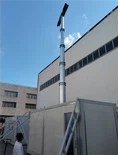

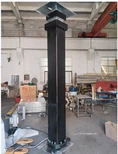
A customer once asked us:
"The tower only needs to be deployed temporarily. Do we really need to spend so much time preparing the installation?"
This is a common misunderstanding.
A Telescopic Mobile Tower is designed for fast deployment, but fast does not mean casual.
In real projects, most tower-related problems do not come from the mast itself. They usually come from incorrect site selection, insufficient stabilization, poor understanding of wind conditions or lack of regular maintenance.
A mobile tower may only stay at one location for a few days or months, but during that period it still needs to withstand the same environmental forces as permanent structures.
After years of working with Mobile Cell on Wheels (COW) Towers and telescopic mast systems, we have found that safe deployment depends on three key areas:
- Correct installation.
- Accurate wind load evaluation.
- Proper maintenance.
Why Safe Deployment Matters for Telescopic Mobile Towers
A Telescopic Mobile Tower provides a flexible way to install communication, surveillance or monitoring equipment without building permanent infrastructure.
Typical applications include:
- Temporary LTE and 5G coverage
- Emergency communication
- Construction site monitoring
- Industrial projects
- Public events
- Remote operations
Because these towers are often deployed quickly and relocated frequently, the installation process must be simple and reliable.
However, a temporary tower is not a temporary safety requirement.
Once the mast is extended and equipment is installed, the system is exposed to:
- Wind pressure
- Equipment weight
- Ground conditions
- Weather changes
A correct deployment process ensures that the tower performs as designed.
Step 1: Select the Right Deployment Location
Before extending the mast, the first step is choosing a suitable installation site.
This is often overlooked.
A good location should consider:
Ground Conditions
The ground must provide enough stability for the trailer or base system.
Avoid locations with:
Soft soil
Unstable surfaces
Excessive slopes
Areas prone to water accumulation
A stable foundation is essential because the tower load is transferred through the support system.
Surrounding Environment
Check nearby obstacles such as:
- Buildings
- Trees
- Power lines
- Other structures
The tower needs enough clearance for safe extension and operation.
For communication applications, surrounding obstacles can also affect signal performance.
Accessibility
A mobile telecom tower must be transported to and removed from the site.
Consider:
- Road access
- Vehicle turning space
- Deployment area
- Future relocation requirements
A tower that cannot be safely positioned is not an effective solution.
Step 2: Stabilize the Tower Before Extension
Before raising the mast, the stabilization system must be correctly deployed.
Depending on the design, this may include:
- Trailer outriggers
- Ground supports
- Leveling systems
- Mechanical locking systems
The purpose is to create a stable platform before the tower experiences vertical and wind loads.
One common mistake is extending the mast before completing stabilization.
This increases risk because the tower is operating before reaching its designed support condition.
The correct sequence is:
Position → Stabilize → Level → Extend → Verify
Step 3: Extend the Telescopic Mast Correctly
The mast extension method depends on the tower design.
Common systems include:
Hydraulic telescopic systems
Manual telescopic systems
A hydraulic telescopic mobile mast is commonly used for applications requiring frequent deployment because it provides:
- Faster operation
- Controlled movement
- Reduced manual effort
Manual systems may be suitable for applications with lower deployment frequency.
During extension, operators should check:
- Smooth movement of mast sections
- Proper locking of sections
- Equipment clearance
- Abnormal noise or resistance
Never force a mast that does not operate normally.
Step 4: Understand Wind Load Before Operation
Wind load is one of the most important factors affecting a deployed mobile tower.
Many users focus on tower height and payload but underestimate wind conditions.
The actual wind force depends on:
- Tower height
- Antenna size
- Equipment weight
- Equipment position
- Local weather conditions
A tower carrying multiple 5G antennas or large microwave dishes experiences much higher wind forces than a tower carrying lightweight equipment.
How Wind Affects a Telescopic Mobile Tower
Wind creates horizontal forces that act on:
- Mast sections
- Antenna mounts
- Trailer structure
- Stabilization system
As tower height increases, wind influence becomes more significant.
This is why selecting a tower requires balancing:
- Required height
- Payload capacity
- Wind rating
A taller tower is not automatically better if the operating environment cannot support it.
Practical Wind Load Considerations
Before deployment, engineers should confirm:
Maximum Operating Wind Speed
The tower should only operate within its designed wind conditions.
If extreme weather is expected:
Lower the mast
Remove exposed equipment if required
Follow manufacturer recommendations
Equipment Configuration
Adding equipment changes wind loading.
Before installing additional antennas or cameras, confirm that:
- Payload limits are not exceeded
- Mounting positions are suitable
- Wind loading remains acceptable
Seasonal Conditions
A tower deployed in a coastal area may face very different conditions compared with one installed inland.
Environmental factors should always be considered during selection.
Step 5: Regular Maintenance After Deployment
A Telescopic Mobile Tower is designed for repeated use.
Regular inspection ensures long-term reliability.
Important maintenance areas include:
Mast Inspection
Check:
- Mast sections
- Mechanical components
- Locking systems
- Extension mechanisms
Look for:
- Damage
- Deformation
- Corrosion
- Abnormal movement
Hydraulic System Maintenance
For hydraulic towers, inspect:
- Hydraulic oil level
- Hydraulic hoses
- Cylinders
- Connections
Hydraulic leaks or pressure problems should be addressed immediately.
Trailer and Stabilization System
Regularly inspect:
Tires
Braking system
Outriggers
Leveling components
The trailer is not only a transportation platform.
It is part of the tower's operational safety system.
Electrical and Communication Equipment
Check:
- Cable connections
- Power supply
- Antenna mounting
- Communication equipment
A mechanically perfect tower cannot perform if the connected systems are unreliable.
Common Deployment Mistakes to Avoid
Based on practical project experience, several mistakes appear repeatedly.
Ignoring Ground Conditions
A strong tower still depends on a stable support surface.
Adding Equipment Without Recalculation
Additional antennas or devices can change the load conditions.
Deploying During Severe Weather
Temporary does not mean risk-free.
Weather conditions should always be considered.
Skipping Routine Inspection
Repeated deployment creates mechanical wear.
Regular checks prevent small issues from becoming major failures.
How Wuxi Qinge Supports Reliable Mobile Tower Deployment
At Wuxi Qinge Technology Co., Ltd., we understand that a Telescopic Mobile Tower is not only a steel structure.
It is part of a complete communication solution.
Before recommending a tower system, we consider:
- Required height
- Equipment payload
- Deployment frequency
- Transportation conditions
- Wind environment
- Application requirements
Whether the project involves a Mobile Cell on Wheels, temporary network coverage or remote monitoring, the objective is the same:
Provide a tower system that operates safely and reliably in real conditions.
Final Thoughts
Safe deployment of a Telescopic Mobile Tower depends on more than simply extending the mast.
The key factors are:
Correct installation creates stability.
Proper wind evaluation ensures safe operation.
Regular maintenance protects long-term reliability.
A mobile tower provides flexibility because it can move with changing project requirements.
But every successful deployment starts with the same principle:
A fast solution must also be a carefully engineered solution.