


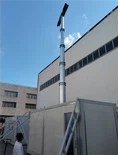

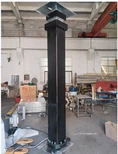
In many projects, the biggest challenge is not installing a tower.
The real challenge is installing communication or monitoring equipment at the right location, at the right time, without waiting months for permanent infrastructure.
We experienced this during a remote construction project.
The customer needed temporary network coverage and site monitoring before the permanent facilities were completed. Building a fixed tower was possible, but it would take too long and would no longer be useful once the project moved to another area.
The solution was a Telescopic Mobile Tower.
Unlike a permanent tower that stays in one location, a telescopic mobile tower is designed around changing project requirements. It can be transported, deployed quickly, extended to the required height and relocated when the work area changes.
After years of working with customers in telecommunications, industrial projects and emergency response, we have found that telescopic mobile towers are mainly valuable because they solve one common problem:
How can companies quickly create temporary elevated infrastructure without committing to permanent construction?
Why Are Telescopic Mobile Towers Becoming More Important?
Traditional towers work well when the location is fixed.
However, many modern projects are temporary or constantly changing.
For example:
A construction site moves as the project progresses.
A disaster area needs communication immediately.
A large event requires additional network capacity for only a few days.
A remote industrial project needs connectivity before permanent facilities are completed.
In these situations, building a permanent tower may create unnecessary cost and delay.
A Telescopic Mobile Tower provides a flexible alternative.
The tower itself becomes a reusable infrastructure platform that can support different equipment depending on the project requirements.
Application 1: Temporary LTE and 5G Network Coverage
Telecommunication is the largest application area for telescopic mobile towers.
A common situation is that network demand appears before permanent infrastructure is ready.
For example, a new industrial park may begin operation before the telecom network is fully developed.
A remote construction project may need communication before fiber networks are installed.
A temporary event may create thousands of additional users in one location.
In these cases, a mobile communication tower allows operators to quickly install:
- LTE antennas
- 5G antennas
- Microwave equipment
- Wireless backhaul systems
The advantage is not only faster deployment.
It is flexibility.
When the network requirement changes, the tower can be relocated instead of becoming unused infrastructure.
This is why many telecom operators use telescopic mobile towers as a supplement to permanent cell sites.
Application 2: Mobile Cell on Wheels for Network Expansion
A Mobile Cell on Wheels (COW) is one of the most common systems using telescopic mobile tower technology.
The purpose of a COW Tower is simple:
Provide temporary cellular coverage where fixed towers cannot arrive quickly enough.
Typical applications include:
- Emergency network restoration
After storms, floods or earthquakes, existing communication infrastructure may be damaged.
A COW Tower can provide temporary coverage while permanent networks are repaired.
- Temporary capacity increase
During concerts, sports events or large public gatherings, user traffic can suddenly increase.
A mobile tower allows operators to add additional capacity without building permanent infrastructure.
- Remote projects
Mining sites, oil fields and large construction projects often require communication before permanent systems are completed.
A telescopic mobile tower provides the temporary connection needed during early operations.
Application 3: Emergency Communication Systems
Emergency response is one of the areas where telescopic mobile towers provide the greatest value.
In emergency situations, communication is not a convenience.
It is a requirement.
Rescue teams need reliable communication for:
- Command coordination
- Field operations
- Medical support
- Safety management
The challenge is that disasters often happen in places where infrastructure is damaged or unavailable.
A rapid deployment tower can be transported directly to the affected area and provide an elevated platform for communication equipment.
The key advantage is speed.
A permanent tower may provide stronger long-term capacity, but it cannot always solve today's emergency.
Application 4: Temporary Surveillance and Security Monitoring
Beyond communication, telescopic mobile towers are widely used for surveillance applications.
Many industries need temporary monitoring capability but do not want to build permanent structures.
Typical applications include:
- Construction site security
- Border monitoring
- Industrial facility protection
- Large outdoor events
- Remote area monitoring
A telescopic mast can support:
- CCTV cameras
- Thermal imaging systems
- Wireless transmission equipment
- Sensors
By raising equipment above ground level, the system improves:
- Viewing distance
- Monitoring range
- Signal transmission
For temporary projects, a portable surveillance tower provides a much faster and more flexible option than fixed installations.
Application 5: Remote Industrial Projects
Remote industrial operations often face the same challenge:
The project starts before the infrastructure arrives.
Industries such as:
- Mining
- Oil and gas
- Renewable energy
- Large engineering projects
require communication for daily operation and safety.
A telescopic mobile mast can support:
- Worker communication
- Equipment monitoring
- Security systems
- Data transmission
As the project expands, the tower can move with the operation.
This is particularly valuable where installing multiple permanent towers would not be economical.
What Makes a Good Telescopic Mobile Tower?
From our experience at Wuxi Qinge Technology Co., Ltd., customers often focus on tower height first.
However, successful deployment depends on several engineering factors.
Correct Height
The required height depends on:
- Coverage area
- Terrain
- Antenna position
- Surrounding obstacles
A taller tower is not always the best solution.
Sufficient Payload Capacity
The tower must support all installed equipment, including future upgrades.
Important considerations:
- Antenna weight
- Camera systems
- Microwave equipment
- Additional accessories
Reliable Deployment System
For frequent relocation projects, deployment efficiency is critical.
Factors include:
- Trailer design
- Stabilization system
- Hydraulic or manual operation
- Transportation conditions
Environmental Adaptability
The tower must match the actual working environment:
- Wind conditions
- Ground conditions
- Temperature range
- Deployment frequency
Final Thoughts
The biggest advantage of a Telescopic Mobile Tower is not simply that it can extend upward.
Its real value is flexibility.
It allows companies to create temporary communication, surveillance, and monitoring infrastructure without waiting for permanent construction.
For telecom operators, it provides fast LTE and 5G expansion.
For emergency teams, it restores communication when time matters most.
For industrial projects, it brings connectivity to locations where traditional infrastructure cannot arrive quickly.
The best tower is not always the one built permanently.
Sometimes, the best solution is the one that can move with the project.