


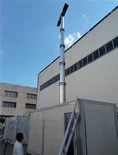

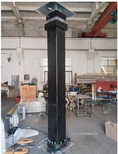
Selecting the right Telescopic Mast requires aligning its features with your specific use case, ensuring it delivers reliable performance and meets operational needs.
Intended Use and Load Capacity
First, define the Telescopic Mast's purpose-whether for surveillance, communication, or sensor mounting. This determines required load capacity: heavier equipment like radar systems or high-power antennas needs a mast with stronger weight-bearing capabilities, while lighter gear can use more compact models. Overlooking load capacity risks equipment damage or mast instability, so match this factor closely to your intended tools.
Height Adjustability and Terrain Adaptability
Consider the height range needed: taller masts suit wide-area coverage, while shorter ones work for confined spaces. Also, assess terrain-Telescopic Mast for rough or uneven areas needs a sturdy base and durable materials to withstand instability, while models for flat sites can prioritize portability over heavy-duty construction.
Deployment Speed and Portability
Evaluate how quickly you need to set up the Telescopic Mast: manual cranks work for low-urgency tasks, but hydraulic or motorized systems are better for time-sensitive scenarios. Portability matters too-if the mast needs transport to remote sites, choose a compact, lightweight design that fits in standard vehicles, avoiding bulky models that require specialized transport.
Environmental Resistance
Check the Telescopic Mast's ability to handle local weather: models for coastal areas need corrosion resistance , while those for extreme temperatures require materials that don't crack or warp. This ensures long-term reliability, even in harsh conditions.
If you have any telescopic mast needs, please feel free to contact us! We have extensive industry experience and a professional engineering team, and we sincerely invite you to work together for development!