


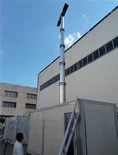

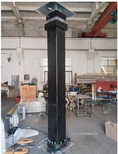
Telescopic Mast and fixed mast serve distinct elevation needs, with trade-offs in flexibility, cost, and usability that align with different use cases.
Telescopic Mast: Pros and Cons
Pros
Telescopic Mast offers unmatched flexibility-its retractable sections let users adjust height for specific needs, from low coverage in confined spaces to high elevation for wide-area monitoring. It's highly portable: compact when retracted, fitting in standard vehicles for deployment to remote or temporary sites like disaster zones or construction areas. Setup is fast too, requiring minimal tools compared to fixed masts, making it ideal for time-sensitive tasks.
Cons
It has lower maximum load capacity than heavy-duty fixed masts, limiting use with extremely heavy equipment. In harsh weather, its modular design may need more frequent checks to maintain stability, unlike fixed masts that are permanently anchored.
Fixed Mast: Pros and Cons
Pros
Fixed mast delivers superior stability and load capacity, supporting heavy gear like large radar systems or high-power antennas long-term. It requires little maintenance once installed, as its permanent anchor and solid structure resist weather and wear. For static sites like permanent communication hubs or border checkpoints, it's a reliable, long-term solution.
Cons
It lacks flexibility-height is fixed, so it can't adapt to changing needs. Installation is time-consuming and requires site preparation , making it unsuitable for temporary or mobile use. It's also immovable, so it can't be redeployed to new sites if needs shift.
If you would like to learn more about telescopic masts, please contact Wuxi Chinge Technology. Our technical team is ready to answer your questions.