


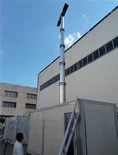

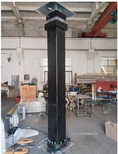
The core differences between Cell on Wheels (COW) and fixed base stations lie in their mobility, deployment speed, application scenarios, and coverage flexibility. A detailed analysis follows:
1. Mobility and Deployment Flexibility
COW: Mounted on vehicles, it can be quickly transported to the target location, with deployment completed within 15 minutes to several hours.
Suitable for temporary or emergency scenarios, such as temporary coverage during natural disasters, large events, military operations, or network failures.
Requires no fixed infrastructure, accessing the core network via wireless backhaul or temporary wired connections.
Fixed Base Stations: Permanently installed in fixed locations such as towers or building rooftops, requiring advance site planning and the laying of fiber optic or microwave links.
Longer deployment cycle, but high long-term stability, suitable for densely populated areas or long-term coverage needs.
Relies on fixed power supplies and backhaul networks, resulting in weaker disaster resilience.
2. Coverage Range and Capacity
COW: Smaller coverage area and limited capacity, but can be expanded through multi-vehicle collaboration.
For example: After the 2004 Florida hurricane, COW provided temporary communications for disaster areas; 26 COW units were deployed to handle peak crowds at Obama's 2009 inauguration. Fixed Base Stations: Wide coverage area, high capacity, suitable for high-density areas.
Supplemented by micro base stations, pico base stations, etc., forming a layered coverage network.
3. Cost and Maintenance
COW (Cost-on-Way): High initial cost, but on-demand use can reduce long-term idle costs.
Maintenance requires a professional team, suitable for short-term or sudden needs.
Fixed Base Stations: High initial investment, but low long-term operating costs.
Maintenance relies on local teams, suitable for stable coverage scenarios.
4. Technical Characteristics
COW: Typically integrates full base station functions, supports 4G/5G, and some models are equipped with satellite backhaul.
For example, SaskTel in Canada deployed portable COWs to alleviate LTE congestion, with a coverage radius of approximately 1 kilometer.
Fixed Base Stations: Can be upgraded to a distributed architecture, supporting more efficient resource scheduling and energy-saving modes.
Strong anti-interference capability, suitable for complex electromagnetic environments.
5. Typical Application Scenarios Comparison
Summary: COW is a "flexible supplement" to fixed base stations.
|
Scenario |
COW Applicability |
Fixed Base Station Applicability |
|
Natural Disaster Relief |
★★★★★ (Rapid communication restoration) |
★ (Vulnerable to damage, slow recovery) |
|
Large-Scale Events |
★★★★★ (Handling peak user traffic) |
★★ (Requires advance planning, high capacity expansion costs) |
|
Remote Area Coverage |
★★ (Dependent on transportation conditions) |
★★★★★ (Long-term stable coverage) |
|
Daily Network Optimization |
★ (Temporary gap-filling) |
★★★★★ (Core for hierarchical coverage) |
Choose COW: Scenarios requiring rapid response, temporary coverage, and no fixed infrastructure.
Choosing fixed base stations: For scenarios requiring long-term stable coverage, high capacity, and strong disaster resistance.
Future trend: COW (Cyber-on-Wire) communication will collaborate with fixed base stations, combining 5G, satellite, and private networks to build an integrated "air-ground-space" emergency communication system.