


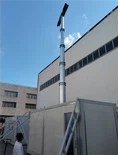

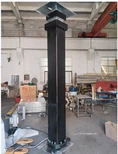
Cell on Wheels is a mobile emergency communication support device. Its core principle is to integrate a complete mobile communication base station system onto a vehicle-mounted platform. Through rapid deployment and signal coverage, it enables wireless communication connectivity in temporary or emergency scenarios. Essentially, it's a modular and mobile reconfiguration of traditional fixed base stations, widely used in disaster relief, large-scale event support, and other scenarios.
Modular integrated design is the foundation for its mobile functionality. Cell on Wheels (COWs) are typically mounted on flatbed trailers or dedicated vehicles, integrating core components of the base station subsystem, including a Base Transceiver Station (BTS), a Base Station Controller (BSC), a power module, and an antenna system. The BTS is responsible for wireless signal transmission and reception and initial processing, while the BSC coordinates core functions such as resource allocation and call control. All modules connect through standardized interfaces, ensuring signal processing capabilities consistent with fixed base stations while adapting to the space and stability requirements of vehicle mobility, allowing for rapid start-up, shutdown, and deployment.
Signal transmission and coverage follow the core logic of fixed base stations while also offering flexible adaptability. During operation, the COW transmits wireless signals to the coverage area via its vehicle-mounted antenna, establishing a communication link with mobile terminals. Simultaneously, it connects to the core communication network via wired or wireless links, enabling data and voice signal interaction between the terminal and the core network. The antenna system can be adjusted in height and angle as needed, covering a range from hundreds to thousands of meters. Power adjustment controls the coverage radius, avoiding signal interference with nearby fixed base stations and precisely adapting to temporary communication needs.
Multiple power supply options and a rapid deployment mechanism enhance emergency adaptability. The COW is equipped with a dual power supply system. Under normal conditions, it connects to mains power; in emergency scenarios, it can switch to the vehicle-mounted generator or battery to ensure continuous operation in power outage environments. Deployment requires no complex civil engineering work; upon arrival at the site, only antenna installation, power-on, and network connection are needed. It can be operational within half an hour, quickly compensating for communication interruptions caused by fixed base station failures or coverage blind spots.
The overall workflow forms a closed loop: the vehicle-mounted platform provides mobility and stable support, the base station module handles signal processing and interaction, and the power supply and antenna system ensure continuous coverage. These three elements work together to achieve "stop and go" communication assurance. Its core advantage lies in breaking the spatial limitations of fixed base stations. Through modular integration and flexible deployment, it can build a reliable wireless communication network in scenarios with temporary communication needs, such as emergency rescue and large-scale events, ensuring smooth communication links.