


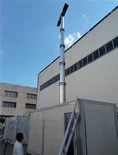

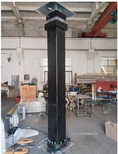
Assessing the cost-effectiveness of Cell on Wheels cannot be a simple "yes" or "no" answer. It's a scenario-dependent trade-off, its core advantage lying in sacrificing flexibility and speed for the long-term cost savings of fixed networks.
You can quickly understand the core logic behind its cost-effectiveness using the table below.
|
Cost-Benefit Dimension |
Cost / Disadvantage |
Benefit / Advantage |
Where Cost-Effectiveness is Realized |
|
Upfront Investment |
Equipment purchase or rental cost is not low. |
Far lower than building a permanent base station with equivalent coverage. |
Low Capital Expenditure (CapEx), avoiding massive sunk costs. |
|
Deployment Speed |
Requires transportation and on-site commissioning. |
Extremely fast (within hours to days), enabling immediate response to demand. |
Very low time cost, creating irreplaceable value in emergencies and events. |
|
Flexibility & Reusability |
Single-point coverage and capacity are usually limited. |
Mobile and redeployable to different locations, adjustable on demand. |
High asset utilization; a single investment meets multiple temporary needs across various locations and times. |
|
Operational Complexity |
Requires arrangements for power (e.g., generator) and transmission backhaul (e.g., satellite, microwave). |
Highly integrated, compact solutions are reducing deployment difficulty. |
Becomes the only feasible option where traditional methods cannot be implemented or are not cost-effective. |
|
Long-Term Operation |
If used fixedly long-term, the cost per unit of traffic is higher than that of a fixed network. |
In short-term or temporary scenarios, it avoids the huge waste of building permanent facilities for low utilization. |
The optimal cost solution for precisely matching temporary or fluctuating demands. |
When is COW the Cost-Effective Option?
In summary, COW is generally considered a cost-effective solution in the following scenarios:
1. Short-term and clearly defined needs: Such as large-scale sporting events, concerts, and festivals, where the COW can be withdrawn after the event.
2. Responding to emergencies and unforeseen circumstances: When communication is interrupted due to natural disasters, COW is one of the fastest and most reliable means of restoring communication.
3. Filling temporary coverage gaps: During the transition phase before the construction of fixed networks, such as during large-scale engineering construction, resource exploration, and disaster area reconstruction.
4. Commercial trial operation and market testing: Before deploying a permanent network, COW is used to test user demand and network performance in the area, reducing investment risk.
5. Areas with special terrain or policy restrictions: In places where it is difficult to obtain site locations or construction permits, COW is a flexible option to bypass obstacles.
Comparison with "Mobile Mobile Base Stations"
It is worth noting that a lighter, integrated "mobile mobile base station" is providing a more economical option in specific scenarios. For example, the solution used by Sichuan Mobile estimates costs 30%-50% lower than traditional methods and can achieve "same-day activation." This represents a trend of COW solutions evolving towards higher cost-effectiveness.
In short, Cell on Wheels is not a cheap replacement for fixed base stations, but rather a "special forces" solution that complements the flexibility shortcomings of fixed networks. In scenarios with "time constraints," "temporary needs," or "variable locations," it optimizes overall costs by avoiding unnecessary infrastructure construction, thus achieving economic efficiency.
If you can tell us the specific application scenario you are considering (e.g., for regular event support or as an emergency backup solution), our company can provide you with a more targeted cost-benefit analysis perspective.