


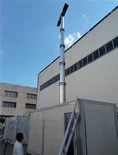

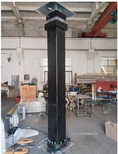
Primarily for the following typical scenarios with extremely high demands for network flexibility:
1. Responding to Emergency Communication Interruptions
Scenario: After natural disasters (such as earthquakes, floods, hurricanes causing damage to fixed base stations or power outages) or during large-scale public safety incidents.
Function: As a critical emergency communication facility, it restores the most basic and stable mobile communication connections for rescue workers, disaster victims, and government agencies, ensuring the lifeline remains open.
2. Ensuring Uninterrupted Network Connections for Large Events
Scenario: Large gatherings, such as concerts, sporting events, international conferences, and celebrations, lead to a surge in people and communication demand.
Function: Significantly enhances network capacity and signal quality in a localized area within a short period, preventing network congestion and ensuring participants can communicate, share, and make payments smoothly.
3. Filling Network Gaps or Dead Zones in Specific Areas
Scenario: Remote or newly built areas, or areas with poor signal coverage due to complex terrain.
Functions: As a quick and economical "patch," COW (Cellular Wireless Network) rapidly resolves network availability issues before fixed base stations are built or when only short-term communication needs are met. It is commonly used for resource exploration, engineering construction, temporary campsites, or temporary communication support in rural areas.
4. Meeting Special or Temporary Commercial Needs
Scenarios: During major engineering construction periods, film and television program or large-scale program recording sites, a reliable temporary network is required for a large number of devices and personnel.
Functions: Provides a stable and controllable dedicated or enhanced network, ensuring efficient production activities. It can be easily moved after the project ends, offering great flexibility.
Differences from Traditional Fixed Base Stations
To more clearly understand the unique value of COW, it can be compared with traditional fixed base stations:
|
Characteristic |
Cell on Wheels (COW) |
Traditional Fixed Base Station |
|
Deployment Speed |
Fast - Can be activated within hours to a few days. |
Slow - Typically requires months to years from site selection and construction to activation. |
|
Flexibility |
High - Can be quickly relocated and redeployed to different locations as needed. |
Low - Fixed location; difficult to move once constructed. |
|
Cost Model |
Lower initial cost - Suitable for leasing or short-term deployment. |
High initial investment - Considered a long-term fixed asset. |
|
Coverage Capability |
Generally provides point or small-area coverage; capacity can be customized for specific events. |
Provides wide-area coverage; capacity and coverage range are determined during the planning/construction phase. |
|
Primary Purpose |
To address temporary, emergent, or changing communication demands. |
To meet long-term, stable, and foundational network coverage needs. |
When faced with situations involving sudden, rapidly changing, or temporary network outages, Cell on Wheels (COW) is one of the best tools for resolving these issues due to its speed, flexibility, and cost-effectiveness.
If you can provide the specific context or scenario in which you need to consider deploying COW, our company can provide you with more targeted analysis.