


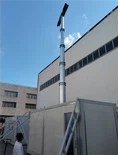

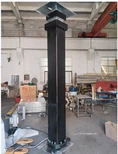
We once got a call at 3 AM on a Sunday: a music festival with 80,000 attendees was losing signal because the nearest tower was overloaded. By sunrise, we had a Cell Tower on Wheels (COW) on-site, powered up, and handing off traffic. By noon, the crowd was live-streaming again.
That's the thing about COWs-they don't wait for perfect conditions. They show up when the plan breaks, when the crowd exceeds the model, or when the map still says "no coverage."
At Wuxi Qinge Technology, we've deployed mobile base stations across three continents. This isn't a theoretical use-case list. It's a field-tested guide to when a COW actually makes sense-and when it doesn't.
The Short Answer: Use a COW When You Need Coverage Now, Not Someday
A Cell Tower on Wheels isn't a permanent fix. It's a rapid-response tool. You reach for it when:
✅ Time matters more than lifetime cost
✅ The location is temporary or uncertain
✅ Infrastructure is damaged, overloaded, or non-existent
✅ You need to test a site before committing to civil works
If you're planning a 20-year network expansion, build a tower. If you're solving for the next 72 hours, the next 30 days, or the next unknown-consider a COW.
Application 1: Large-Scale Events - When 50,000 Phones Hit One Square Kilometer
The Scenario
Music festivals, sports tournaments, political rallies, trade shows. One weekend. One location. A surge of devices that would normally be spread across a city-now concentrated in a field.
Why Fixed Towers Struggle
Permanent sites are engineered for average load, not peak density. When 50,000 attendees all try to upload videos at halftime, even a well-planned network buckles. Adding capacity takes months: permitting, construction, backhaul provisioning. The event is over by then.
How a COW Solves It
- Rapid deployment: 4–6 hours from arrival to live traffic
- Targeted coverage: Sector antennas can be tilted and azimuth-adjusted to match crowd flow, not just blanket an area
- Capacity on demand: Multi-carrier, multi-band RRUs handle LTE anchor + 5G NR overlay simultaneously
- Temporary backhaul: Satellite or microwave links bypass congested local fiber
Real Field Note
At a coastal marathon last year, we positioned two COWs at the start/finish zone and one at the mid-point aid station. The trick wasn't power-it was backhaul. Local fiber was already saturated by spectator hotspots. We used a dual-link setup: primary microwave to a nearby hilltop, secondary satellite as fallback. Zero dropouts during the 4-hour race window.
When Not to Use a COW for Events
- Multi-week festivals with stable attendance: a semi-permanent micro-site may be more cost-effective
- Indoor venues with existing DAS: a COW won't penetrate concrete well; consider in-building solutions instead
Application 2: Disaster Recovery - When the Grid Goes Dark and Every Minute Counts
The Scenario
Earthquake, flood, wildfire, severe storm. Fixed sites lose power, backhaul cuts, or physical damage takes them offline. Emergency responders need comms. Survivors need to contact family. Time is the scarcest resource.
Why Permanent Infrastructure Fails First
- Power grids fail before towers do
- Fiber cuts isolate sites even if they're standing
- Access roads wash out, delaying repair crews
How a COW Restores Critical Coverage
- Self-contained power: Diesel generator + battery bank + optional solar keeps the shelter running when the grid doesn't
- Independent backhaul: Satellite terminals or point-to-point microwave don't rely on local infrastructure
- Rapid mobility: Towable units can reach accessible perimeter points while roads are still being cleared
- Priority routing: Local QoS policies can prioritize emergency services, even with limited backhaul bandwidth
Real Field Note
After a typhoon in Southeast Asia, we deployed a COW to a temporary evacuation center. The challenge wasn't the unit-it was the mast. Wind gusts exceeded 25 m/s, so we used a guyed mast instead of telescopic, anchored with sandbags and vehicle weights. We also pre-loaded emergency contact lists and SMS gateway configs so survivors could send texts even with minimal data throughput. The unit stayed live for 11 days until the nearest fixed site was repaired.
Critical Design Considerations for Disaster Use
| Factor | Why It Matters | Our Field Adaptation |
| Wind rating | Storms don't wait for perfect weather | Guyed mast option, anchor kits, real-time wind monitoring |
| Fuel autonomy | Resupply may be delayed | 72-hour onboard fuel + quick-connect external tank ports |
| Backhaul redundancy | Single-link failure = total outage | Dual-mode (satellite + microwave) with auto-failover |
| Ruggedized cabling | Mud, water, debris damage connectors | IP68-rated quick-disconnects, internal cable routing where possible |
When a COW Isn't Enough
- Widespread regional damage: multiple COWs + mobile switching may be needed
- Long-term recovery (>30 days): consider transitioning to semi-permanent solutions to reduce operational cost
Application 3: Remote & Temporary Operations - When "Permanent" Doesn't Make Sense Yet
The Scenario
Mining exploration camps, construction sites, military forward operating bases, scientific research stations. Locations where people and equipment need connectivity, but the site may only be active for 6–36 months.
Why Building a Tower Is Overkill
- Permitting and civil works can take longer than the project lifespan
- ROI on a permanent tower requires 5–10 years of traffic
- Relocation needs: if the site moves, the tower doesn't
How a COW Bridges the Gap
- Deploy in days, not months: No foundation pouring, no tower climbing crews
- Relocate as needed: Tow to the next phase of the project
- Scale capacity incrementally: Start with 4G, add 5G NR when backhaul allows
- Hybrid power options: Solar + battery + generator reduces fuel logistics in remote areas
Real Field Note
For a mineral exploration project in the Gobi Desert, we deployed a COW with a hybrid power system: 4 kW solar array + 20 kWh battery bank + 15 kW diesel generator. The solar offset ~35% of daily consumption, extending generator service intervals from 3 days to 5. We also used a high-gain satellite terminal for backhaul-latency was high, but for telemetry and voice, it was sufficient. When the camp relocated 80 km east, the entire unit moved in one convoy.
Remote Deployment Checklist (Lessons Learned)
✅ Pre-survey satellite visibility if using VSAT backhaul
✅ Confirm fuel availability and storage safety on-site
✅ Test mast raise/lower in simulated wind conditions before dispatch
✅ Include spare filters, fuses, and connector kits-remote sites don't have hardware stores
✅ Train local staff on basic monitoring (fuel level, alarm status) to reduce dependency on fly-in techs
Decision Framework: Is a COW Right for Your Use Case?
Ask these five questions before committing:
1. What's the time horizon?
< 30 days → Strong COW candidate
30–90 days → Evaluate COW vs. semi-permanent micro-site
> 90 days → Permanent infrastructure likely more economical
2. How certain is the location?
Fixed coordinates → Either option works
May relocate → COW advantage
Multiple phased sites → COW fleet strategy
3. What's the backhaul reality?
Existing fiber/microwave nearby → Easier integration
No local infrastructure → Satellite-capable COW required
Congested local network → COW with independent backhaul
4. What are the environmental constraints?
High wind, extreme temps, sand, humidity → Specify ruggedized shelter, cooling, and mast options
Limited fuel access → Prioritize hybrid power design
5. Who operates it?
Your own tech team → Standard configuration
Third-party or local staff → Simplified UI, remote diagnostics, clear SOPs
If you answer "COW" to 3+ of these, it's likely the right tool.
What We've Learned at Wuxi Qinge (The Unwritten Rules)
After dozens of deployments, here are the patterns that don't show up in spec sheets:
- The first 90 minutes decide the mission. If power, backhaul, and mast aren't stable in that window, the rest of the deployment fights uphill. We now pre-stage "go-kits" with pre-terminated cables, torque wrenches, and alignment tools to compress that window.
- Backhaul is the silent bottleneck. Everyone focuses on RF and power. But if your satellite terminal can't lock, or your microwave link gets blocked by a new crane, the COW is just an expensive shelter. We now include a backhaul health dashboard in every remote monitoring portal.
- Technician experience > component specs. A $50 connector that a field tech can swap in 3 minutes beats a $500 "premium" part that requires two people and a lift. We design for maintainability first, elegance second.
- Document the field, not just the lab. Our deployment checklists now include photos of "good vs. bad" cable routing, wind anchor setups, and fuel line routing. New techs learn faster when they see real-world examples.
Ready to Talk Through Your Scenario?
If you're weighing options for an upcoming event, emergency protocol, or remote operation, we're happy to walk through your specific constraints. No generic brochures. Just engineering notes, power curves, and lessons from the field.