


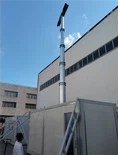

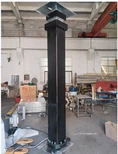
When customers approach us at Wuxi Qinge Technology Co., Ltd., they often assume choosing a cell tower on wheels is mainly about height or price. In reality, the projects that run smoothly are the ones where the selection process starts from the actual deployment scenario, not just the specification sheet.
We've learned this the hard way alongside our clients. A few years ago, a contractor working on a remote infrastructure project asked for a "standard 20-meter mobile tower." On paper, that sounded reasonable. But once we reviewed the site conditions-uneven terrain, strong crosswinds, and limited power supply-it became clear that a standard configuration wouldn't last long in real operation. We adjusted the design, reinforced the structure, and optimized the power system. The upfront cost changed slightly, but the system has now been running reliably for over a year.
That's usually where the real decision-making starts: matching the tower to the environment.
Height is important, but only in context.
Many buyers instinctively aim for the tallest mast available, assuming higher means better coverage. In practice, height should be determined by terrain, obstacles, and signal requirements. For flat open areas, a 15–20 meter mast may be sufficient. In more complex environments-such as urban edges or forested zones-you may need 25–30 meters to achieve stable coverage. We often advise clients to think in terms of effective coverage, not maximum height. Overspecifying height can increase cost and wind load without delivering proportional benefits.
Payload capacity is often underestimated.
It's not just about supporting one antenna. Most real deployments include sector antennas, microwave links, mounting brackets, and cabling. We've seen situations where a tower technically met the height requirement but struggled under the actual equipment load. That leads to instability over time. A good rule is to calculate your full equipment weight in advance and allow a safety margin. It's a small step that prevents big problems later.
Wind resistance and stability matter more than most expect.
In temporary deployments, especially in coastal or open مناطق, wind becomes a critical factor. A telescopic mast that performs well in calm conditions may behave very differently under continuous wind pressure. One of our clients operating near a coastal region initially prioritized quick deployment over structural reinforcement. After experiencing repeated shutdowns due to instability, they upgraded to a wind-rated system with better anchoring and guying options. Since then, their downtime has dropped significantly.
Power configuration should match your operating reality.
This is another area where assumptions can lead to inefficiencies. Some projects only need short-term operation and can rely on a diesel generator. Others, especially in remote or fuel-limited environments, benefit from hybrid systems that combine batteries or solar support. We've worked with clients who underestimated fuel logistics-transporting diesel regularly to remote sites turned out to be more expensive than investing in a more efficient power solution from the beginning.
Deployment speed and ease of use are often overlooked-but critical.
On paper, most mobile towers look similar. In practice, the difference comes down to how quickly and safely they can be deployed. Features like hydraulic lifting systems, automatic leveling, and compact transport design can save hours-or even days-during setup. One event organizer we worked with had a strict schedule and limited technical staff. By choosing a system that could be deployed by two people in under an hour, they avoided delays and reduced labor costs.
Mobility should align with how often you plan to relocate.
If the tower will stay in one place for months, a simpler trailer design may be enough. But if you plan to move it frequently between sites, durability and transport efficiency become much more important. Reinforced chassis, reliable braking systems, and road compliance features start to matter in day-to-day operations.
In the end, choosing the right cell tower on wheels is less about finding the "best" model and more about finding the right fit for your specific use case.
From our perspective at Wuxi Qinge Technology Co., Ltd., the most successful projects are the ones where clients share their real deployment conditions early-location, duration, equipment, and operational constraints. That allows us to recommend a configuration that balances performance, cost, and reliability without unnecessary complexity.
If you're currently evaluating options, it's worth taking a step back and asking: What will this system actually face once it's on site? The clearer that picture is, the easier it becomes to choose a solution that works not just in theory, but in real-world conditions.
If you'd like to go through your project details, we're always open to discussing practical configurations based on actual deployment experience.